

By Rachael Lindley
Photography by Crystal Wise
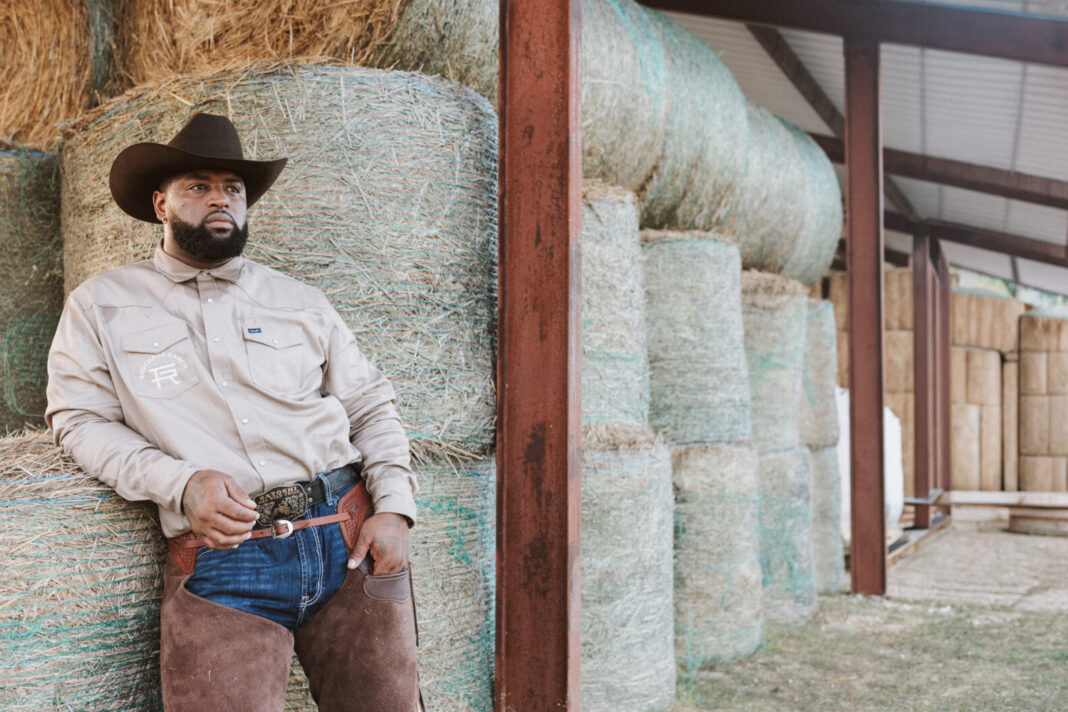
Davon Godchaux wasn’t looking for a second career when he found horses.
Davon Godchaux wasn’t even looking for a competition horse.
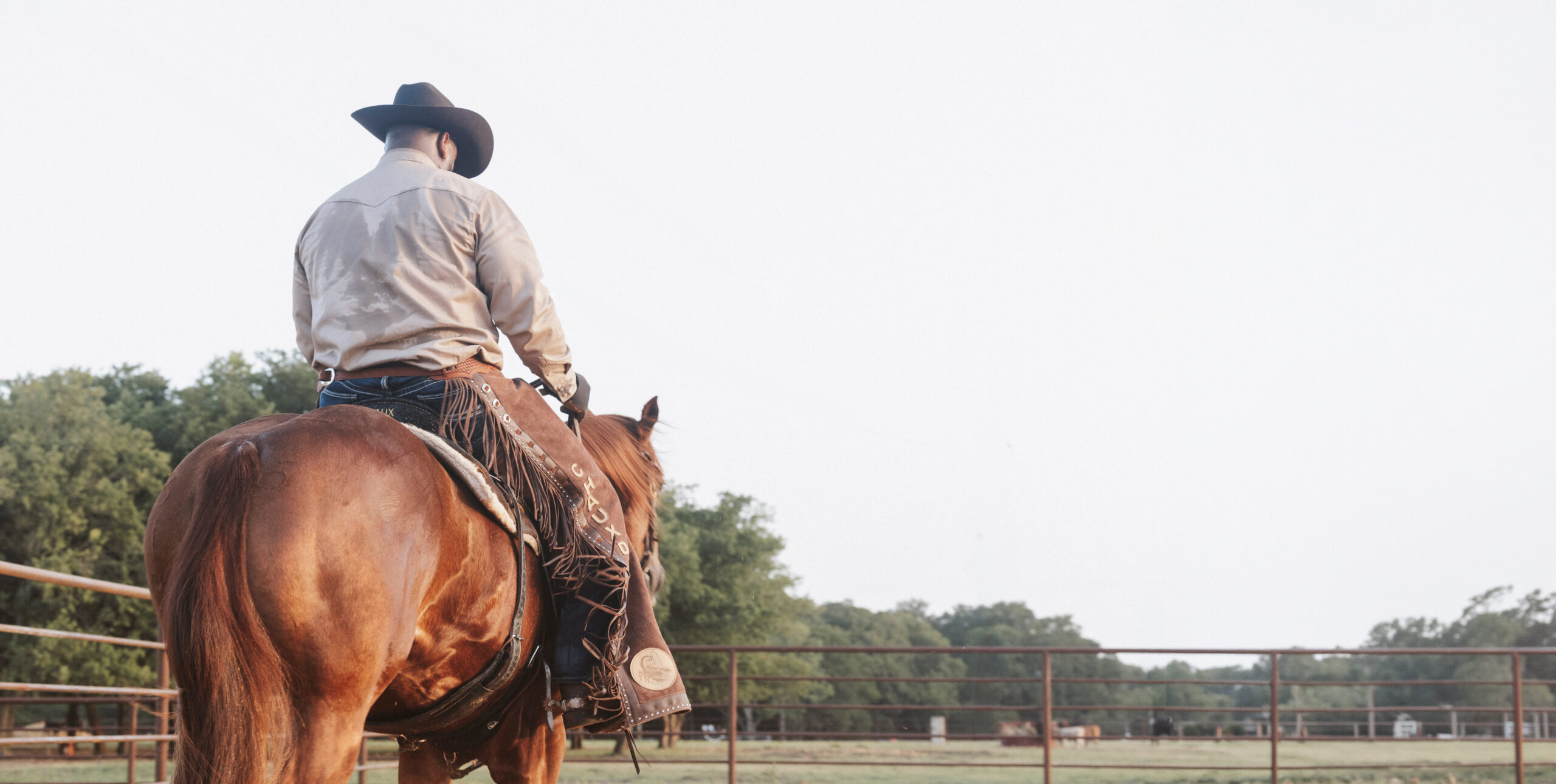
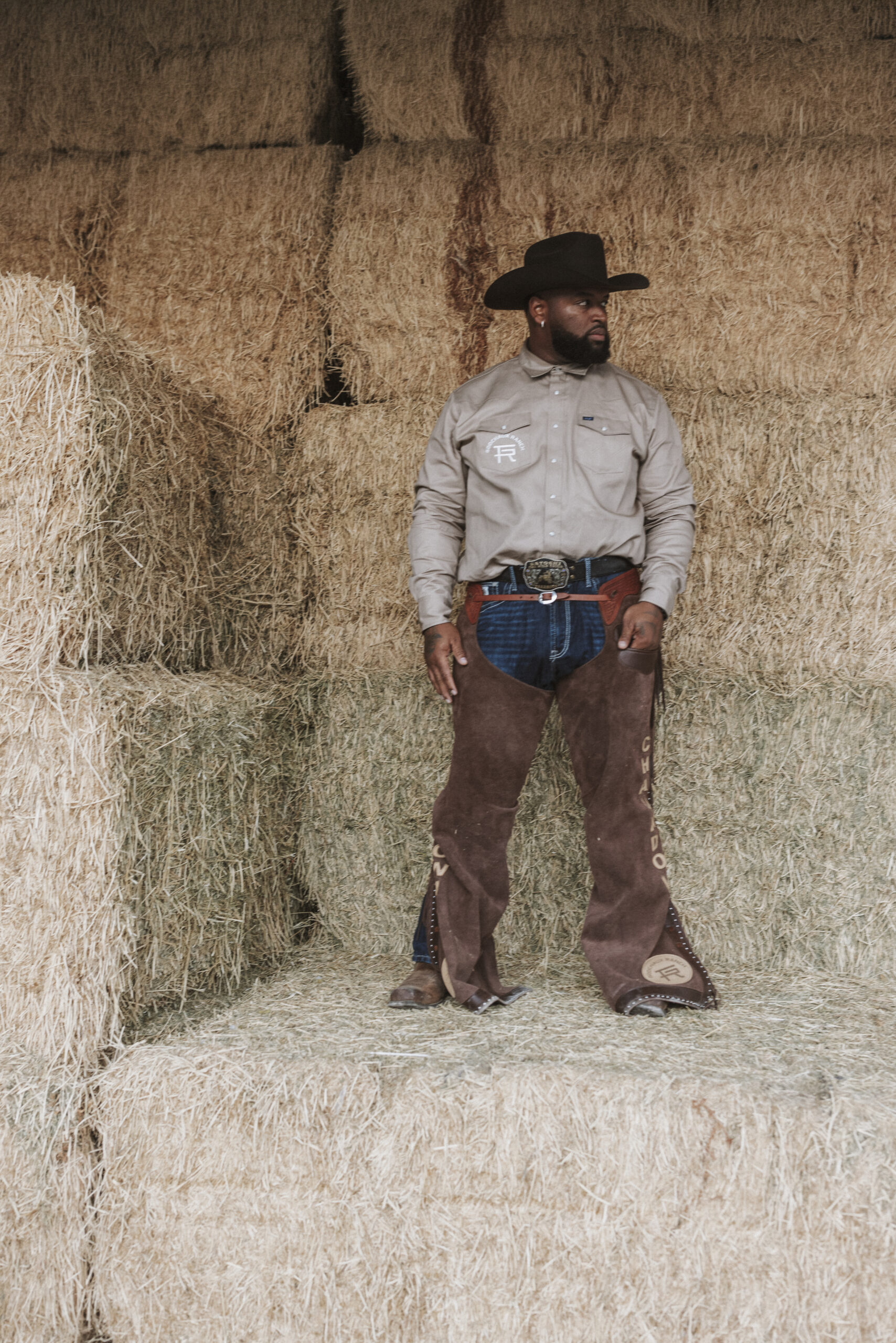
The premise, at least in the beginning, was considerably simpler: find a horse big enough for a very big man to ride. As a defensive tackle for the New Orleans Saints, Godchaux looms large — 6-foot-3 and 330 pounds to be exact — but his essence is gentle and calm. So much so that the horses surrounding him pick up on it.
“I really wasn’t supposed to get into competition,” says Godchaux, an NFL veteran now in his 10th season in the league. “It really was supposed to be just finding a horse for a big man to ride.”
Then, he says, “I got the itch.”
A friend introduced him to the performance-horse world, and Godchaux kept coming back for more. While he doesn’t compete himself, he hires professionals to handle the competition side.
“It was a really bad itch,” he says, laughing. “It’s kind of like trying to shake a bad habit, but you can’t.”
He hasn’t tried very hard, either.
Instead, Godchaux has gone all in.
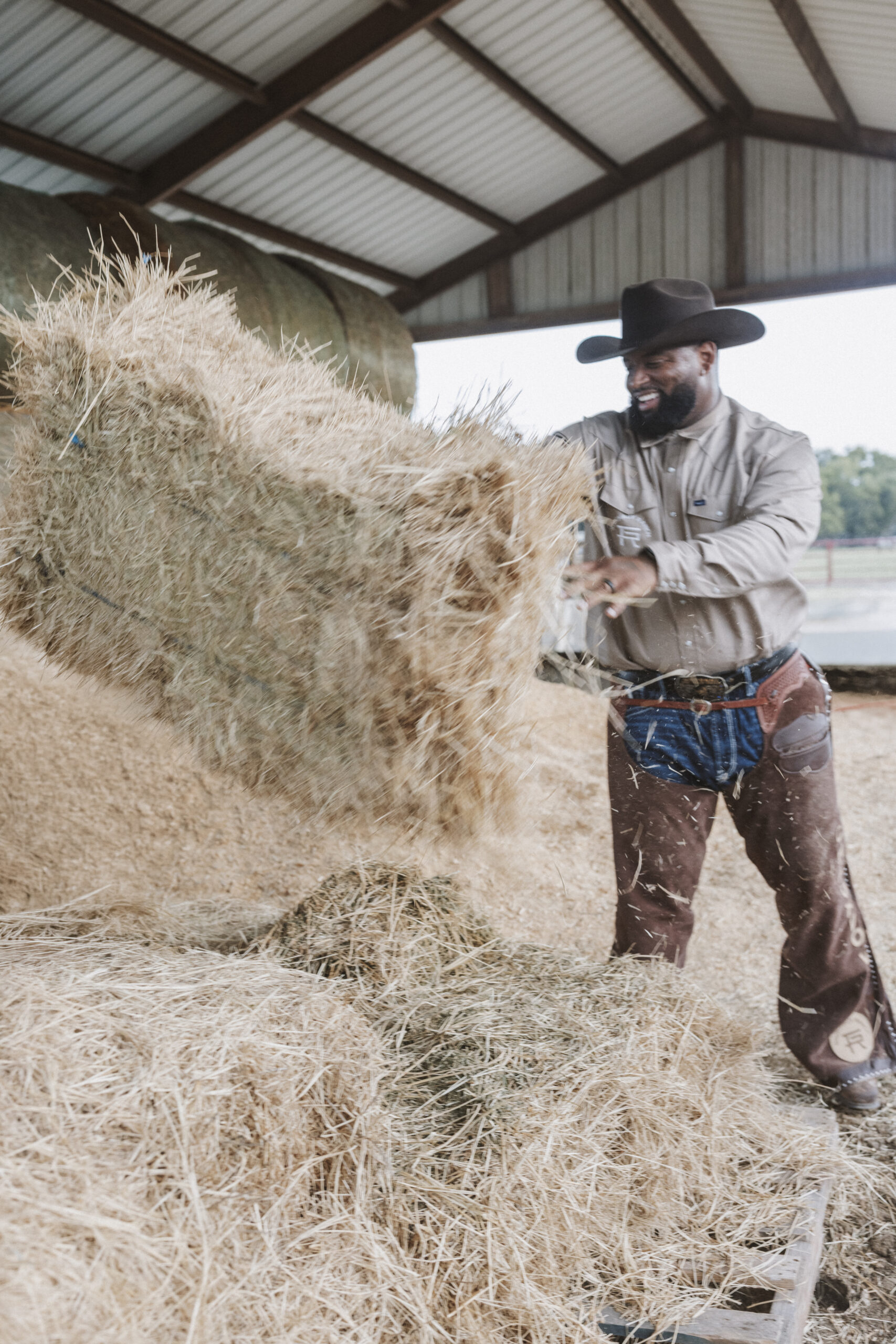
Less than a year ago, he purchased a Texas horse property that has quickly become both his refuge from professional football and the headquarters of an ambitious performance-horse operation. The ranch came remarkably close to turnkey: two barns with a combined 32 stalls, an arena, covered storage and much of the infrastructure necessary to accommodate a growing herd.
“It was really plug-and-play,” he says.
For Godchaux, however, “plug and play” didn’t mean leaving it alone. He reworked the arena to get the footing the way he wanted it. He added a round pen and an eight-horse walker. He expanded storage. And he began assembling horses with an eye not merely toward showing them, but toward building something of a legacy that might outlast his football career. Ideally, Godchaux would love to sell his outstanding horses to the public so others can enjoy the western way of life. Today, he estimates he has somewhere around 45 to 50 horses, recipient mares included.
He is still relatively new to the performance-horse business, but you wouldn’t necessarily know it from listening to him walk through the broodmare pasture.
There is a High Brow Cat daughter. A Metallic Cat daughter. A mare by Dual Smart Rey. He talks about Shining Spark and West Coast Whiz, earnings and production records, embryos and recipient mares, planned cross-breeding and babies expected next year.
Godchaux has become a student of pedigrees.
And increasingly, one thing matters above all else: the mare.
“I want to build my program off of good mares,” he says. “You’re always hunting for that mare.”
It’s a lesson Godchaux picked up from people he trusts in the horse business, and one he repeats with the conviction of a recent convert: Build the broodmare band first. Access to a great stallion is one thing; having the right mare to cross him on is another.
“Mare power is everything,” he says.
It is a serious breeding philosophy delivered with Godchaux’s particular combination of enthusiasm and plainspoken practicality. He is learning quickly, and he makes no attempt to pretend otherwise.
That may be one of the reasons the horse world has suited him so well.
Godchaux believes deeply in being coachable.
“I dislike people who think they have all the answers,” he says. “If you think like that, you can never be successful in life.”
He pauses, then explains why. It is a philosophy forged over a lifetime of being coached.
“How can you grow and expand when you think you have all the answers? You can’t, because you know everything.”
Godchaux grew up in Louisiana, one of six children raised by his mother. He remembers a childhood filled with brothers, competition and the occasional busted lip.
“We used to fight a lot,” he says. “We competed against each other in every sport.”
There wasn’t, as he puts it, a “silver spoon.” There was adversity. There was struggle. And there were brothers who made certain he learned how to take a hit.
Ask what he carried from that childhood into adulthood, and he distills it into two words.
“Toughness and grit. I wouldn’t trade it for anything,” he says. “Because if I did, I might not be the person I am today.”
Football took that foundation and hardened it.
Godchaux played three seasons at LSU before entering the NFL Draft. In 2017, the Miami Dolphins selected him in the fifth round with the 176th overall pick.
He remembers the number, not only because it is tattooed on his body.
“176. I keep that on me,” he says. “It’s motivational.”
Godchaux believed he was one of the best defensive tackles in his draft class. So, a fifth-round pick stung. Nearly a decade later, he can concede there may have been a reason for it while simultaneously admitting that, yes, the moment was emotional.
“I try not to take it personally, but it is personal,” he says. “Because I attack it every day. Every season. Every offseason.”
That tension — acceptance without complacency — is the way Godchaux has approached horses.
He isn’t interested in simply owning them.
He wants to understand them. He wants to breed them. He wants his operation to compete. He wants good people working for him, and he wants those people to become better at what they do.
And eventually, he wants the Godchaux name to mean something in this industry, too.
“I’m not doing this to be just another ranch,” he says. “I’m doing this to be the best.”
The Standard Is The Standard
There is a phrase Godchaux uses to describe what he wants: “blue-collar elite.”
A portmanteau with locker-room sounding origins. He wants the ranch to be professional without being precious. Hardworking without being sloppy. He wants visitors to leave believing the horses are in good hands and that business is done correctly.
“I tell people there’s a difference between NFL players and professional NFL players,” Godchaux says. Making an NFL roster is extraordinary, certainly. But to him, professionalism is what happens afterward, in the habits no one applauds, in showing up on time and prepared, in refusing to let success lower the standard.
He expects the same from the people around his horses.
“You should want to work on your craft and be great,” he says.
If you want to become a better reiner, find a great reiner and learn from him. If cow horse is the goal, seek out someone who understands cow horses better than you do. Ask questions. Take criticism. Get coached.
Godchaux has spent enough time in football to know that talent is only the entry fee.
“Everybody wants to be great,” he says. “But you’ve got to work at it.”
He also knows something about teams.
In football, an individual performance is inseparable from the men lined up alongside you. Godchaux sees the same structure emerging at his ranch. Trainers need good assistants. Young horses need good starters. An owner needs people capable of making the right decision when he is hundreds of miles away playing football.
“A good team is everything,” he says.
When the ranch is running well enough that his phone doesn’t ring with a problem, he is delighted.
“You don’t realize how happy I am when I ain’t got to get a phone call from the ranch saying, ‘Hey, we need this. We need that. This horse is hurt,’” he says. “I’m so happy. I’m so blessed.”
The standards, though, remain high.
“The standard is high for them,” he clarifies. “The standard is high for me.”
That applies to Godchaux as much as it does to anyone working for him. If he becomes complacent in football, he says, someone younger, cheaper or better will eventually take his place.
The horse business is no different.

Pressure Is a Privilege
For all the similarities Godchaux finds between horses and football — the discipline, teamwork, toughness and competitive drive — the ranch fulfills a need the NFL cannot.
It quiets his mind.
“Pressure is a privilege,” he says.
But privilege doesn’t mean pressure isn’t exhausting.
An NFL season stretches across months of preparation and physical punishment, wins and losses, scrutiny and expectation. Godchaux loves the game, but the ranch gives him somewhere to set it down.
“It’s very therapeutic for my mind,” he says. “Just dealing with the pressure … some anxiety playing football, 17, 18 weeks out of a season, ups and downs, wins and losses.”
Here, there is another rhythm. Feed. Ride. Train. Breed. Wait.
“This is a way that I can come and just get away from all of the anxiety,” he says. “Just relax. And this is what I enjoy the most.”
His wife, model Chanel Iman, has seen the effect.
“This is probably the greatest thing that happened to me,” he says she would tell you.
It has slowed him down.
There are always chores to do, horses to think about, bloodlines to research and another improvement to make. Godchaux has come to believe that having something meaningful to occupy your hands and mind matters.
“Idle hands,” he says.
And his are decidedly not.
In It For The Long Haul
Godchaux is already thinking about the shows he wants to attend once football no longer dictates the calendar.
He attended a qualifier for The Run For A Million and came away enamored.
“It was electric,” he says. “Ten out of ten.”
The main event falls during football season, so it will have to wait. So will some of the futures he wants to experience. The National Finals Rodeo is on the list, too.
For now, football wins.
“This comes with sacrifice,” he says.
It is a practical acknowledgment from someone who understands that the first career helps build the second.
And Godchaux is not finished with the first.
He still talks about football with the hunger of someone who has something to prove. He is excited about another season, another training camp, another opportunity to compete. But the ranch’s existence seems to have changed the shape of the horizon.
There is something waiting on the other side now.
Godchaux wants to compete with some of his horses, but breeding is the larger goal. He wants to develop a broodmare program with enough depth and quality that people eventually seek out what he produces.
He knows that it takes time.
Horses, perhaps even more than football, punish impatience. A breeding decision made this season may take years to fully reveal itself. There will be misses. There will be young horses that don’t turn out as everyone hoped. There will be years when a group exceeds expectations, when others won’t.
Godchaux expects all of it.
“You’re not going to win every race,” he says. “The adversity is gonna — you’re gonna hit rock bottom at some point. It’s just the industry you’re in.”
Then you come back.
That, too, feels familiar.
“The two I take are toughness and consistency,” he says. “If you have those two, in both of them, you can be whatever you want to be.”
And perhaps that is what makes Godchaux’s new world feel less like a departure from football than an extension of everything it has taught him.
Both are physical pursuits governed largely by the mind.
“Football is more mental than physical,” he says. “And I’m sure horses are the same, too.”
On the football field, Godchaux is thinking about where the offensive lineman will move before the block comes. A horseman, he says, is similarly thinking about where he wants the horse to go before he moves a rein or applies a leg.
The body executes what the mind has already anticipated.
For a man who has spent most of his adult life mastering one form of that communication, learning another has become irresistible.
Still, when Godchaux talks about his future with horses, his ambition eventually circles back to something simpler.
He wants to build something good.
Something respected.
Something that lasts.
“I’m in it for the long haul,” he says. “I’m not in it for the short term. I’m not in it to waste or burn cash. I’m in it for the long haul to do the right thing and to make a name for myself.”
He has spent ten seasons making one name for himself.
On a Texas ranch, surrounded by horses he never expected to own in the first place, Davon Godchaux is beginning to build the next one.