

Story and photos by Shilo Urban
You’ve tried red wine, white wine, and rosé — but have you ever heard of black wine? What about amber wine?
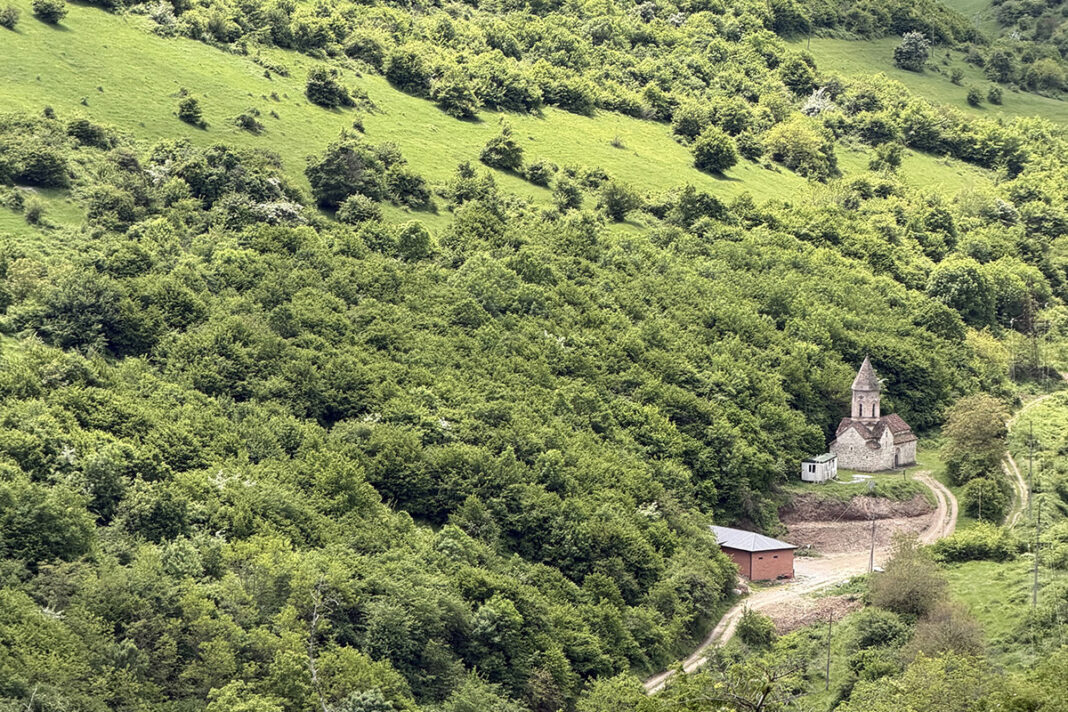
Both flow freely in the Republic of Georgia, the beguiling birthplace of wine. I’d always assumed that Italy or France gave us the fruit of the vine. But wine was born here, in the fertile foothills of the Caucasus Mountains, where Europe meets Asia — a legendary landscape of farmland, forests, and scenic grandeur.
Over 8,000 years ago, prehistoric Georgians discovered that grape juice, when buried in lemon-shaped clay pots, would transform into something wonderful. Vintners today still use the same clay vessels, called qvevri, to ferment their natural, small-batch wines underground.
I see qvevri all over Kakheti, the country’s winemaking heartland. Some are massive 10,000-liter jars, with room for several people to crawl inside. But there’s no room for chardonnay grapes or pinot; Georgian wine is made only from native grapes, many with ancient roots — over 500 varieties in all.
I start with saperavi, Georgia’s signature red wine and one of the world’s only red-fleshed grapes. The dark ruby drink is almost inky in the glass — black wine, to the locals. It pairs well with the view from my hotel in Telavi: a dramatic stretch of snow-capped mountains taller than the Alps.
It’s a short drive to our wine tasting at Lost Ridge Inn, a boutique brewery and horse ranch atop a vineyard-laden valley. But before we begin to clink-clink and sip-sip, we gather for a traditional cooking class. We make plump, meat-stuffed soup dumplings called khinkali, and — my favorite — khachapuri, a crusty bread with a molten filling of fresh white cheese. Georgians serve it for breakfast, lunch, and dinner — or maybe I just keep ordering it for breakfast, lunch, and dinner.
While the bread bakes and the dumplings dumple, we sample organic amber wine from the owner’s vineyards. A blend of white rkatsiteli and mtsvane grapes, it glows golden in the glass. Amber wines, like Saperavi and many Georgian vintages, are fermented the old-school way with seeds and skins, and sometimes even stems. I’m expecting a tannic slap, but the wine is incredibly drinkable, with a structured, earthy tang. I buy a bottle before decamping to Sighnaghi, a hilltop village that rivals any in Tuscany for charm. Encircled by walkable fortress walls, it’s a romantic, medieval jumble of cobblestone streets and pastel houses with wooden balconies. Wine bars overhang the valley below. A shopkeeper hands me a glass of chilled kindzmarauli, a semisweet red — unlike most Georgian wines, which are dry. He tells me Georgians don’t buy wine; they make it themselves or get it from family and friends. Grapevines grow everywhere in the country, twisting across backyards, bistros, and late-night bars.
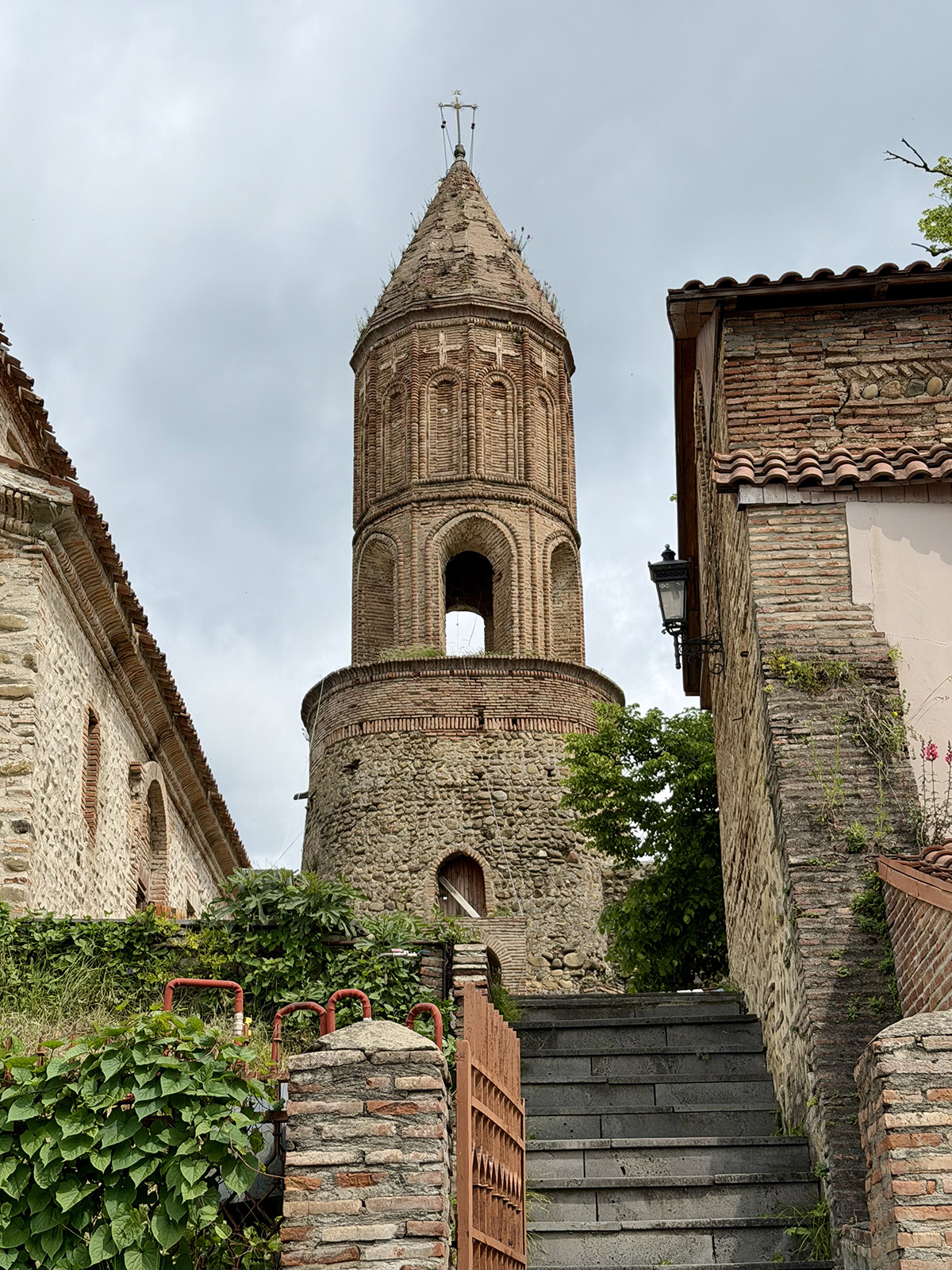

I even see grapevines in Tbilisi, Georgia’s bustling capital city. Phenomenal food, eclectic outdoor cafes, historic sulfur baths, a hidden waterfall in the middle of it all…I’ve stumbled upon travelers’ gold. Restored in some parts and crumbling in others, Tbilisi is an intoxicating riverside mishmash of timeless character and creative modern energy.
It’s a city that begs you to wander and explore, no itinerary required. I indulge in a long lunch at Café Littera, a trailblazing restaurant tucked away in the gardens of a century-old mansion. They seat me at the perfect corner table, and what follows is an unforgettable meal of Nouveau-Georgian cuisine.
Beetroot phkali, a vegetable pâté, gets the crispy croquette treatment and a blue cheese sauce. Traditional kharcho trades its beef and rice for shrimp and polenta, yet keeps its zesty garlic flavors and aromatic herbs. Smoky grilled artichokes and red adjika peppers take it to the next level; I’ve never tasted anything like it before. Koliva comes last, a crumbled wheat berry dessert with walnut gelato melting in the middle. I savor every last bite.
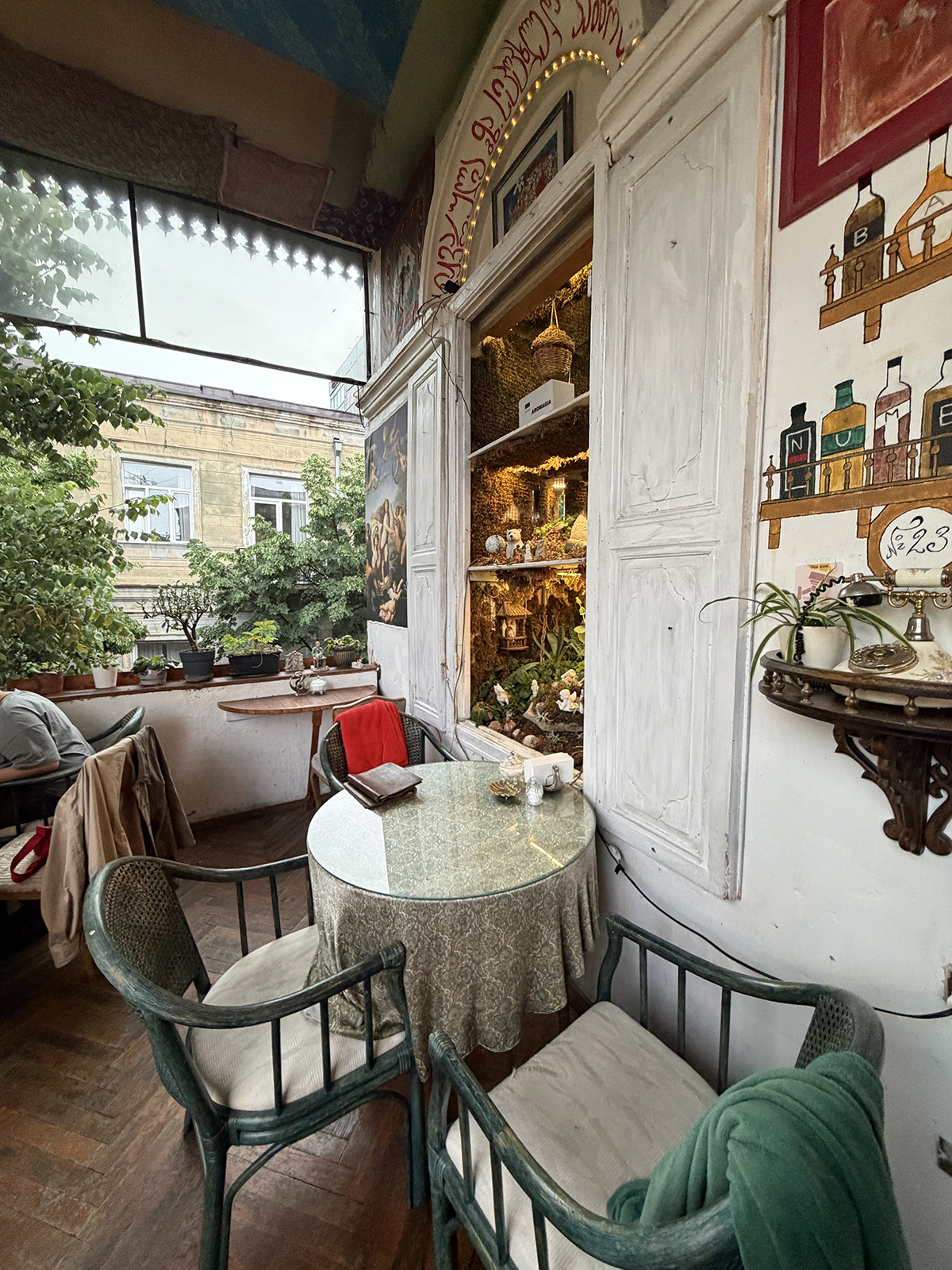
When dinnertime descends in a few hours, I can only order a salad at quirky Café Dante. The restaurant couldn’t be cozier, with cassette music and working rotary phones on the tables (you can call the bartender). But I get a serious case of food envy when I see my tablemate’s closed burger, so I order one too. Its patty, cheese, and grilled peppers are completely enclosed in a stretchy dough, so all the juices stay inside a pocket of insane deliciousness.
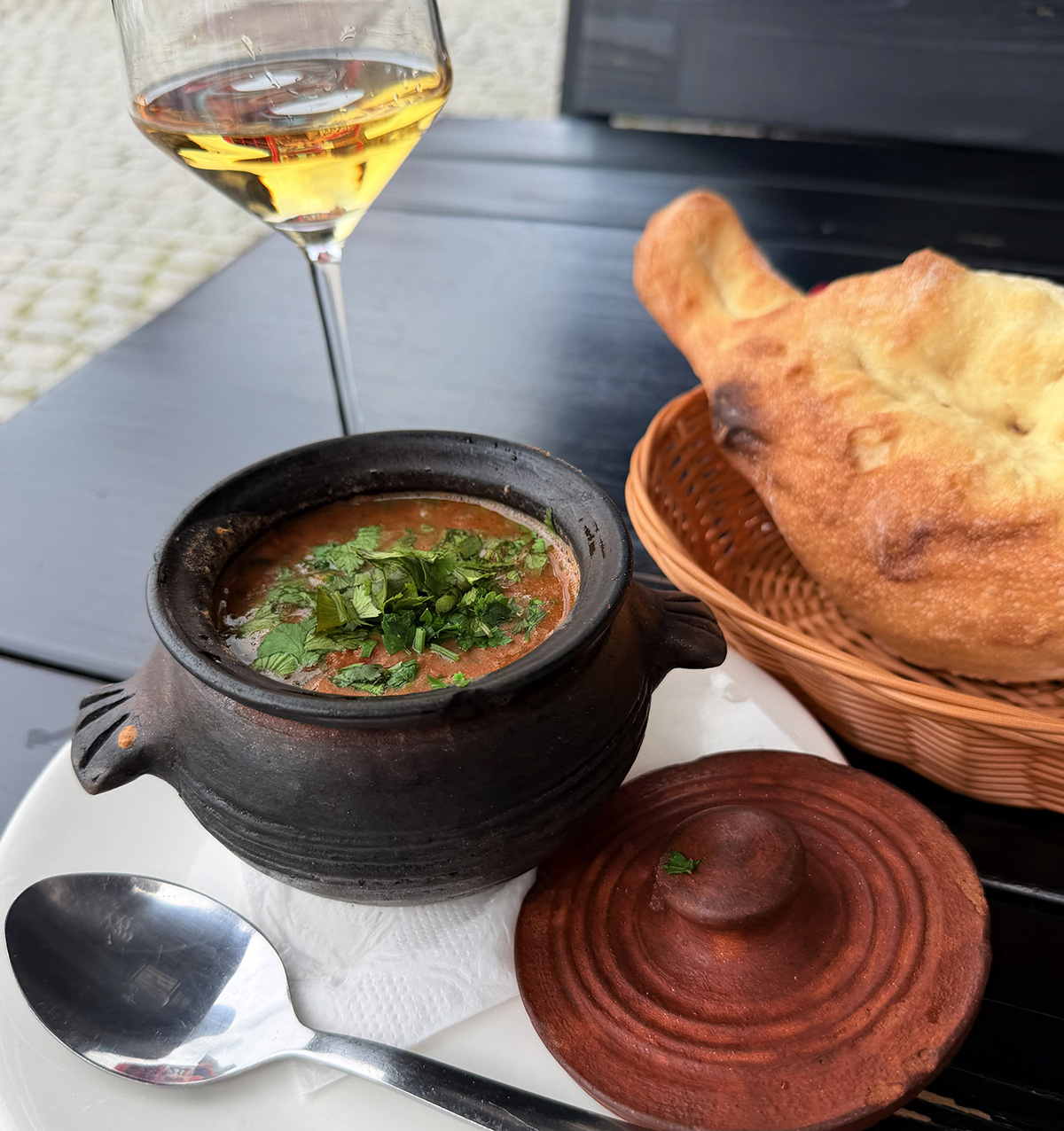
Even beyond Tbilisi’s inventive urban eateries, I encounter palate-pleasing Georgian cuisine at every turn, with distinct spices, freshly picked herbs and sharp accents. From fried eggplant filled with cheesy walnut cream to clay-pot beans and chewy cornbread, every dish comes with a story…and a glass of fine Georgian wine.
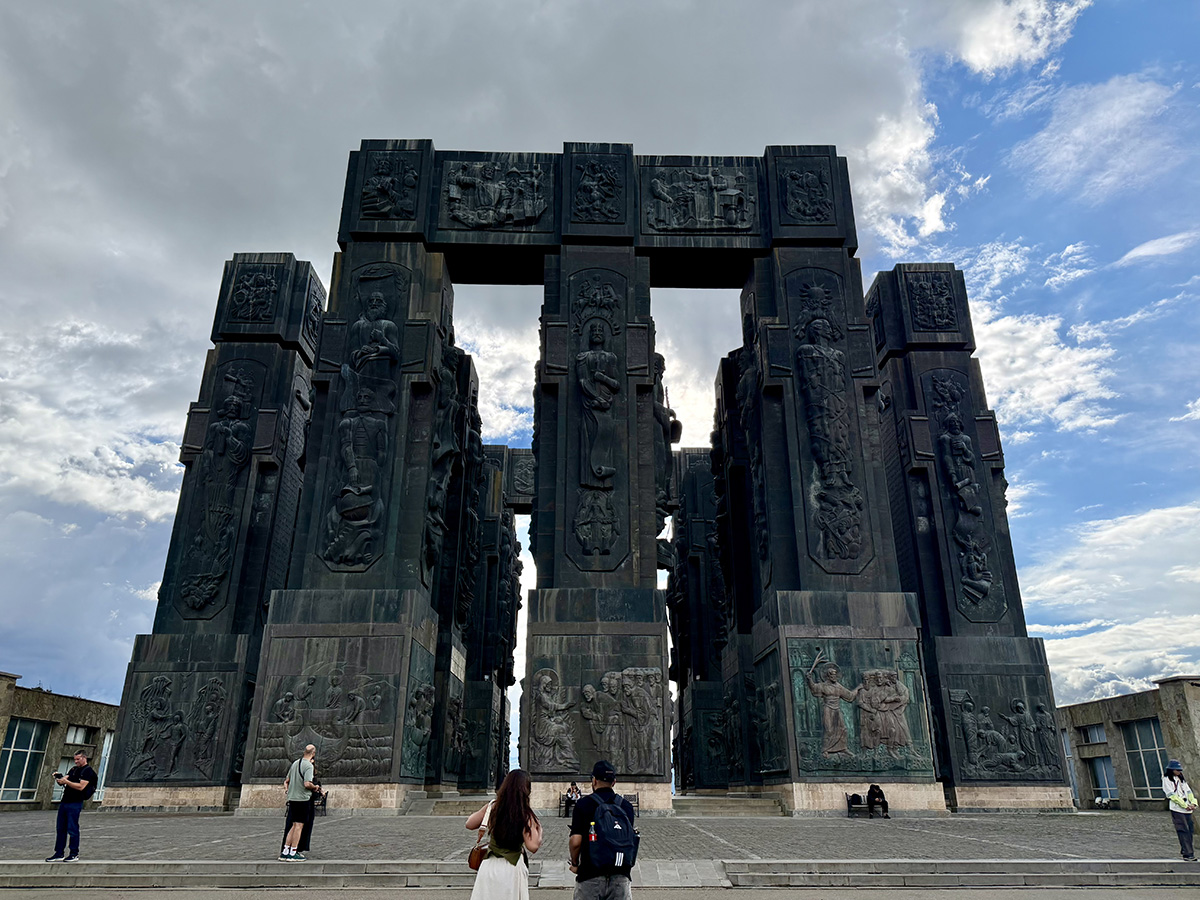
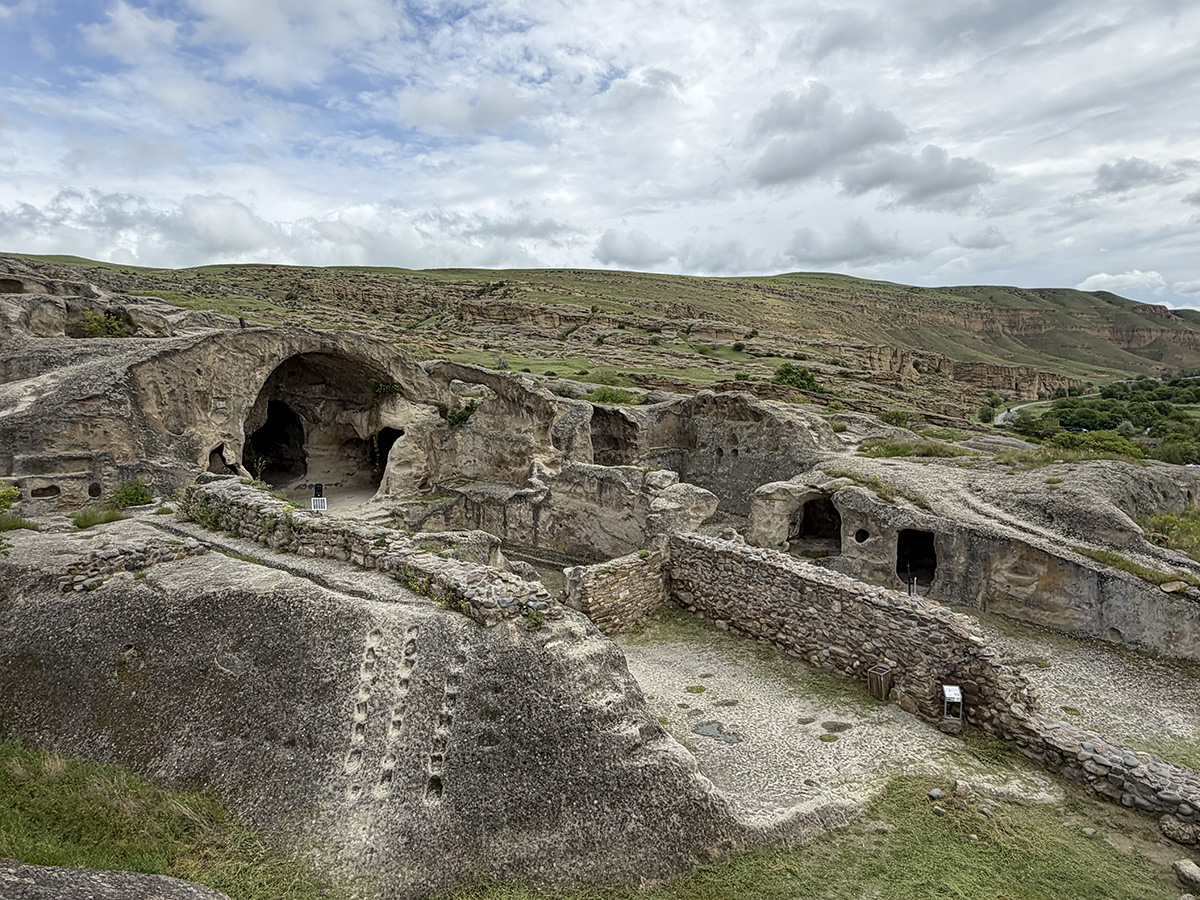
Tbilisi is an ideal base for day trips, and I visit the Iron Age cave city of Uplistsikhe, the sacred ancient capital of Mtskheta, and the colossal Chronicle of Georgia monument. But it’s Tbilisi that steals my heart. I spend my final evening at a sidewalk café with friends, sharing bottles of black saperavi and raising a toast to the soulful, stone-hewn country that gave the world the gift of wine.