

By Hannah Barricks
Photography by Thanin Viriyaki
Jarrod Oram was racing the sun when he saw the truck.
Somewhere on a back road to San Angelo, he was chasing golden hour toward the Texas Theatre, where he hoped to catch its old marquee in the last good light of the day.
He already knew the photograph he wanted.
Then he saw one he hadn’t planned for.
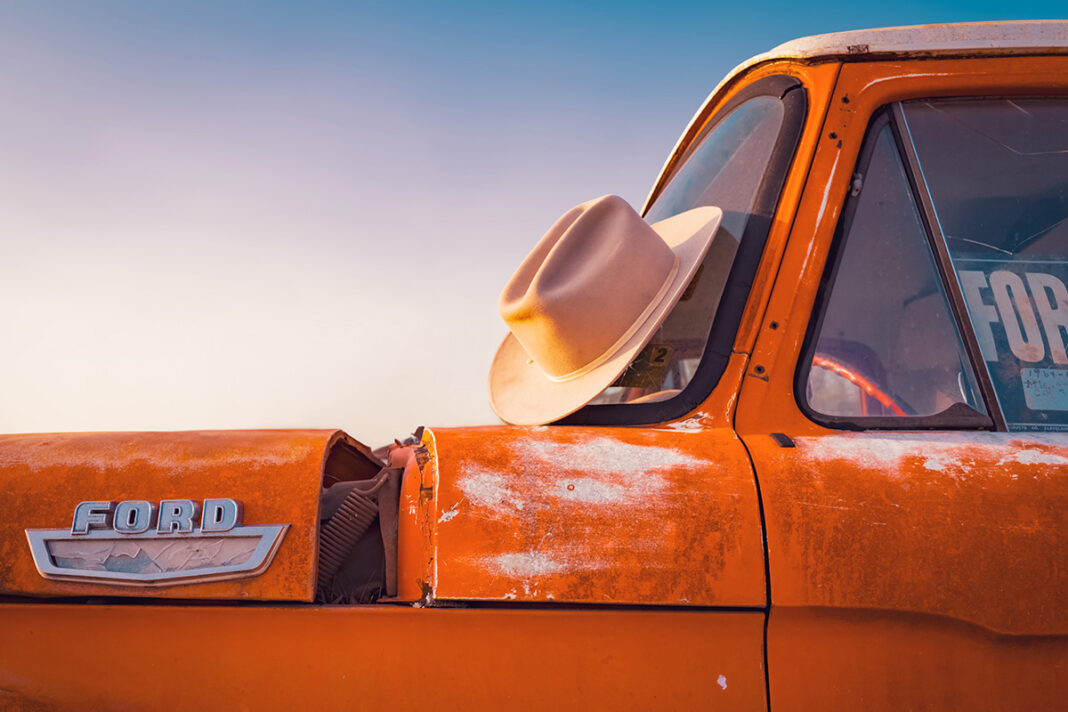
An aging Ford sat beside the road with a for-sale sign in the window.
Oram pulled over.
More than 60 years of Texas weather had worked the truck’s metal into rust, color and patina. For years, Oram had wanted to find an old truck like it and place his Chieffalo Americana cowboy hat on top. Now, one had simply appeared, with only a few minutes left to photograph it.
So he placed his hat on the Ford and took the shot.
The sun kept moving toward San Angelo without him.
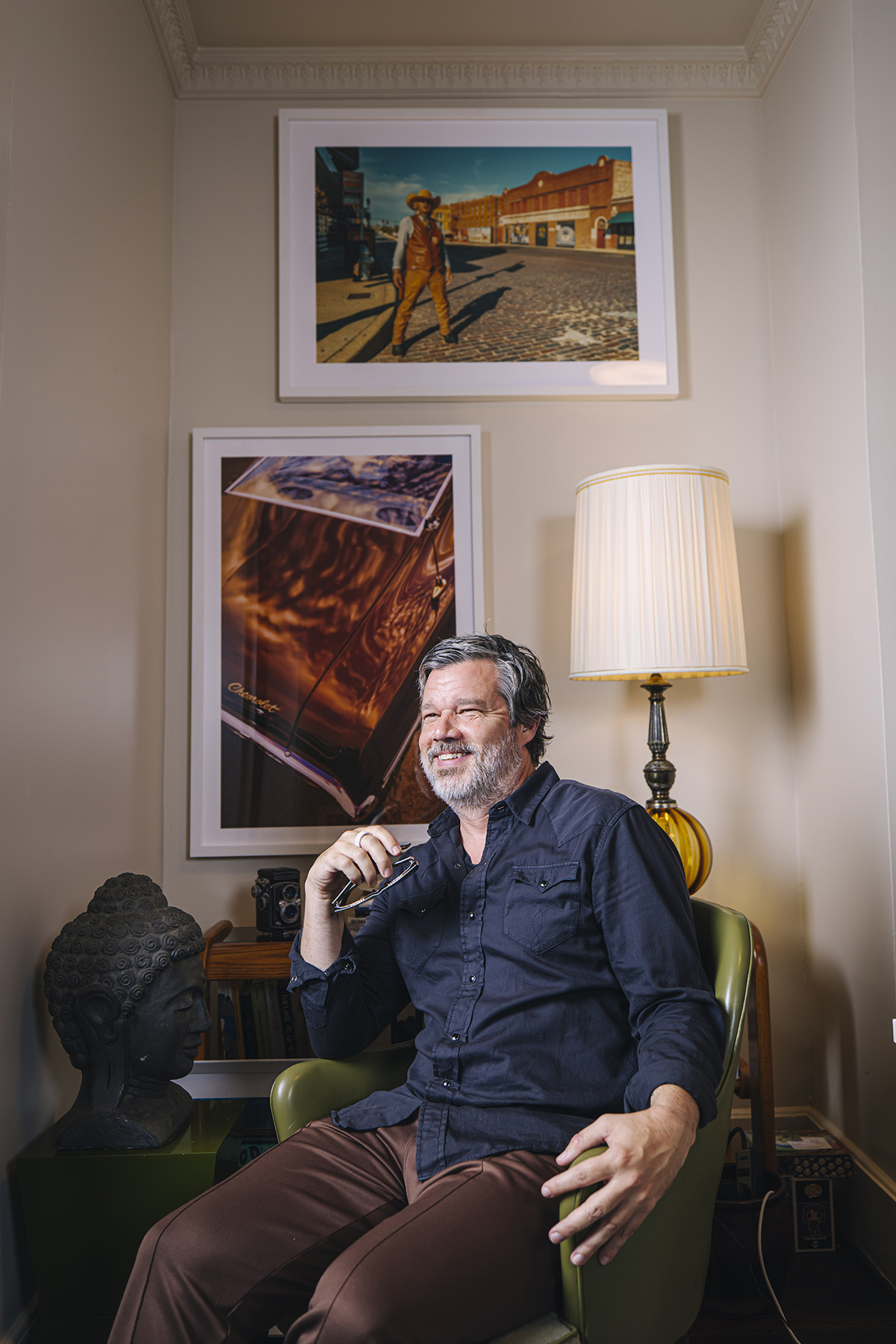
Inside the historic Cedars studio he shares with Fonde Interiors, Oram scrolls through photographs on his desktop, collected from years of similar detours.
“So much of my work is journey and not destination,” he says. “I’ll have something I want to get to, but it’s usually all the things along the way that end up being way more rad than I could have imagined.”
That is the paradox at the center of Oram’s work: He goes looking, but the best photographs seem to find him.
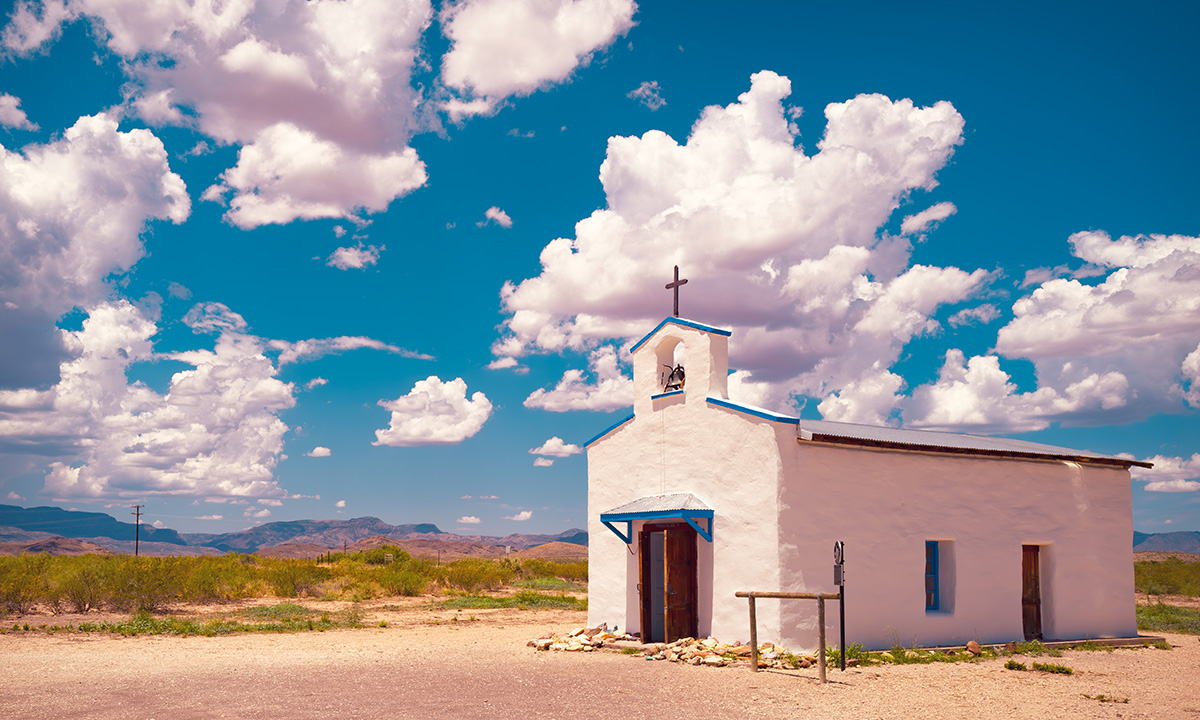
His large-scale fine art photography moves easily from a West Texas chapel beneath an enormous sky to a tunnel blazing with graffiti beneath London’s Waterloo Station. There are motel signs, empty roads, neon, boots, motorcycles, shadows, architecture and the occasional stranger who wanders into precisely the right place.
Ask Oram what he photographs, and the question almost misses the point.
“I don’t have a subject matter,” he says. “It’s the world.”
His business carries the tagline “You’ve Been Everywhere But Here,” a fitting invitation from a photographer interested less in documenting famous places than disrupting the way we see familiar ones. His clients may travel the world, he says, yet he can still show them something they have never noticed — sometimes in their own backyard.
Oram learned to look early.
He grew up in Arlington, the son of photographer Marty Seybold, whose wedding and portrait work frequently brought the family to Fort Worth. While his mother photographed brides and families at the Fort Worth Botanic Garden, Oram and his brother disappeared into its trails and trees.
The two photographers eventually developed very different bodies of work, but Oram recognizes something inherited in the impulse behind them: curiosity.
“I grew up seeing beauty prioritized,” he says. “There’s definitely that curiosity side to both of us — having to find things and really searching for something — that I got from her.”
Fort Worth became part of that visual education.
“Fort Worth, more than anything, has been a big part of my soul and my journey becoming an artist,” he says.
For more than 20 years, Oram trained that eye professionally in advertising and corporate creative work, building visual narratives for other people through print, television, video and digital media. When the pandemic arrived shortly after a move to Las Vegas, empty weekends and open roads gave him time to point the camera toward something else: his own point of view.

He drove. He looked. He photographed.
The solitude helped refine an aesthetic that had been there all along — architecture, Americana, color and light; evidence of people even when people themselves were nowhere in the frame. Eventually, Oram left advertising to pursue his photography full time.
That background still matters. Oram knows exactly what it takes to construct an image with crews, models and meticulous art direction.
He simply prefers not to.
“There are a lot of people chasing trends with highly produced, art-directed shots,” he says. “Coming from a production background, I know what that takes, and it’s beautiful. For me, I want something that feels timeless and true.”
In Oram’s version, the world gets to art direct itself.
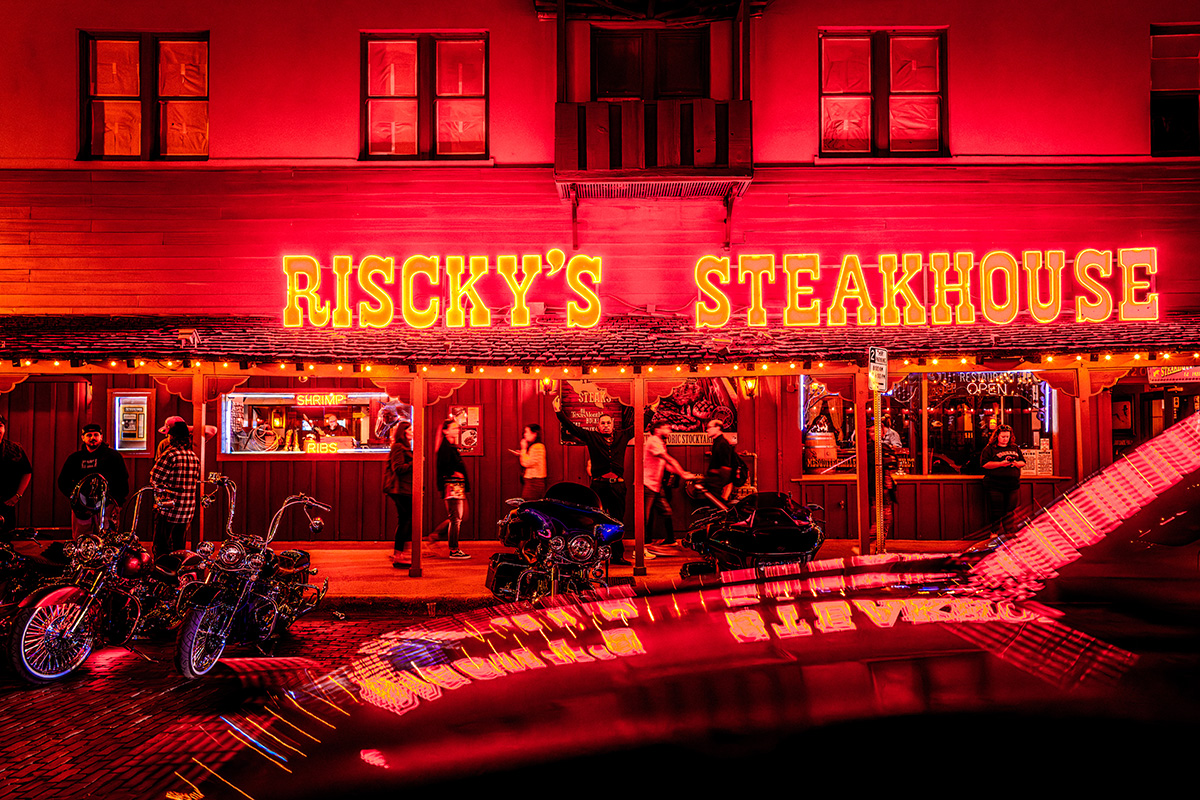
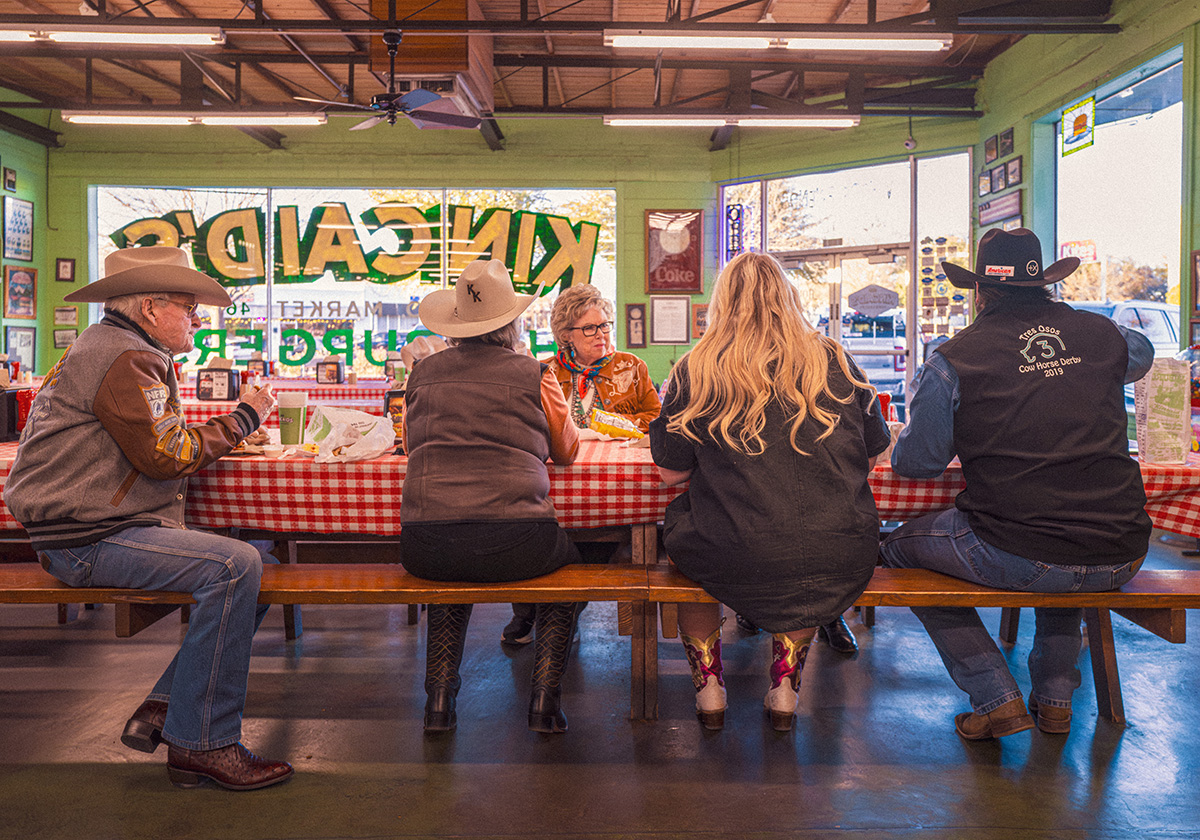
Outside Riscky’s in the Stockyards, that meant waiting about 45 minutes for the pieces of a photograph to align: motorcycles, chrome, passing cars, reflections and people moving through the frame. At Kincaid’s during the Stock Show, it meant noticing a family sitting together on a Friday night — burger on the table, vest, big hair and Kincaid’s signage layered behind them.
Oram asked permission and took the picture.
“This is about as Fort Worth of a shot as you can get,” he says.
And yet there is no skyline, no posed cowboy astride a horse, no visual announcement that says Fort Worth.
“How can I show Fort Worth without showing Fort Worth?” Oram says. “This is the way that I do it.”
It is an especially interesting question in a city moving quickly between identities. Glass and chrome rise alongside Art Deco remnants. The Stockyards welcome visitors from around the world while worn steps, old signs and weathered buildings hold onto evidence of the people who came before them.
Oram notices both.
There is a shorthand in the imagery — Stetson hats, boots, Stockyards patina, an old motel sign along Camp Bowie — without reducing the West to its iconography. His photographs are Western because the place is Western.
“With Texans, there’s definitely a shorthand we all kind of share,” he says.
His photographs are often displayed at a scale that makes looking unavoidable. At 60 by 40 inches, age cannot hide. A crack becomes a landscape. Rust becomes color. Decades of weather become texture.
“What it does in that blown-up detail is show the beauty in the cracks,” he says. “It can show something people have probably driven by — something broken or abandoned — from a totally different perspective. The beauty is the patina of this 62-year-old truck, which also took time to grow.”
The finished photographs may be large, but Oram’s process remains deliberately small: one Leica Q2 with a fixed lens.
Then he waits.
Sometimes the light changes. Sometimes a stranger crosses the frame. Sometimes moving a foot to the right changes the entire composition. Sometimes the thing he came to photograph never becomes the photograph at all.
That patience is less technique than discipline. Oram describes photography as meditative. When he worries about whether an image will sell or whether he has captured the perfect frame, his attention moves away from the moment in front of him.
“If I’m really being truly present in the moment, I’m not worried about any of that,” he says. “I just want to go out into the world and find something. If I’m finding something that brings me joy or curiosity, it’s going to show.”
There is an old chapel in far West Texas that proves his point.
Oram photographed it one morning before heading to Balmorhea to swim. The pictures were beautiful, but the sky was clear. Later, he passed the chapel again.
This time, the sky had changed.
Above the little building stretched the kind of enormous West Texas sky that can make almost anything beneath it appear momentarily sacred.
Oram stopped again.
He had already photographed the chapel. He just hadn’t finished seeing it.
Perhaps that is the trick to Oram’s photographs. The world does not need him to manufacture something interesting for the camera. It needs him to notice what it has already made.
He goes looking.
Then he lets himself be interrupted.