

Story and photography by Shilo Urban
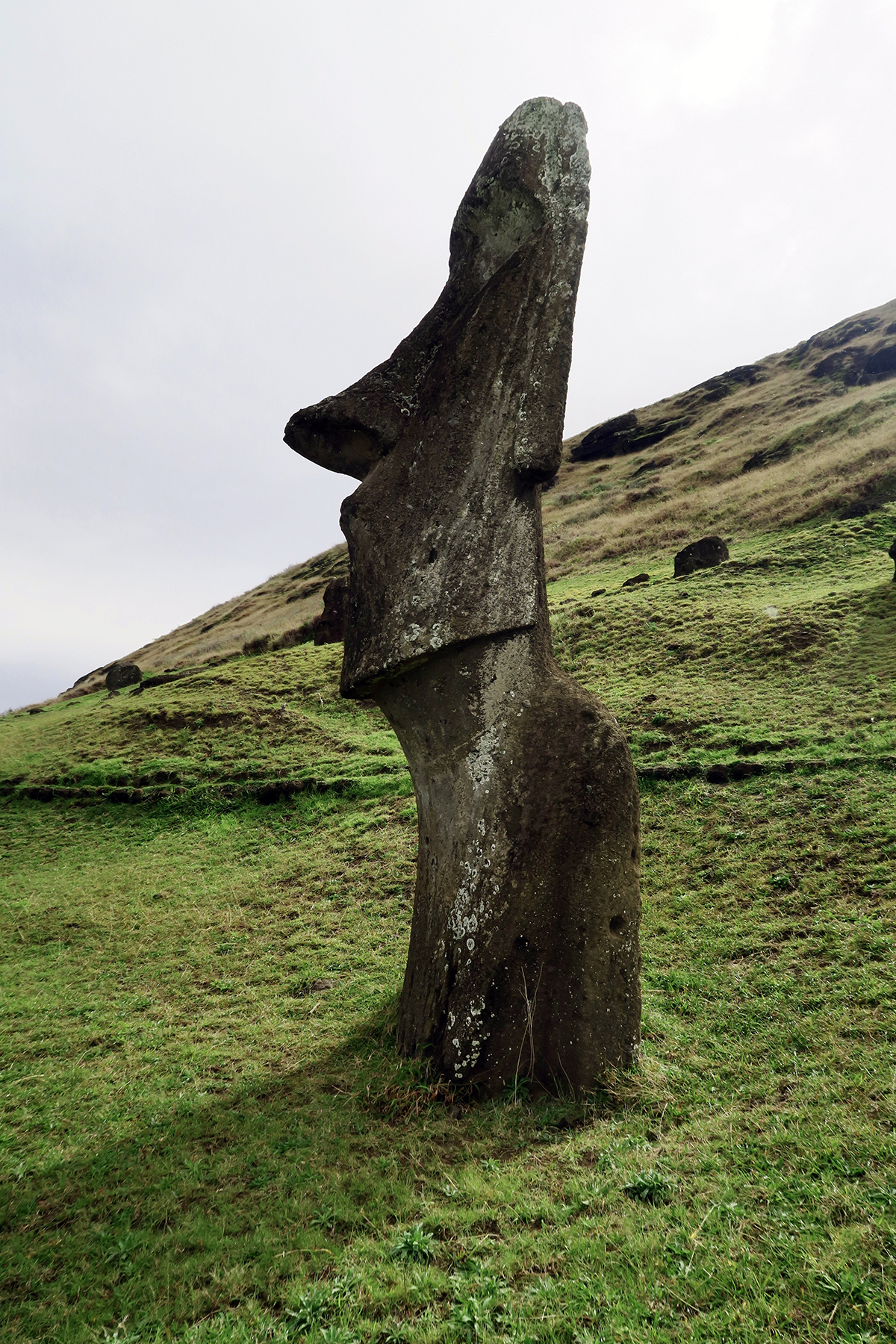
A massive stone head looms over me, staring down with empty eyes. It’s the size of a school bus tipped on the end, and it’s one of a thousand on Easter Island. Called moai, these humanoid megaliths ask tantalizing questions with their silence. Who carved them? Why? And what happened to their civilization?
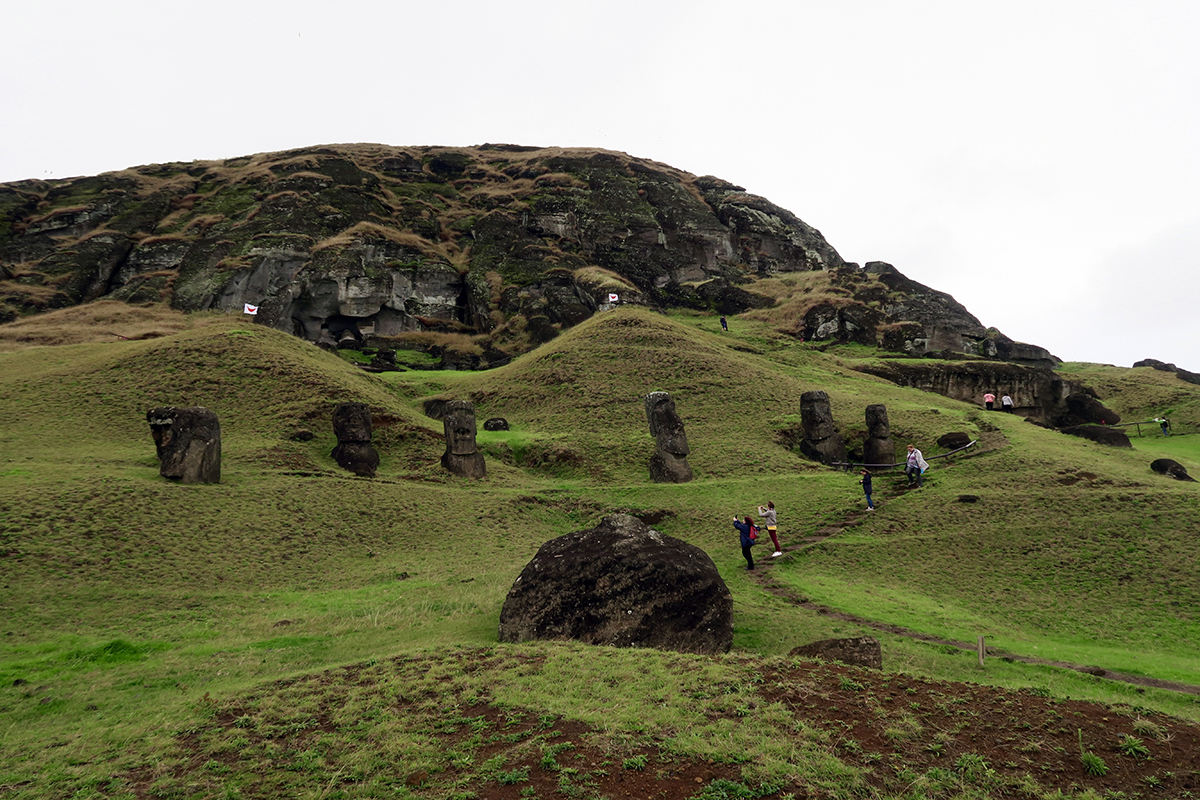
Morning mist casts an eerie mood as I wander through the island’s ancient quarry, a volcanic crater where 412 moai remain in various stages of construction. They tilt this way and that, kneeling or crumbling or buried or engraved with petroglyphs. Some stand finished and ready for transport; others are still embedded in the rock, waiting for release — including a 70-foot-tall, 270-ton monster named El Gigante. Another hundred moai have been abandoned on the roads leading out of the quarry.
It feels like the workers just dropped their tools one day and walked off the job, never to return. Archaeologists have indeed discovered stone chisels and obsidian drills discarded beside the statues. My goosebumps aren’t just from the chilly weather.
I’ve flown five hours over the Pacific Ocean from Santiago, Chile, to reach this speck of an island, also known as Rapa Nui. Just 15 miles long and 8 miles wide, it’s the most remote inhabited spot on the planet. Yet prehistoric Polynesians found it, arriving in double-hulled canoes around 1200 A.D. They brought food crops like sweet potatoes to establish a new society, along with chickens and, regrettably, rats.
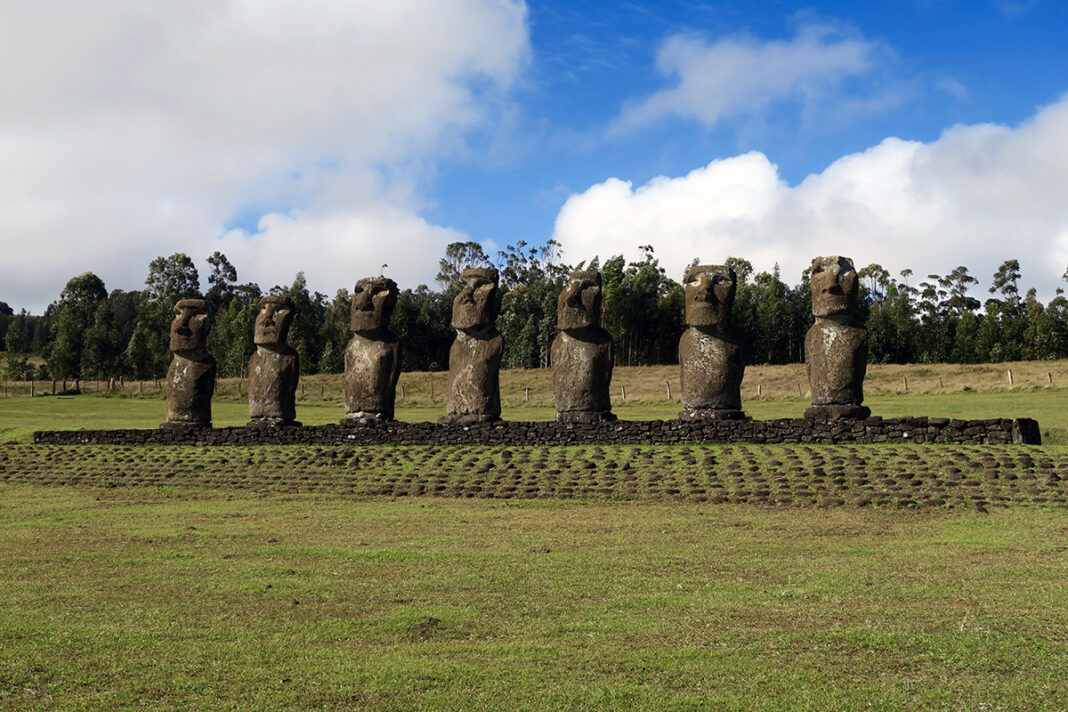
The voyagers landed at sandy Anakena Beach, now a swimming hotspot. Seven moai here face away from the ocean, looking not out to sea but keeping watch over a village no longer there. Some wear red headdresses, each a 10-ton stone cylinder.
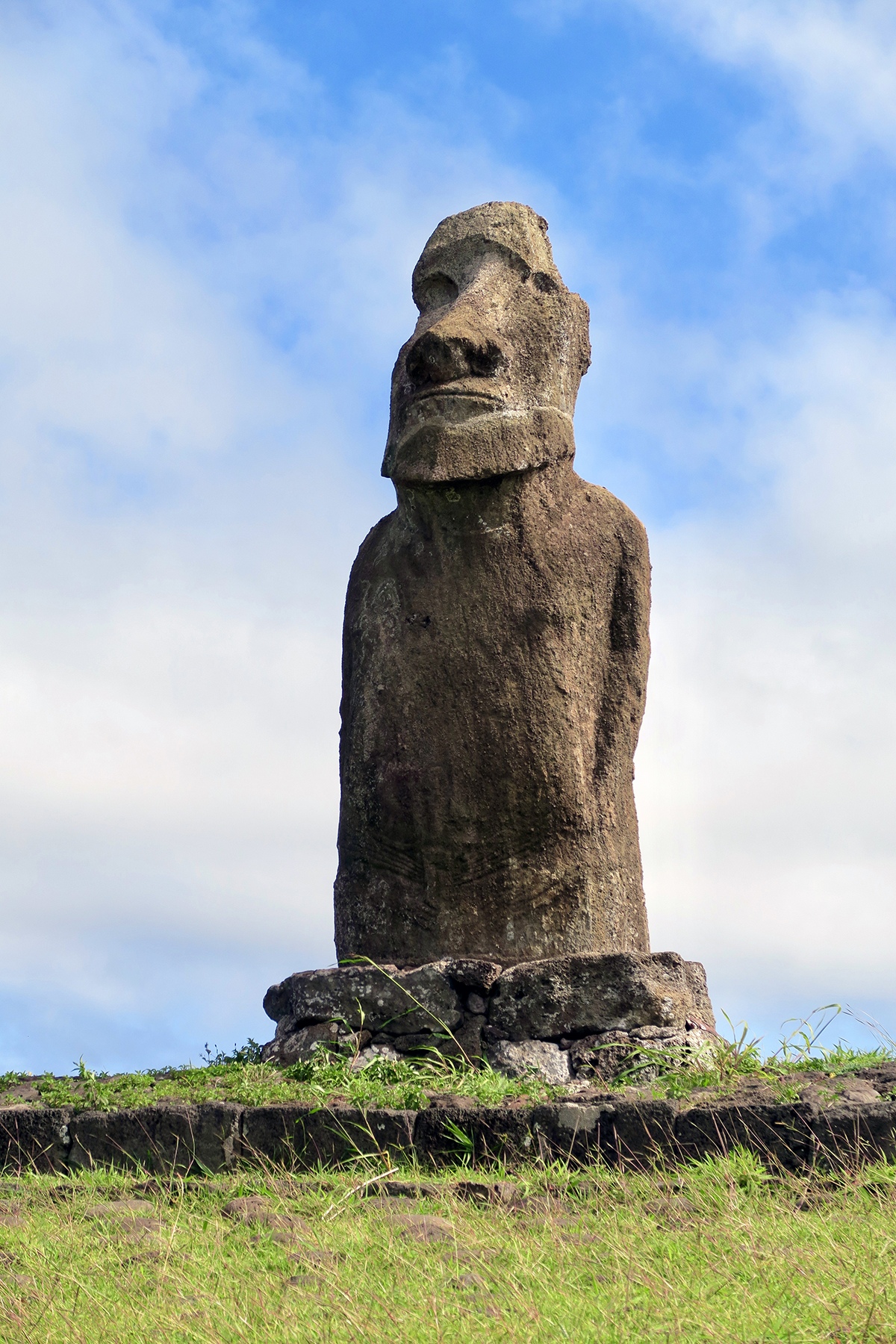
Moai didn’t always have vacant stares; white coral eyeballs with dark pupils once made them glower. One statue near my hotel wears a reconstructed set. I’m staying in the town of Hanga Roa, like every other traveler — it’s basically the only place you can stay.
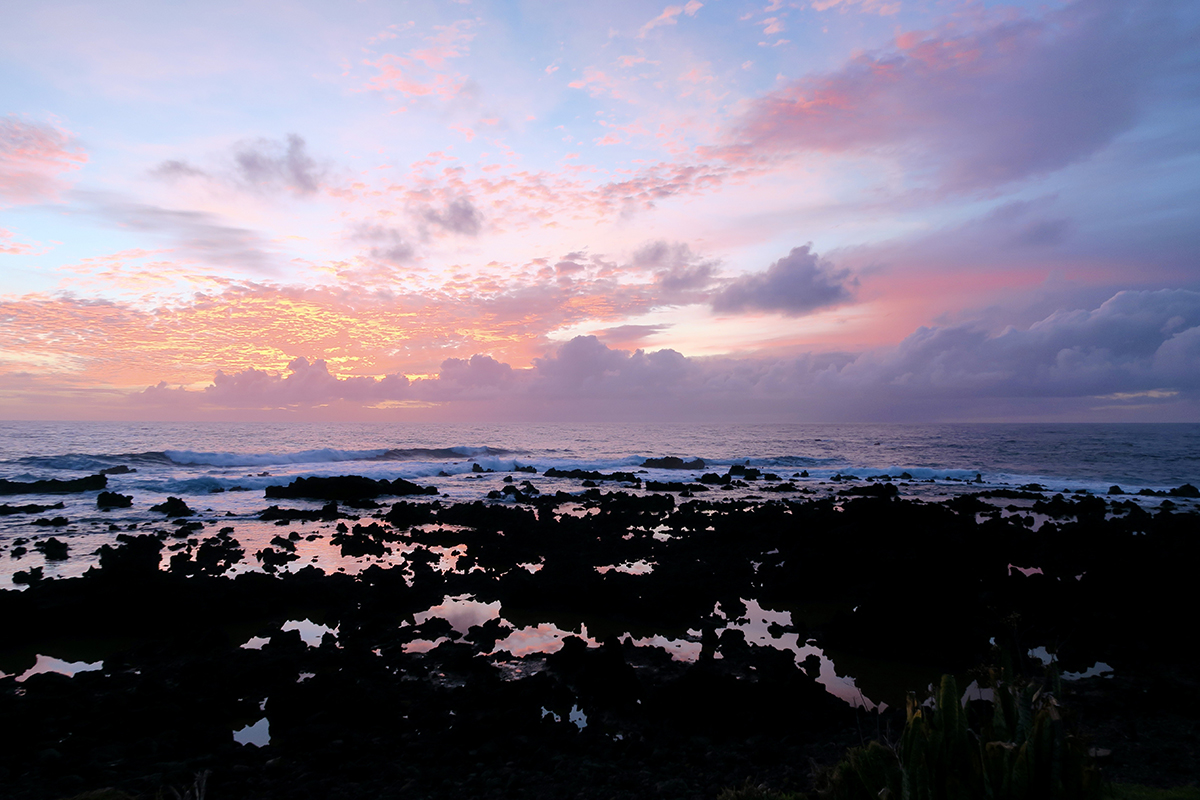
It’s small and walkable, with tourist cafes and empanada shops. I head to Tataku Vave restaurant at sunset for a waterfront feast of shrimp, octopus and a delectable native lobster with the unfortunate name of rape-rape.
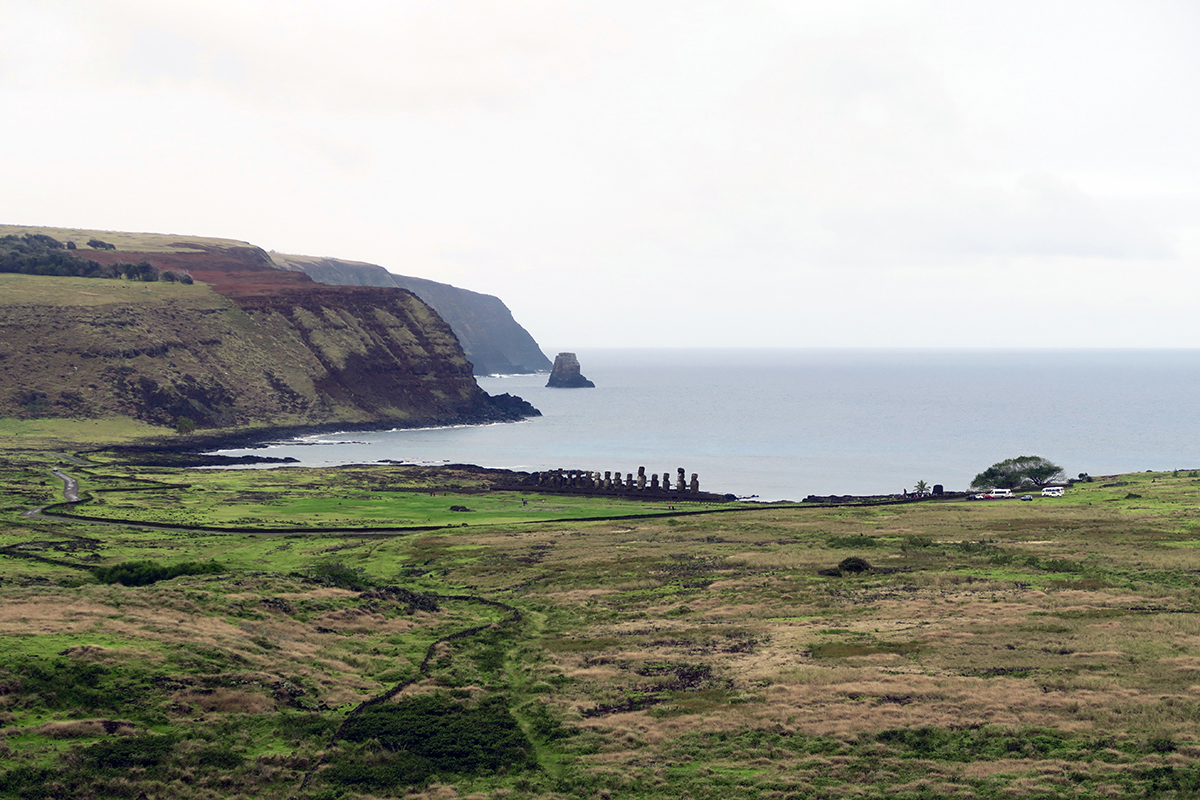
Rapa Nui’s early residents also feasted on nature’s bounty: deep-water fish caught in oceangoing canoes, juicy birds and hearts of palm from the towering trees covering the island. Their numbers soared. They cleared more land for farming and started building statues like crazy. The moai, which possibly represented ancestral chiefs, were hauled from the quarry all across the island (no one is quite sure how) and erected on long stone platforms called ahu. Almost all stand on the wind-whipped coast, including the impressive strand of 15 moai at Ahu Tongariki. Some take their bearings from the stars; seven identical giants at Ahu Akivi align with the autumn equinox. One unnerving outlier rises inland, grabbing its belly with four hands.
I discover more and more moai, but I don’t find any answers. My guide Alejandro, a descendant of the original settlers, tells me the quarrying commenced “at the beginning of time.” At first, I’m annoyed because it’s clearly untrue. Then I realize that any book can tell me the official story of Rapa Nui, but I may never have another chance to hear a local’s perspective. Alejandro weaves a tale of supernatural chickens, globe-circling ancestors and a dark era of despair — when all the moai were toppled.

For centuries, the islanders had reveled in abundance, clearing ever more land and carving bigger and bigger moai. But by 1500, things began looking grim. The trees disappeared — all of them, their seeds eaten by rats and their trunks harvested for fuel, housing and moai construction. No more trees meant no more seaworthy canoes, and no more deep-ocean seafood. Extreme deforestation prompted soil erosion and poorer crop yields. The birds went extinct. As resources ran scarce, workers deserted the quarry and warfare erupted. Residents started knocking down rival clans’ moai and moved into caves for protection. All was not well on Rapa Nui.
Then in 1722, on Easter Sunday, three wooden ships appeared offshore. Europe had arrived, bringing disease and eventually, slave traders. By 1838, the islanders had knocked down all thousand statues, and four decades later, only 111 inhabitants were left.
No site epitomizes the rise and fall of Rapa Nui like Ahu Akahanga, where the toppled moai lie where they fell. Almost all the moai have been restored and re-erected by archaeologists. Not these. Standing before the facedown, broken moai, I shudder with a visceral sense of the loss, fear and anger the islanders must have felt as their society collapsed. Remnants of houses and chicken coops here speak of their thriving civilization…and the dank caves where they sheltered whisper warnings of their demise.
Yet there’s another facet of this fascinating story: resilience. Today, more than 5,000 Rapa Nui descendants, like Alejandro, live on Easter Island.
We may never know why the islanders expended such extraordinary efforts to build and move moai, even as their world fell apart. But travel, perhaps, isn’t really about finding answers to your questions — it’s about seeking them.