

By Rachael Lindley
Photography by Crystal Wise
Some artists paint the West, while others seem to carry it.
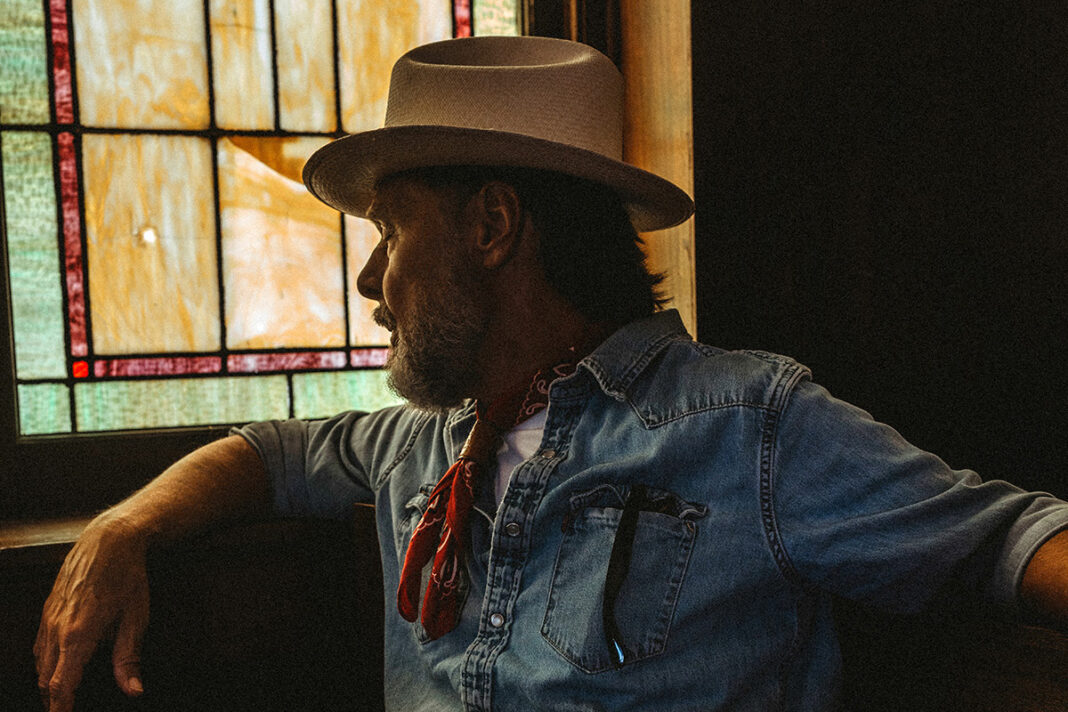
Meandering through downtown Weatherford with artist Jon Flaming, I begin to understand something about his work. It occurs to me that his bold, geometric paintings aren’t stitched together from the usual Texas clichés. Instead, they evoke the spirit of a bygone era of Texas regionalism.
Much like Flaming himself, the paintings are deeply rooted — first in a Kansas ranch, then in modest church pews, dusty back roads, and the stories shared between former strangers who became friends.
Flaming possesses a warmth that disarms. He speaks plainly about his process and his subjects, without pretense, and although his paintings hang in sprawling homes across Texas and in numerous museum collections including the Amon Carter in Fort Worth, the values represented within each remain remarkably uncomplicated.
“My earliest memories were of my grandfather running cattle,” Flaming says. “We had humble beginnings, and I’m thankful for that.”
Before he was one of Texas’ most recognizable contemporary Western artists, Flaming was just a kid — albeit one deeply captivated by creative pursuits. His father worked as a music director for small churches during the day and at a gas station in the evenings to support his family. His mother taught piano lessons, and music consistently filled the house. Under his parents’ supervision, the ranch shaped Flaming’s imagination, and his faith quietly informed both.
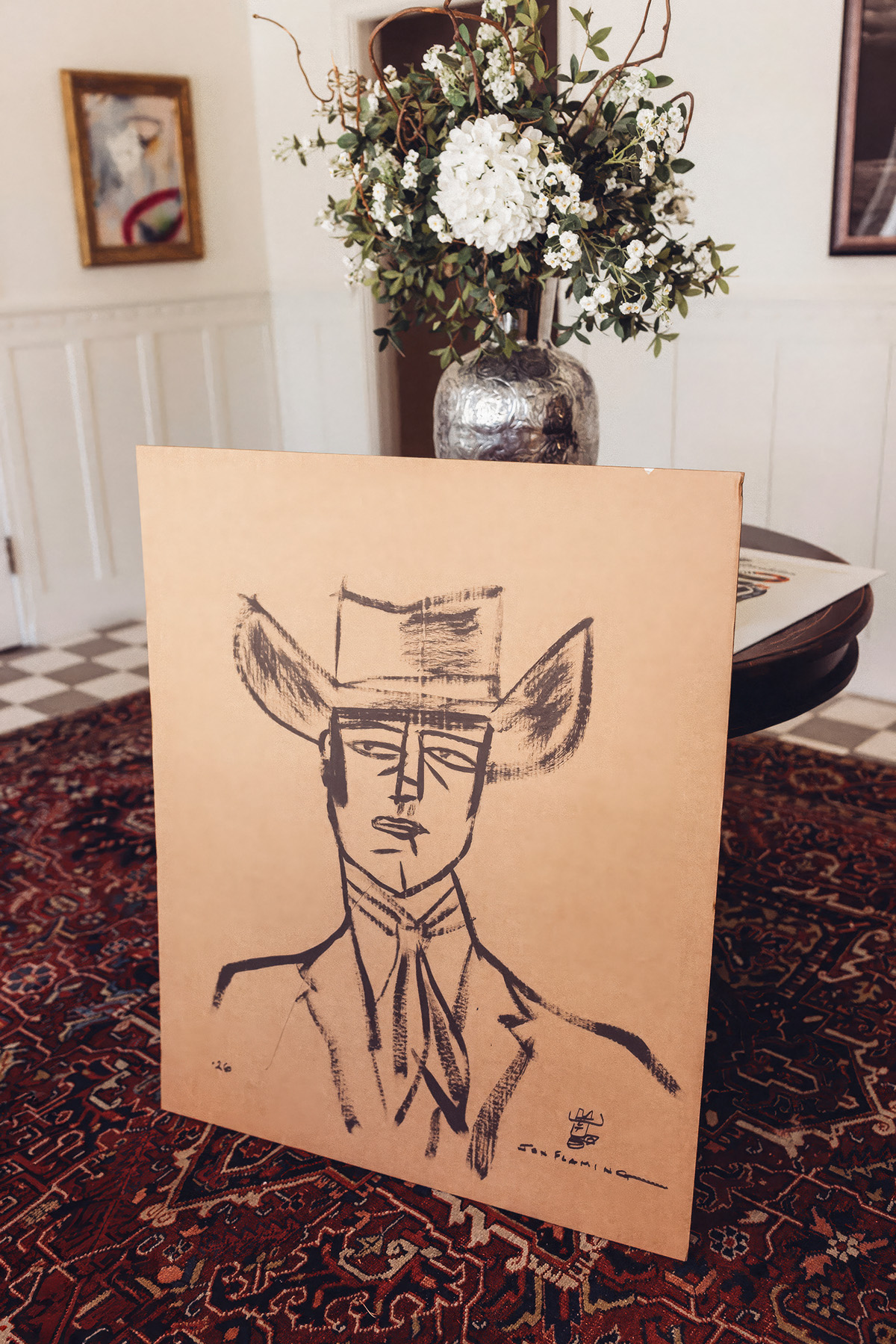
Those early influences remain central to his creative expression and continue to ground his work today. In an effort to increase accessibility, the artist manages a “you find it, you keep it” giveaway on Instagram, where he sketches one of his iconic original works onto whatever scrap material sits nearby, be it cardboard or book pages, and films the process as another clue for viewers, and unceremoniously abandons the keepsake at an undisclosed location for some lucky collector to track down.
On a particularly sweltering day last month, I was lucky enough to witness the process firsthand behind The Jazz Chapel in Weatherford.
It took the mother-daughter duo just 13 minutes to identify the sketches’ location and retrieve it.
Part treasure hunt, part gift, the project grew out of what Flaming describes as an ongoing conversation with God. The artwork often disappears within minutes of his placing it, discovered by complete strangers turned explorers, like the mother and daughter I saw in Weatherford.
“I love giving it away,” he says.
For Flaming, the experience is about far more than an object, with the story surrounding a piece often becoming just as important as the art itself.
“It’s me who’s actually receiving the biggest blessing.”
While Flaming grew up sketching on the ranch, art wasn’t his only passion. He was a well-rounded student, playing football at Richardson High School and eventually building a successful branding agency, creating campaigns for companies including Neiman Marcus, American Airlines, Sony and FedEx. That design background continues to define his visual language.
“Creativity is subtraction,” he says, summarizing a philosophy that has become central to his work. “The hardest thing is stripping an idea down to its most essential form.”
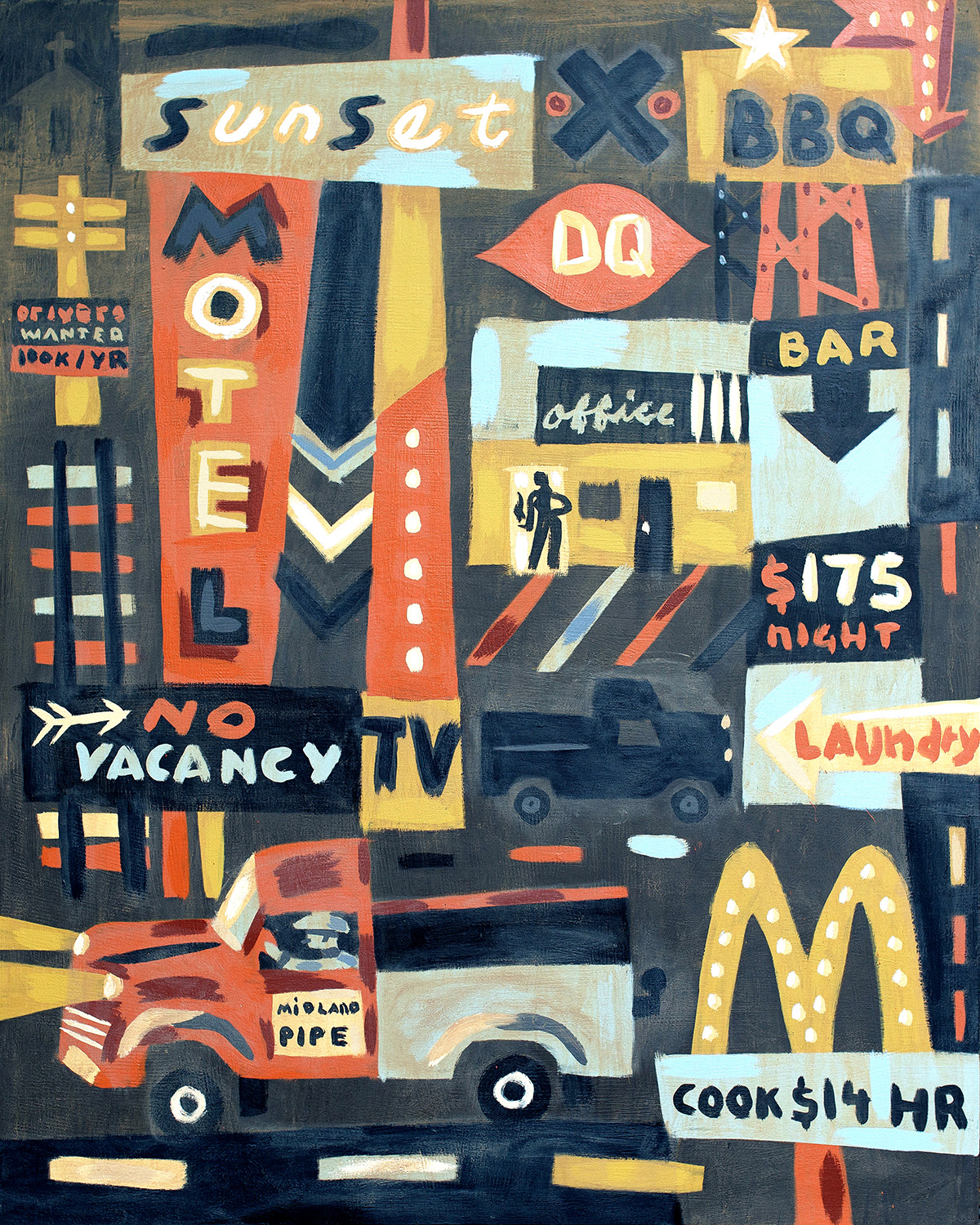
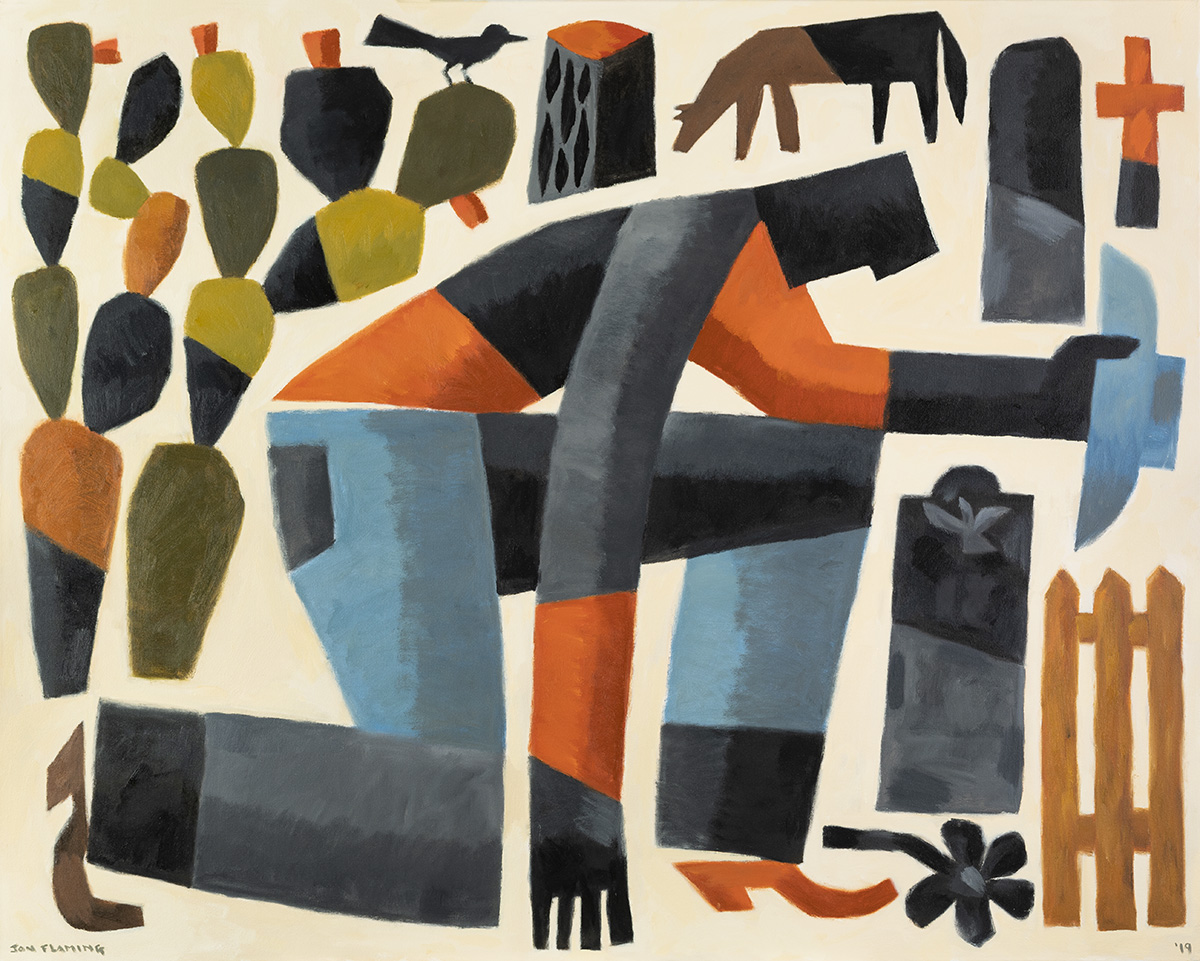
The ideology is immediately recognizable in his signature “Modern Cowboy” series.
Rather than recreating the romantic realism of Frederic Remington or Charles Russell, Flaming chose a different path. Inspired equally by Paul Rand’s graphic design, Picasso’s cubism, children’s drawings and ancient cave paintings, he distilled the American West into bold shapes, dramatic colors and unmistakable silhouettes.
“I saddled a fresh horse and blazed a new trail,” he says brightly.
But it was a gamble.
When he introduced the style in 2017, Flaming risked leaving behind collectors who had embraced his earlier impressionistic Texas landscapes. But instead, the work resonated across generations.
Young collectors appreciated the contemporary aesthetic. Longtime Western art enthusiasts connected with its unmistakably Texan soul. Interior designers found oversized canvases that fit modern architecture while still celebrating ranching heritage.
The paintings were unmistakably Jon Flaming.
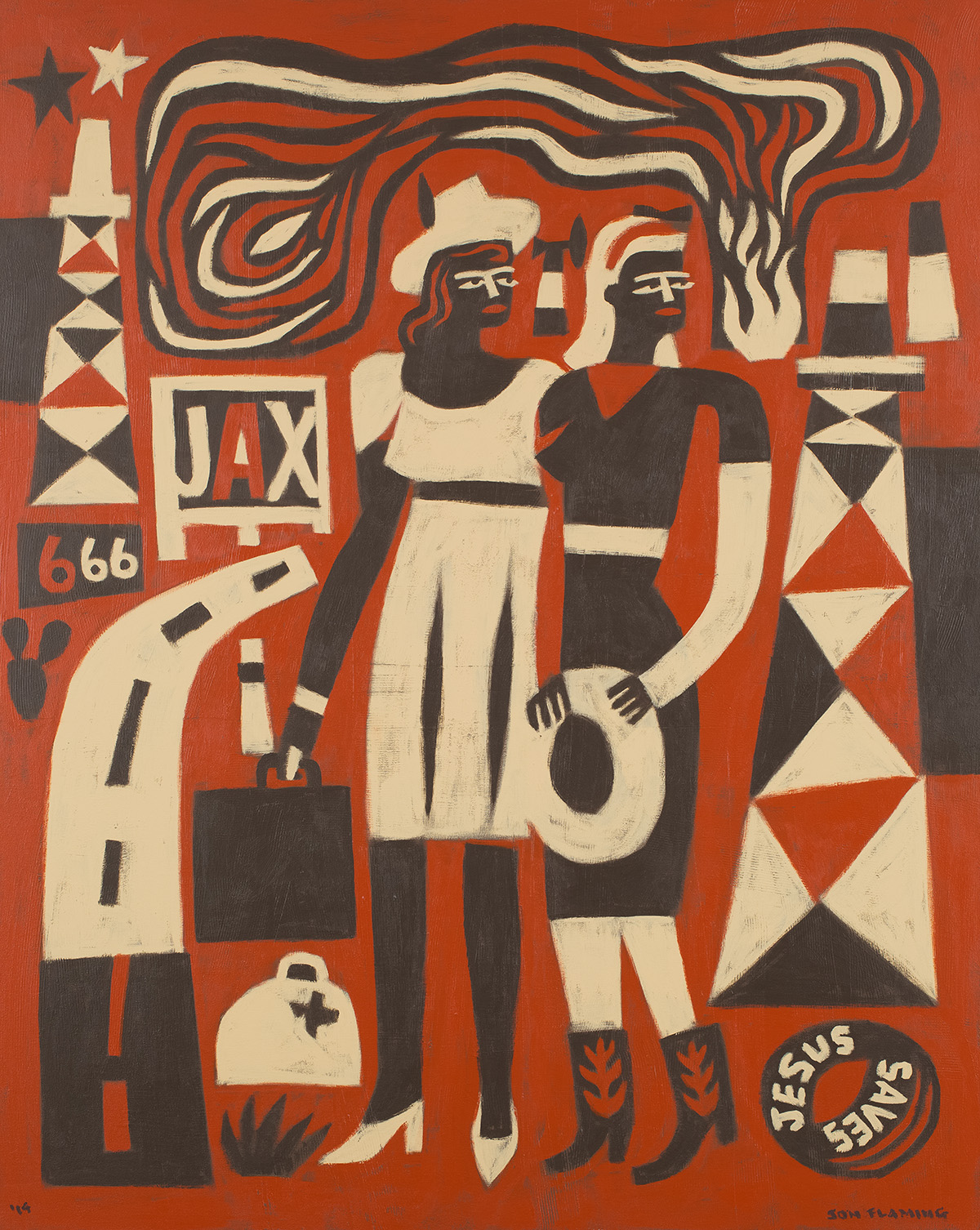
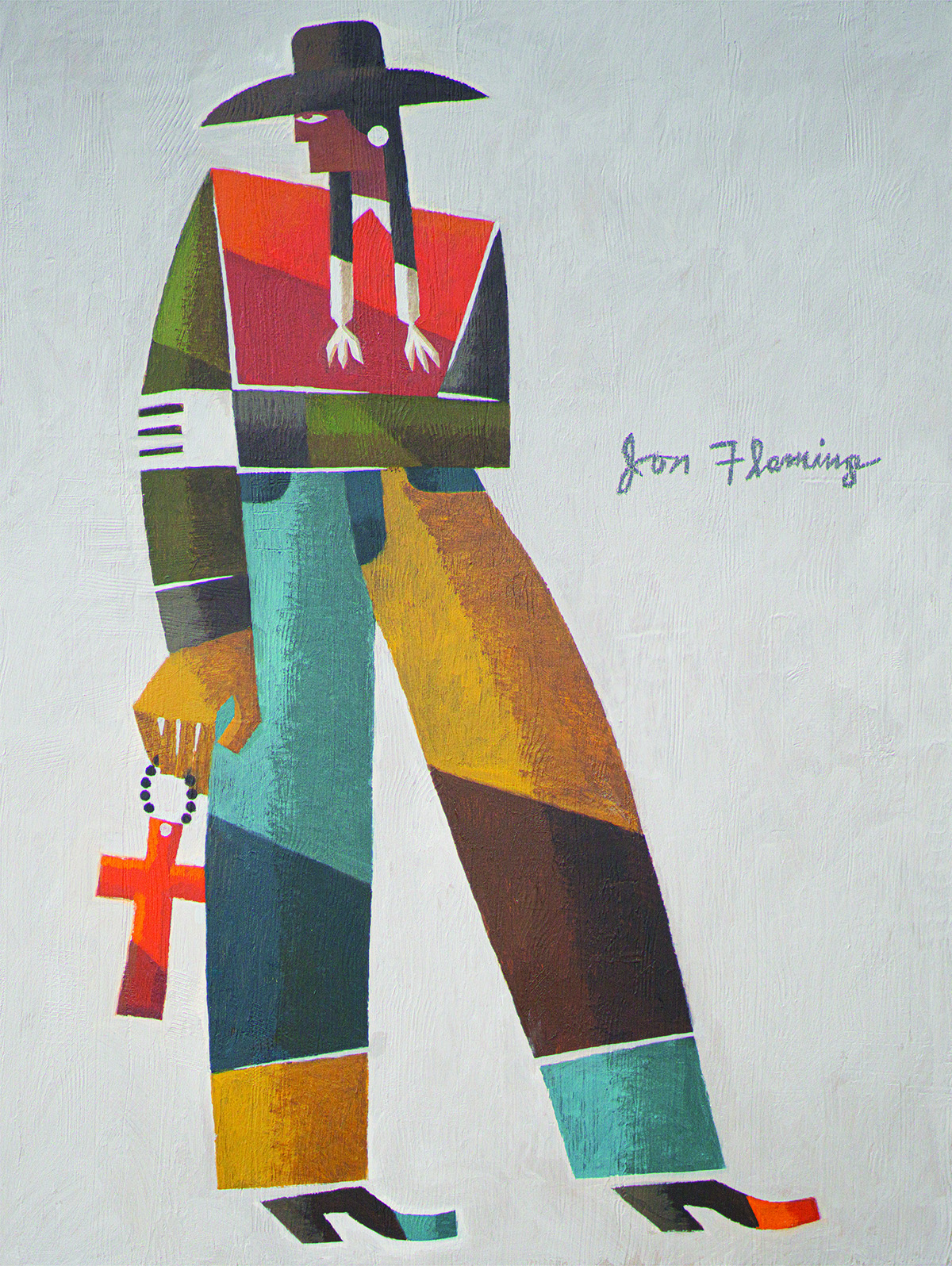
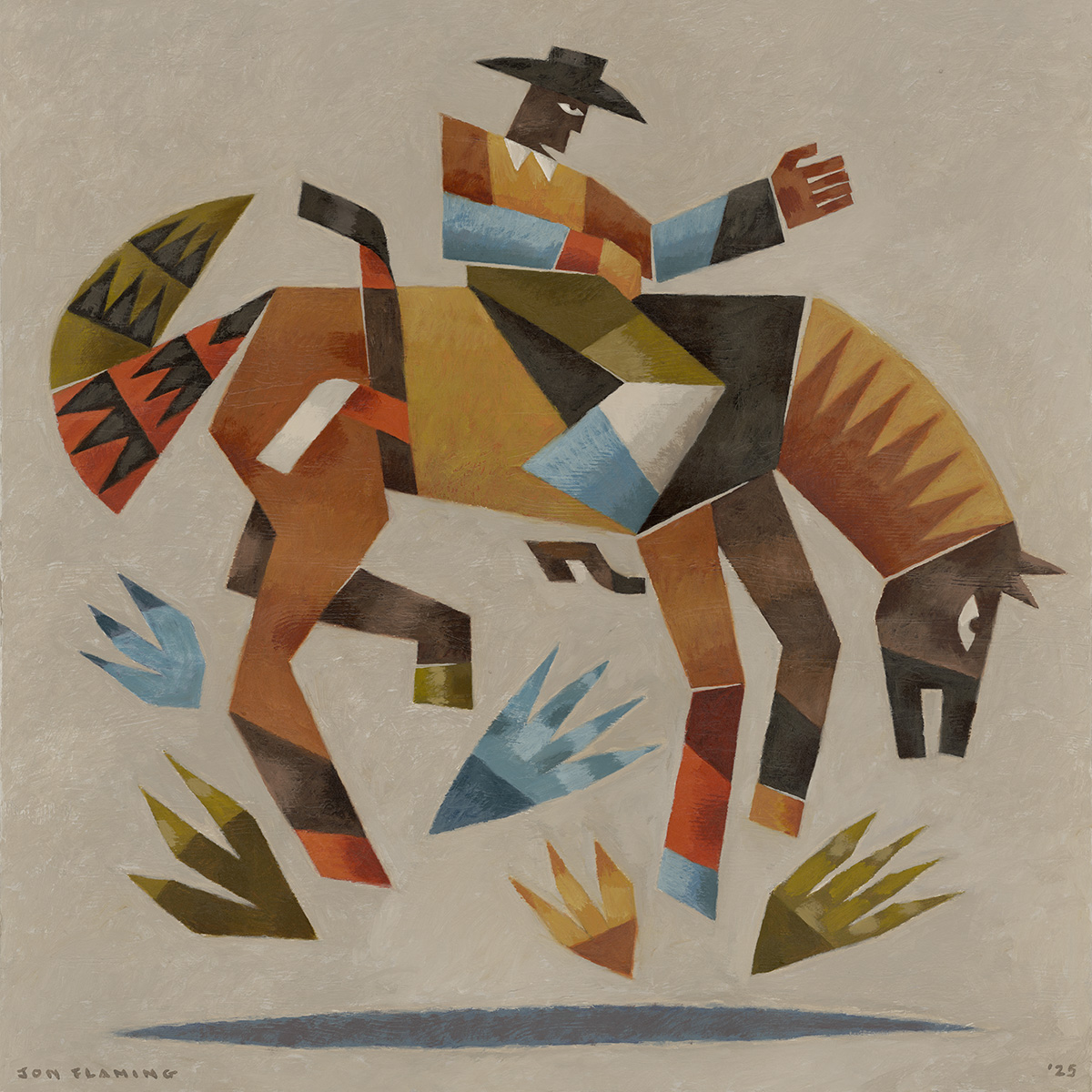

Perhaps no story illustrates that philosophy better than Birdston Valley.
While exploring forgotten back roads near Streetman, Texas, Flaming stumbled upon the remains of a tiny Freedmen’s community cemetery tucked behind an abandoned white clapboard church. Over the next decade, it became a place of quiet reflection before he finally met descendants returning to clean the graves of their ancestors.
When he asked how he could help, they spoke of practical needs: fencing to keep cattle from damaging headstones, a proper cemetery sign and clearing overgrown burial grounds.
Flaming responded the way he knew best.
He created an exhibition inspired by the community’s history, directing proceeds toward restoring the cemetery. The project funded a new entrance sign, rebuilt fencing and preservation work while forging lasting friendships with families who still gather there today.
Years later, when the cemetery’s matriarch, Mary Bolden, passed away, her family asked Flaming to attend her homegoing service.
For him, that invitation remains one of the greatest honors of his career.
The experience speaks to what separates Flaming from many contemporary artists. His work isn’t merely about documenting Texas, but participating in it.
Whether he’s photographing forgotten highways through the frame of a vintage television set, creating monumental cowboy portraits or leaving surprise drawings in rural towns, Flaming approaches creativity as a way of building relationships.
“The breakthrough is in the work,” he says. “Inspiration exists, but it must find you working.”
That mindset continues to propel him forward.
A second solo exhibition at the Museum of the Southwest is on the horizon, alongside new public art projects and a long-awaited coffee table book. But even with museum exhibitions and growing national recognition, Flaming remains drawn to the same places that shaped him decades ago: ranches, rural roads, weathered buildings and the people who keep Texas’ stories alive.
His paintings may look strikingly modern. Their heart, however, is timeless.