

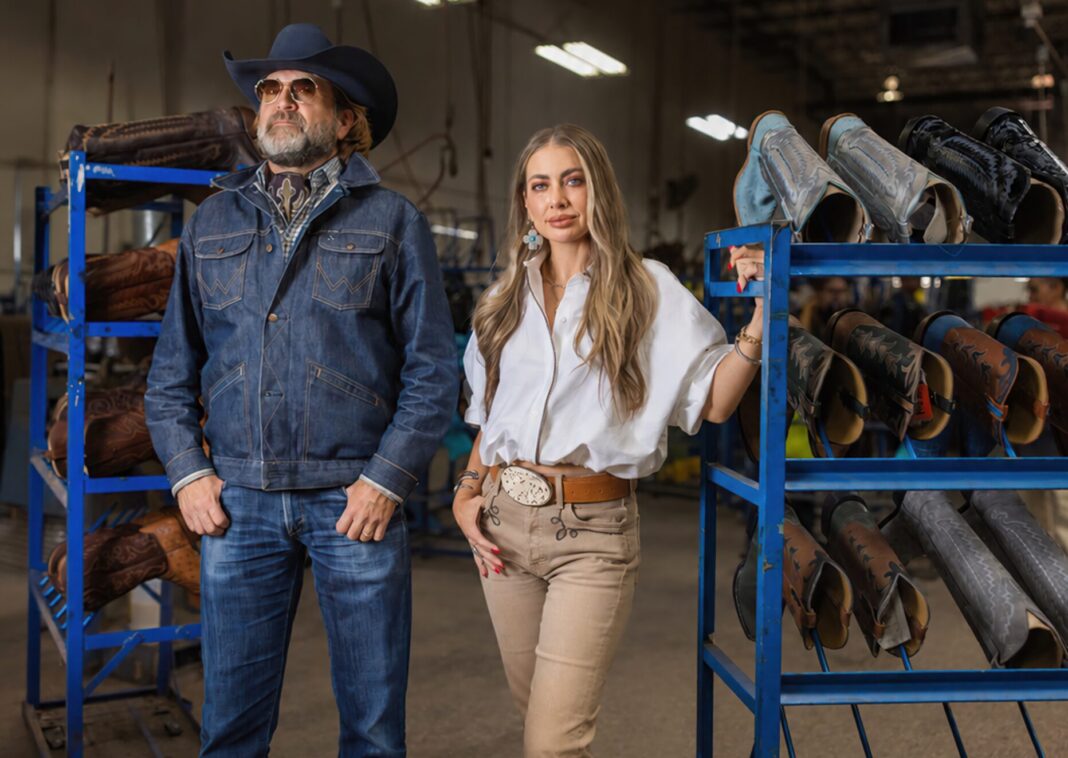
By Rachael Lindley
Photography by Crystal Wise
There is a particular kind of luxury that cannot be hurried. It lies not in extravagance for its own sake, but in the quiet confidence of something made exceptionally well — in the precision of a stitch, the richness of hand-finished leather and the subtle details that reveal themselves only upon closer inspection.
For Lucchese, the storied American bootmaker, that philosophy has shaped its identity for more than a century.
Founded in San Antonio in 1883 by Italian immigrant Salvatore Lucchese and his brothers, the company has evolved from a modest bootmaking shop into one of the most recognizable names in luxury Western footwear. Its reputation rests on meticulous construction, quality design and an enduring respect for the artisans who hand-build each pair.
To understand what makes a pair of Lucchese boots exceptional, one must look beyond the finished product and into the El Paso factory, where generations of craftspeople have devoted their lives to perfecting the art of boot making.
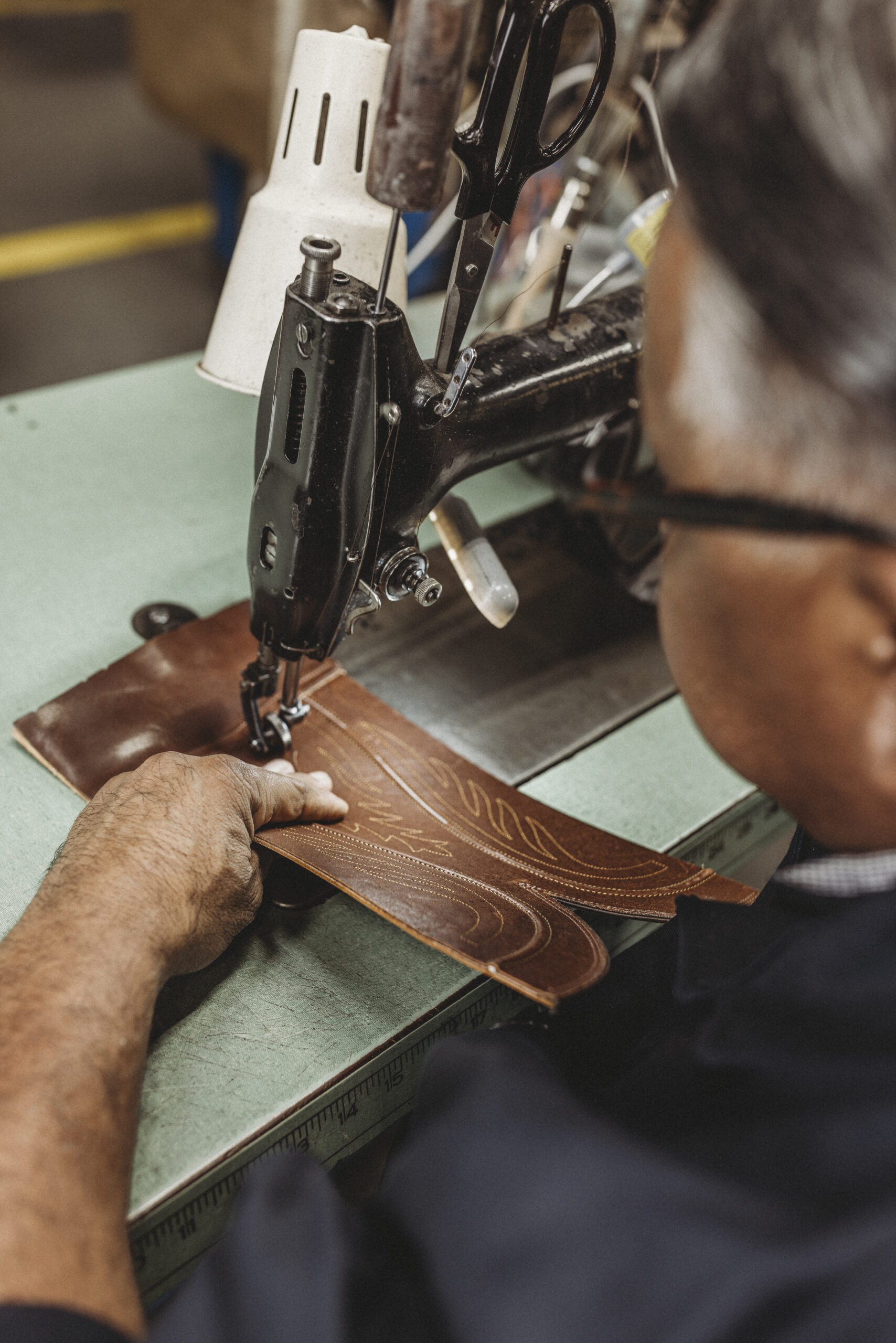
Amid the rich scent of leather and the rhythmic hum of machinery, tradition isn’t merely celebrated; it is practiced daily. A single pair of boots may pass through as many as 200 hands before completion, with each person contributing a specialized skill. Some sewing machines are nearly a century old, kept running by a full-time mechanic who fabricates replacement parts that are no longer commercially available. Nearby, second-, third-, and even fourth-generation bootmakers work alongside colleagues with four decades or more of tenure.
This continuity of knowledge lives not in instruction manuals, but in the muscle memory of artisans who understand instinctively how leather should feel, stretch and respond beneath their hands.
For Trey Gilmore, Lucchese’s director of product development and men’s design, those individuals represent the company’s greatest asset.
“Without those 250-plus folks down there, we’re nothing,” he says. “This is the heart and soul of who we are and what we stand for.”
Gilmore’s appreciation for craftsmanship began long before his career. Raised south of Abilene amid the cattle, sheep, and traditions of West Texas, he grew up watching his father, who considered dressing well a matter of personal pride. Gilmore inherited that same quiet dignity.
“My pops was a fanatic not only over cowboy boots, but just the way he dressed,” Gilmore recalls. “He always looked extremely put together.”
Gilmore entered Western retail almost by accident. In 1996, a trip to a local shop to have his hat cleaned and shaped before a date led to an unexpected job offer. He spent more than 13 years in retail before joining Lucchese in 2009, bringing an intimate understanding of the Western customer and the heritage that shapes the industry.
Today, Gilmore’s work draws on both the American West’s landscape and the company’s extensive archives.
“A lot of it comes from our surroundings — the landscapes, the skies, the colors in the sunset,” he explains. “But most importantly, we are inspired daily by our founders and our archives.”
Those archives hold more than a century of patterns, silhouettes and sketches, many of which modern consumers have never seen. Rather than simply reproducing the past, Gilmore and his team look for opportunities to reinterpret it through new materials, unexpected palettes and evolving construction methods.
“We refer back to our archives often to breathe new life into an old design or pattern,” he says.
That balance between preservation and reinvention is especially evident in the company’s approach to leather. In Lucchese’s finishing department, color is an art form. Hides that begin in nearly identical base shades can transform, gaining depth and dimension through successive pigment applications and painstaking handwork.
Gilmore considers the proprietary hand-staining program one of Lucchese’s defining advantages. “We have two or three base colors that we can turn into two or three hundred,” he says.
This technique grants the workshop complete control over its palette, yielding distinctive patinas that conventional leather sourcing cannot replicate. Among the most iconic is Black Cherry. It appears ebony at first glance, but a deep, warm burgundy shines through. Its richness comes from a carefully orchestrated sequence of treatments refined over decades.
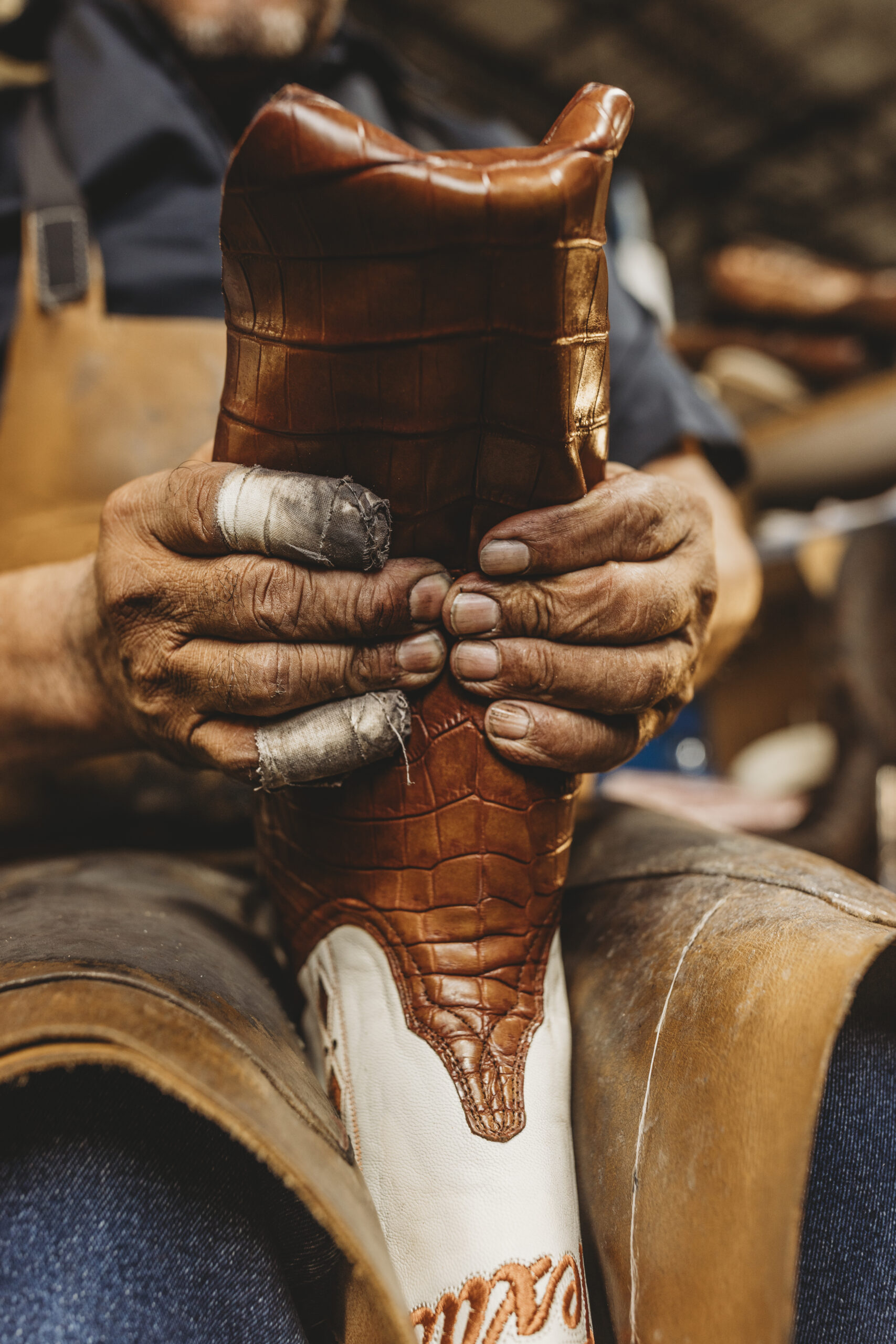
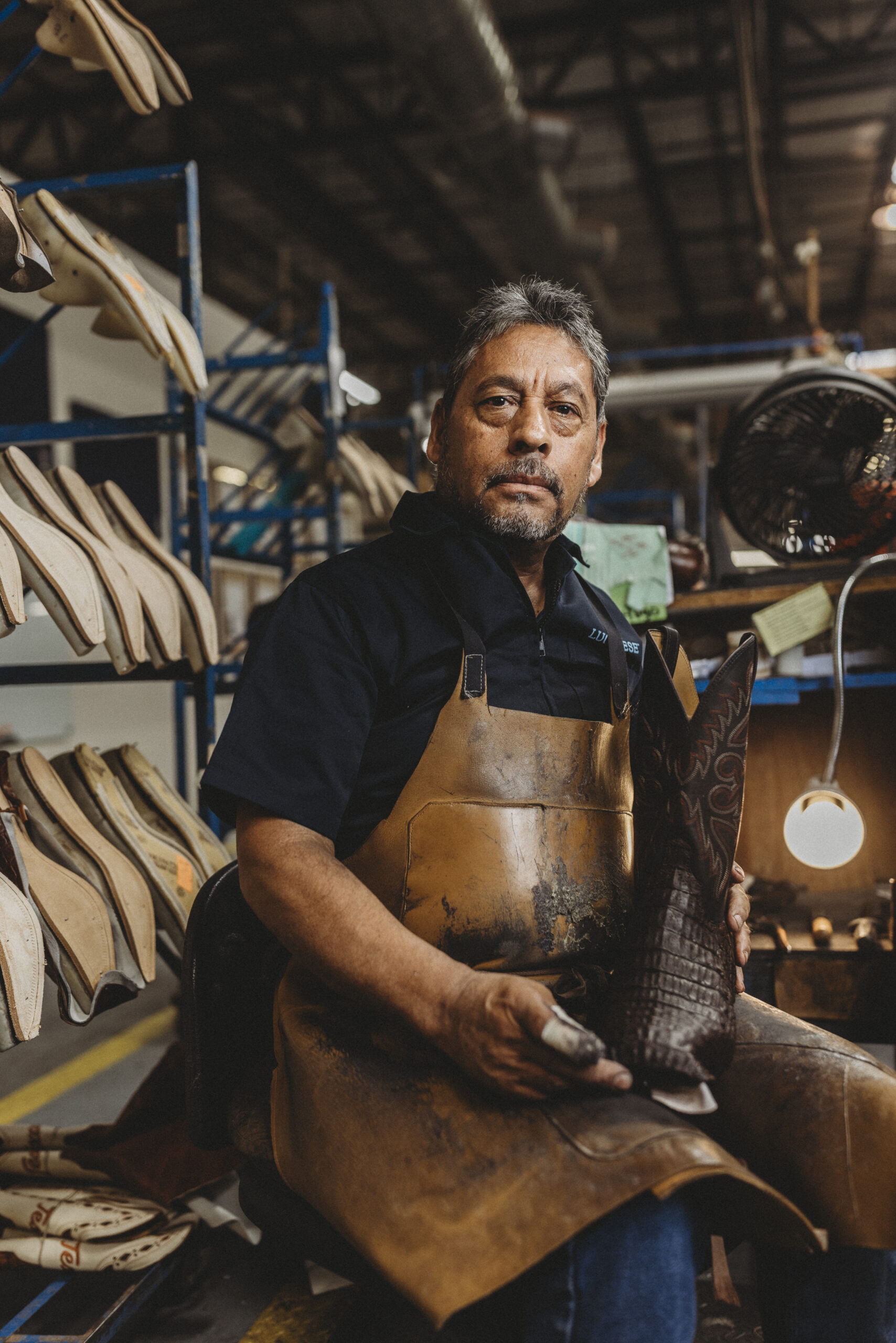
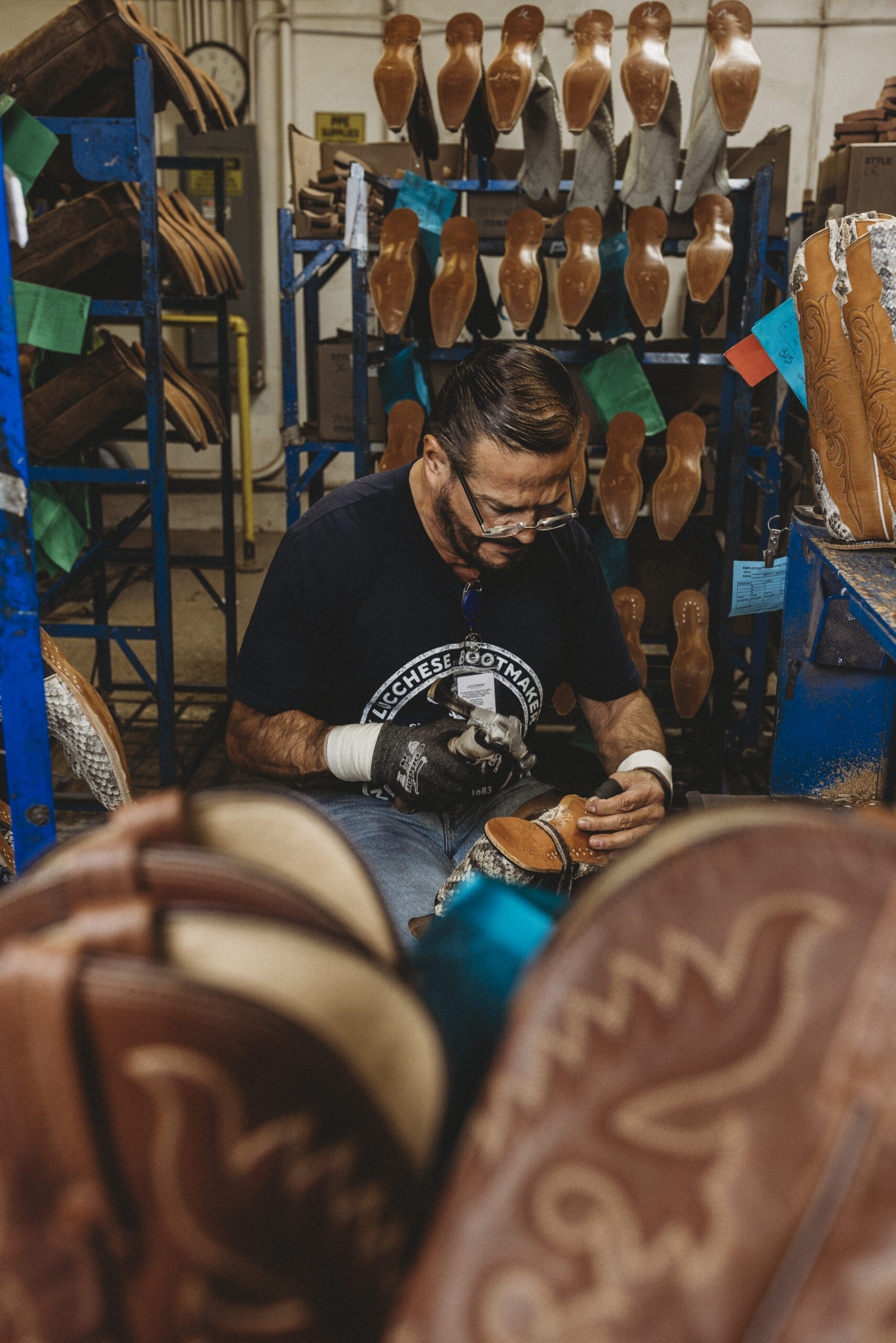

On the factory floor, Gilmore demonstrates how vivid cherry leather is transformed through coats of darker pigment, selective brushing, and hand-finishing. The result has an almost luminous quality, shifting subtly in the light.
At the center of this work is Saul Marquez, a master finisher whose decades of experience make him indispensable. Working closely with product development, he translates creative concepts into the finishes that define Lucchese’s collections. New formulas are tested, refined and documented in handwritten production books. Even then, execution demands a seasoned eye and a steady hand: a slight variation in shading, the feathering of a transition or the pressure of a brushstroke can entirely alter the boot’s character.
The result is not merely a color, but a material alive with depth and movement.
“It’s really the separation, along with the nimbleness and the production advantages that we have,” Gilmore says of their approach to finishing.
That same adaptability made the official Dallas Cowboys Cheerleaders boot possible.
“Our charge was making a cowboy boot that wears and performs like a dance shoe, or more like an athletic shoe,” Gilmore says.
Because traditional cowboy boots and athletic shoes sit at opposite ends of the footwear spectrum, the challenge was significant. The team engineered a lightweight boot with unprecedented flexibility, letting dancers point their toes and perform demanding routines without a painful break-in period.
While Gilmore directs the men’s side, Holly Mery has spent the past 15 years shaping Lucchese’s women’s line. After studying apparel design at Oklahoma State University and designing at Fossil, she joined Lucchese as an assistant designer. Today, she oversees the entire women’s collection, guiding each season from initial sketches and leather selection to color development and final production.
Her creative references reach far beyond traditional Western motifs. Mery pulls inspiration from vintage fashion, architecture, fine art, and nature. For upcoming collections, she has explored botanical patterns and historical photographs pulled from the archives — some of which were never originally produced.
For Mery, the objective is creating pieces that feel contemporary without losing the signature craftsmanship of a Lucchese boot.
Her clearest realization of that vision is the Priscilla, a tall Western boot she conceived after noticing a gap between runway fashion and Western wear. As knee-high and over-the-knee silhouettes surged in popularity, Mery introduced that elongated elegance to traditional boot making. The result was a sleek, pull-on boot that retained classic Western construction while offering a fashion-forward profile. With the addition of a wide-calf option, the Priscilla quickly became one of the brand’s all-time bestsellers.
Its popularity mirrors a wider cultural shift: Western boots are no longer reserved for ranches and rodeos. They have become staples of modern style, styled as naturally with tailored denim as with silk dresses.
Mery, who was raised in Dallas rather than on a ranch, reflects that crossover in her own wardrobe. Her personal style leans feminine, modern, and slightly edgy; she wears boots daily without dressing head-to-toe Western. Her designs carry that same versatility, using balanced proportions and unexpected textures so the footwear moves seamlessly between worlds. Looking ahead, she is focusing on tonal pairings — marrying suede, alligator, and lizard to build visual interest through texture rather than high-contrast color.
Even as Lucchese broadens its range with casual styles and footwear produced in Italy, its core identity remains grounded in signature details like the Lucchese crown and proprietary toe shapes.
For Mery, the true beauty of the product lies in its permanence.
“I want women to know that a Lucchese boot is an heirloom. It’s wearable art,” she says.
In an industry driven by disposable trends, Lucchese designs for longevity — a standard made possible only by the specialized skills preserved in the El Paso workshop.
“There’s immense pride in passing your trade along to the next generation,” Gilmore says. “Yet there’s not a school anywhere in the world teaching what we do.”
That reality reinforces a central truth: craftsmanship requires continuous investment. Techniques must be practiced and protected to ensure survival.
That outlook has also driven Lucchese’s retail growth. When Gilmore joined the company, distribution relied almost entirely on wholesale accounts through independent Western retailers. Developing company-owned stores gave Lucchese the freedom to tell its story directly to the customer.
Today, that narrative reaches beyond footwear into custom felt hats, leather outerwear and accessories, presenting Lucchese as an expansive luxury lifestyle house rooted in heritage.
“Everyone in America has a little piece of the American West in their heart,” Gilmore says. “It’s our job to pull that out.”
He witnesses that connection during factory tours, when visitors who arrived with little interest in boots watch the artisans at work. “They walk through these doors and see these incredible men and women,” he says. By the end of the tour, most are looking for a pair of their own.
That reaction speaks to the heart of the brand: skilled handwork transforms raw materials into something deeply personal.
As Mery notes: “When you walk into a room, your boots enter first.”
For Gilmore, leading a heritage house with more than 140 years behind it remains an ongoing creative venture. “It’s always about the next season,” he says.
Between those two perspectives lies the essence of Lucchese: reverence for the past, dedication to the artisans who sustain it and the conviction that traditions can always find modern relevance. True luxury is not simply something beautiful enough to admire — it is something made well enough to wear, cherish, and hand down.