

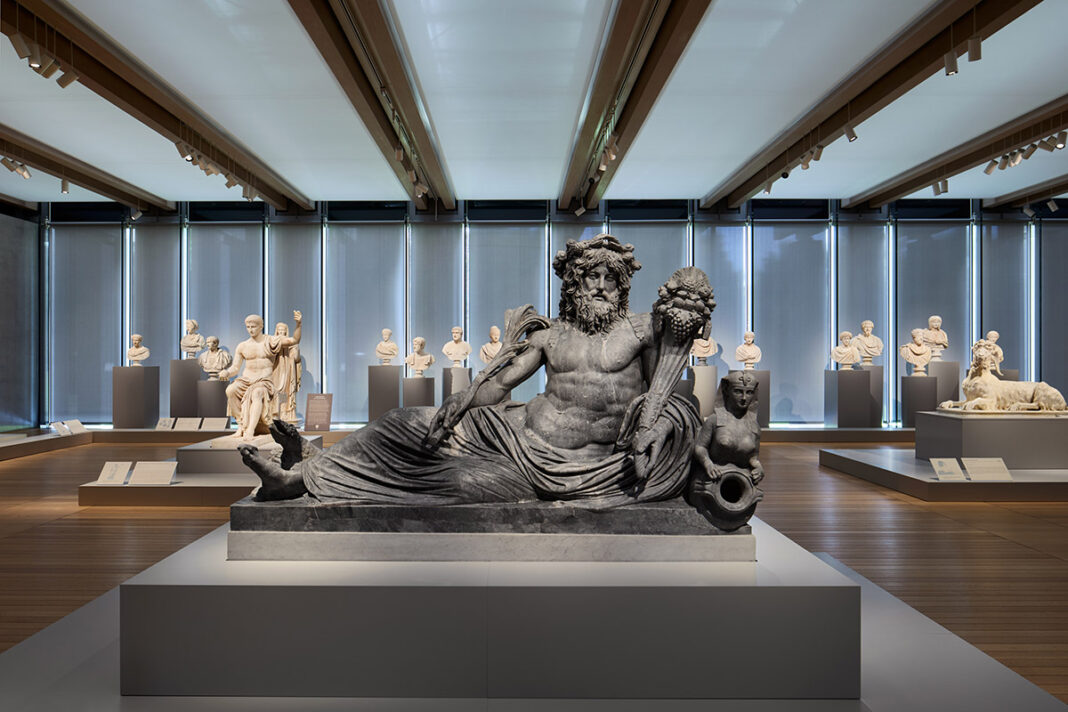
After decades of going unseen by the public, the Torlonia Collection arrives in North America for the first time, with Fort Worth being one of three stops
Photos courtesy of Kimbell Art Museum
Imagine walking into a gallery and finding yourself surrounded by emperors, gods, and mythic heroes—faces and figures carved in marble nearly two millennia ago. Their presence is immediate, almost human, yet they carry with them centuries of history.
For decades, these masterpieces from Rome’s fabled Torlonia Collection were unseen by the public. Now, for the first time, they are traveling across North America on a three-stop tour, and Fort Worth is one of the privileged cities chosen to host them.
Through January 25, 2026, the Kimbell Art Museum invites visitors to experience Myth and Marble: Ancient Roman Sculpture from the Torlonia Collection. Fifty-eight works are on view in the Renzo Piano Pavilion, offering a rare chance to stand in the presence of Rome’s enduring artistry.
A Collection Now Revealed
The Torlonia Collection is often described as the greatest private collection of ancient Roman sculpture in the world. From 1876 until its closure in the wake of World War II, the Museo Torlonia was open only to small groups. For more than 70 years, this legendary collection has been inaccessible to the public, known only through faded catalogues and scholarly whispers.
“To see these works in person, after decades in storage, is a revelation,” explained Jennifer Casler Price, the Kimbell’s curator and organizer of the exhibition. “This is a unique opportunity to see one of the greatest collections of ancient Roman sculpture in the world. Even if you went to Rome today, you wouldn’t be able to see this number or range of works from the collection.”
The collection itself tells a story of passion and preservation. Assembled in the 19th century by Prince Giovanni Torlonia and his son Prince Alessandro Torlonia, it grew through the acquisition of collections assembled by noble Roman families and through archaeological excavations undertaken on the Torlonia family estates throughout Italy.
Over generations, it became known as a “collection of collections,” filled with figures of gods, emperors, and Roman citizens who sought to be remembered in stone.
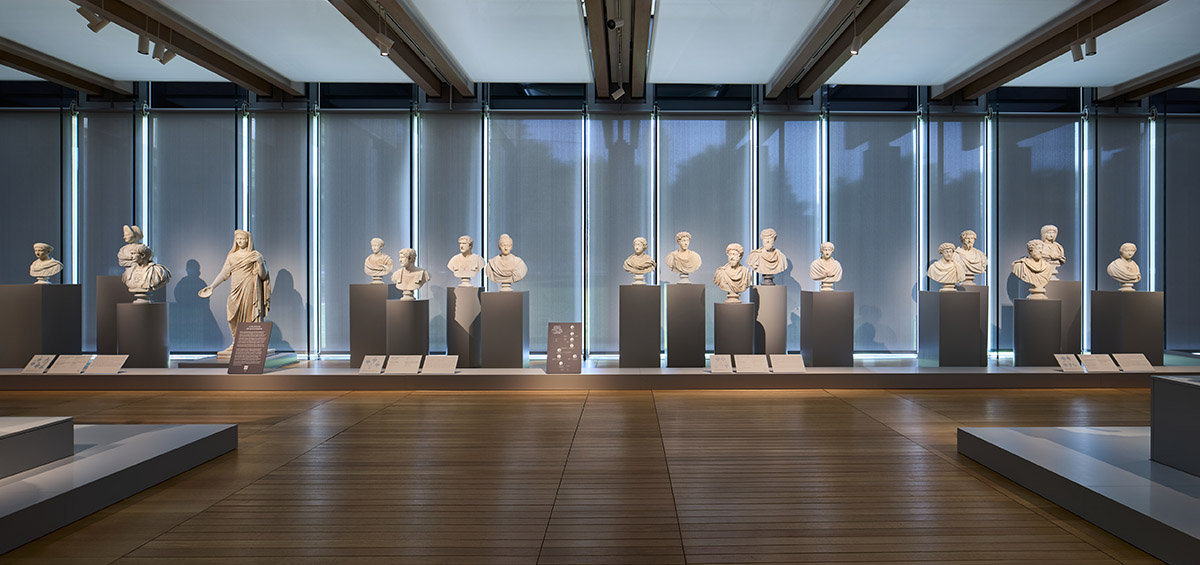 View of Busts in Renzo Piano Pavillion at the Kimbell Art Museum © Fondazione Torlonia, PH Agostino Osio
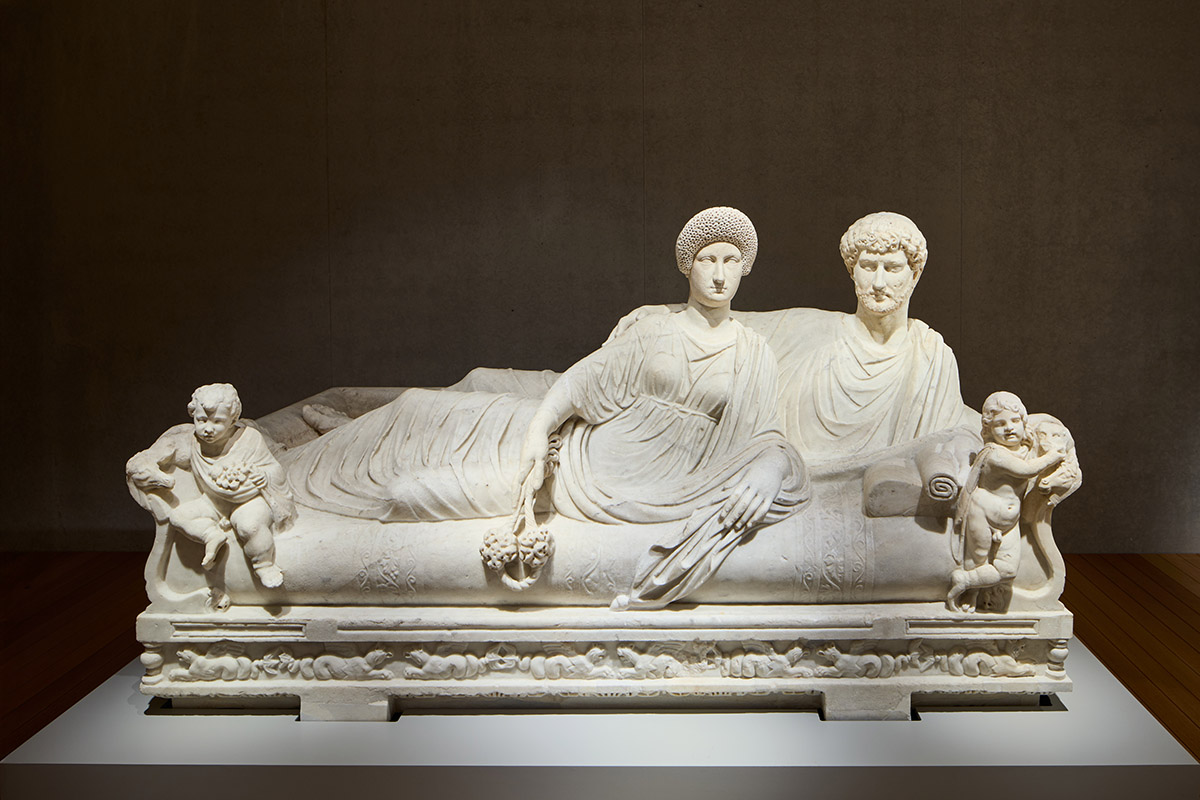
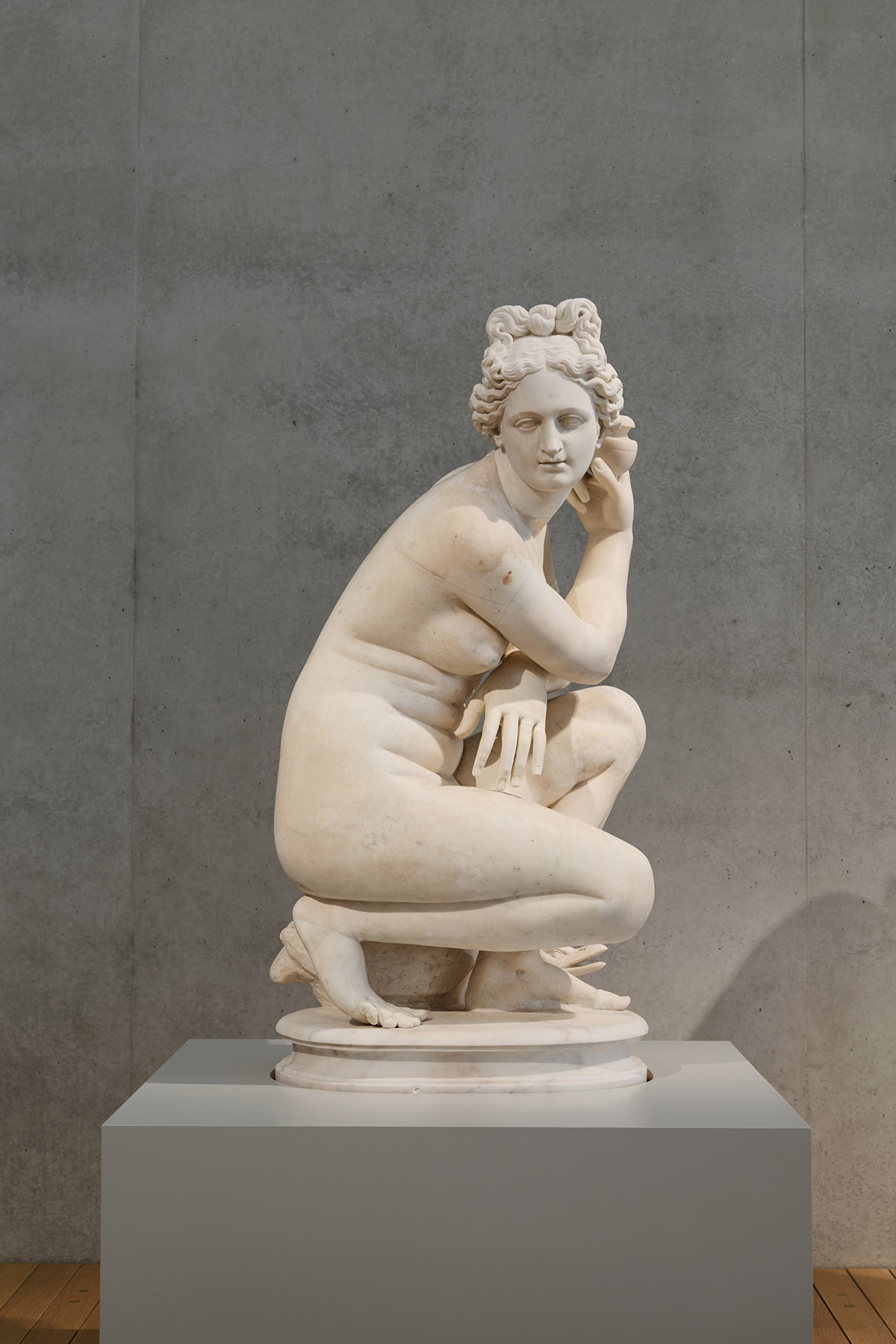
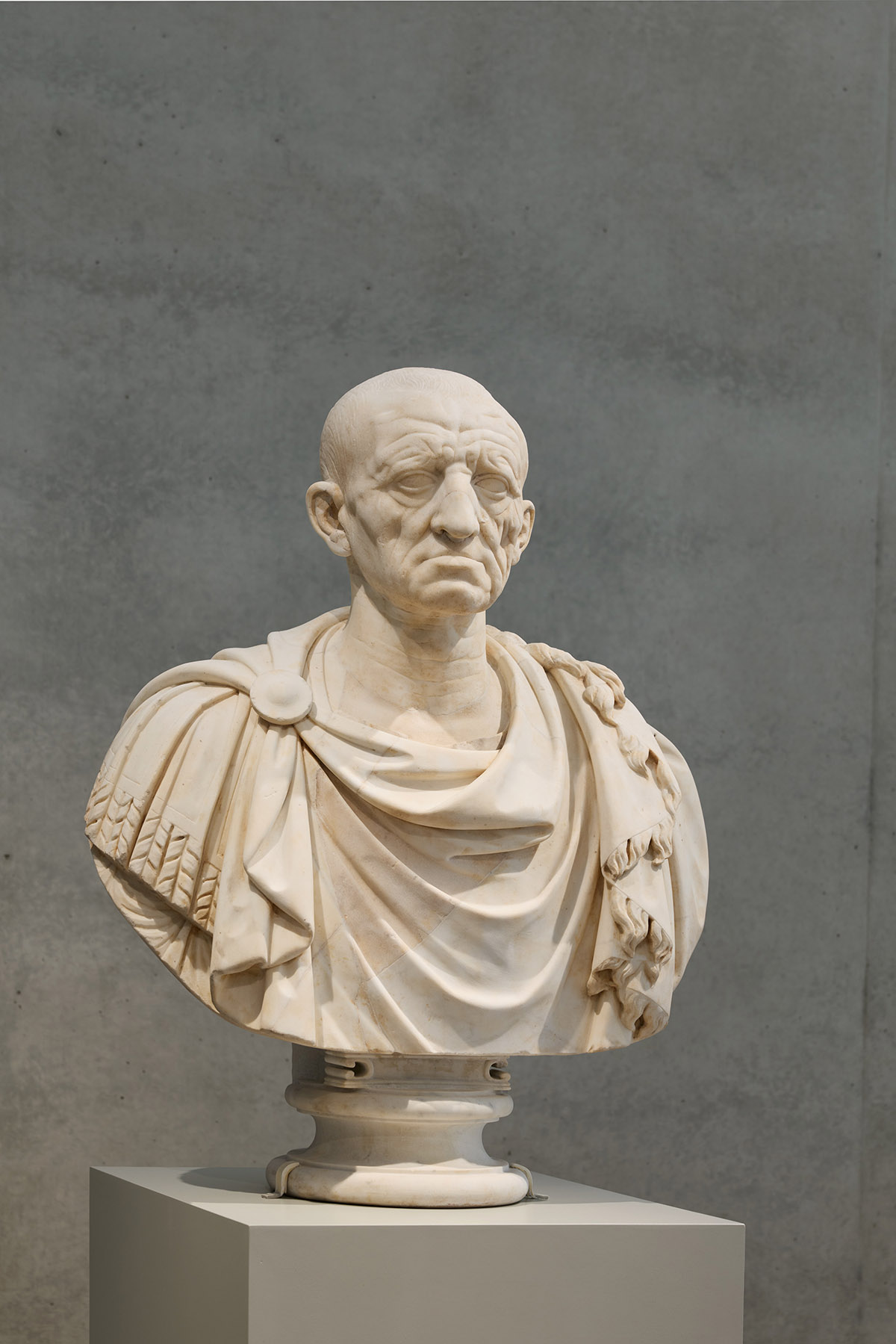
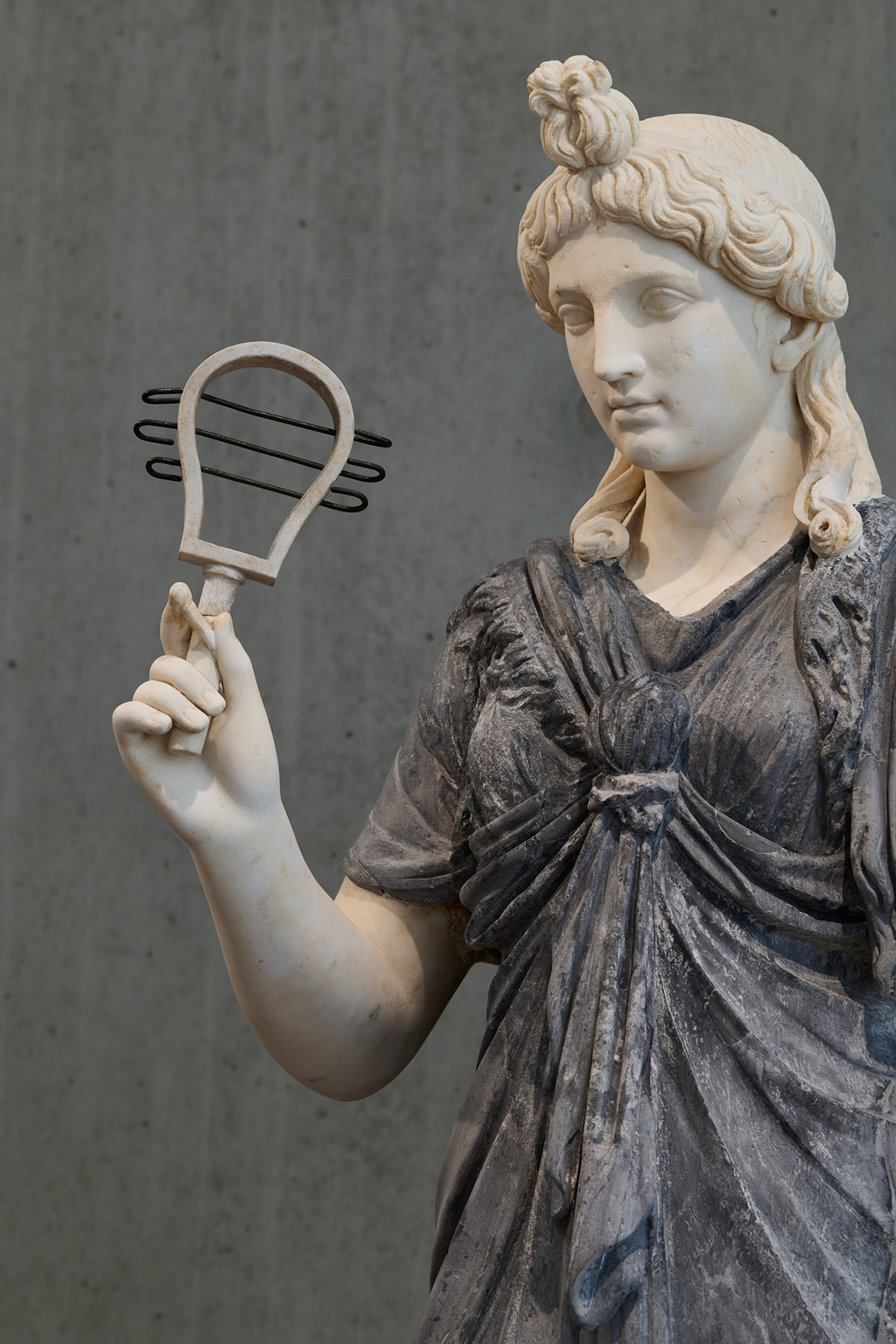

The Power of Roman Marble
Myth and Marble spans nearly 900 years of artistic achievement, from the late fifth century BC to the early fourth century AD. The exhibition unfolds thematically, guiding visitors through six sections that highlight Roman artistry and cultural values:
- Icons of the Torlonia Collection, featuring masterpieces like the “Maiden of Vulci,” a striking portrait from the late Republican period.
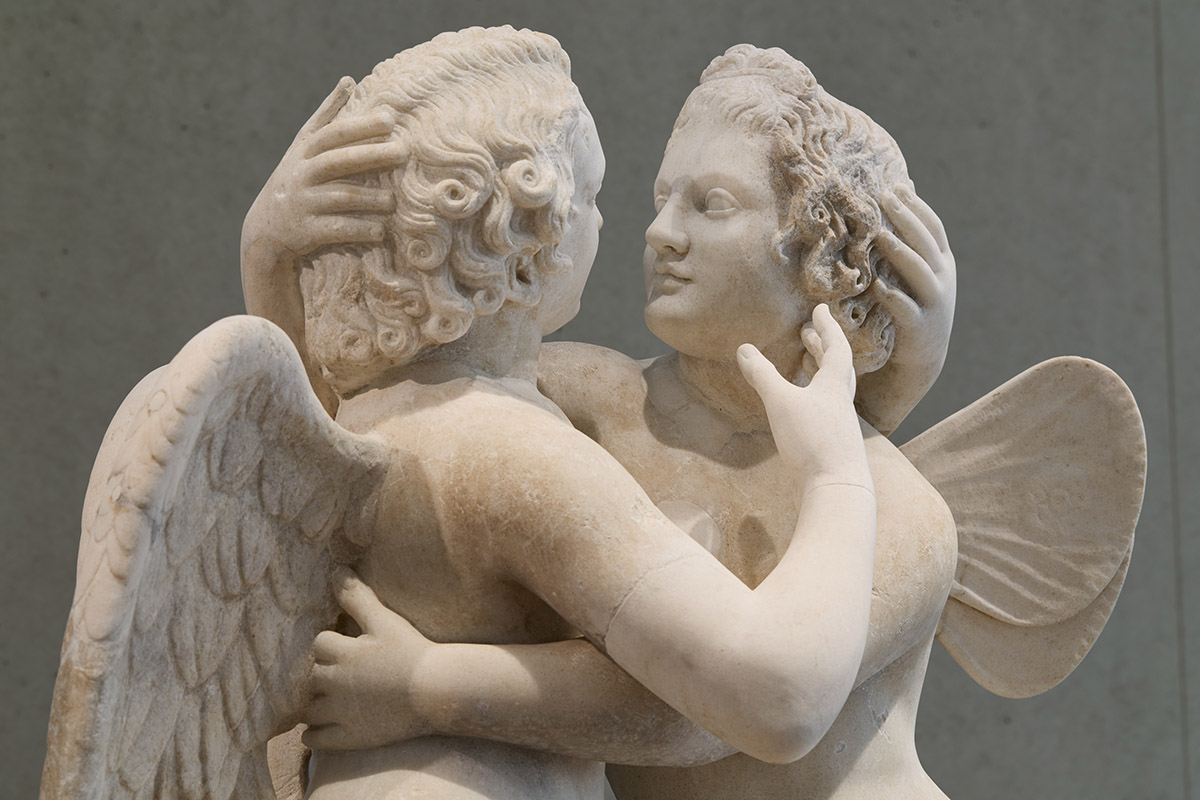
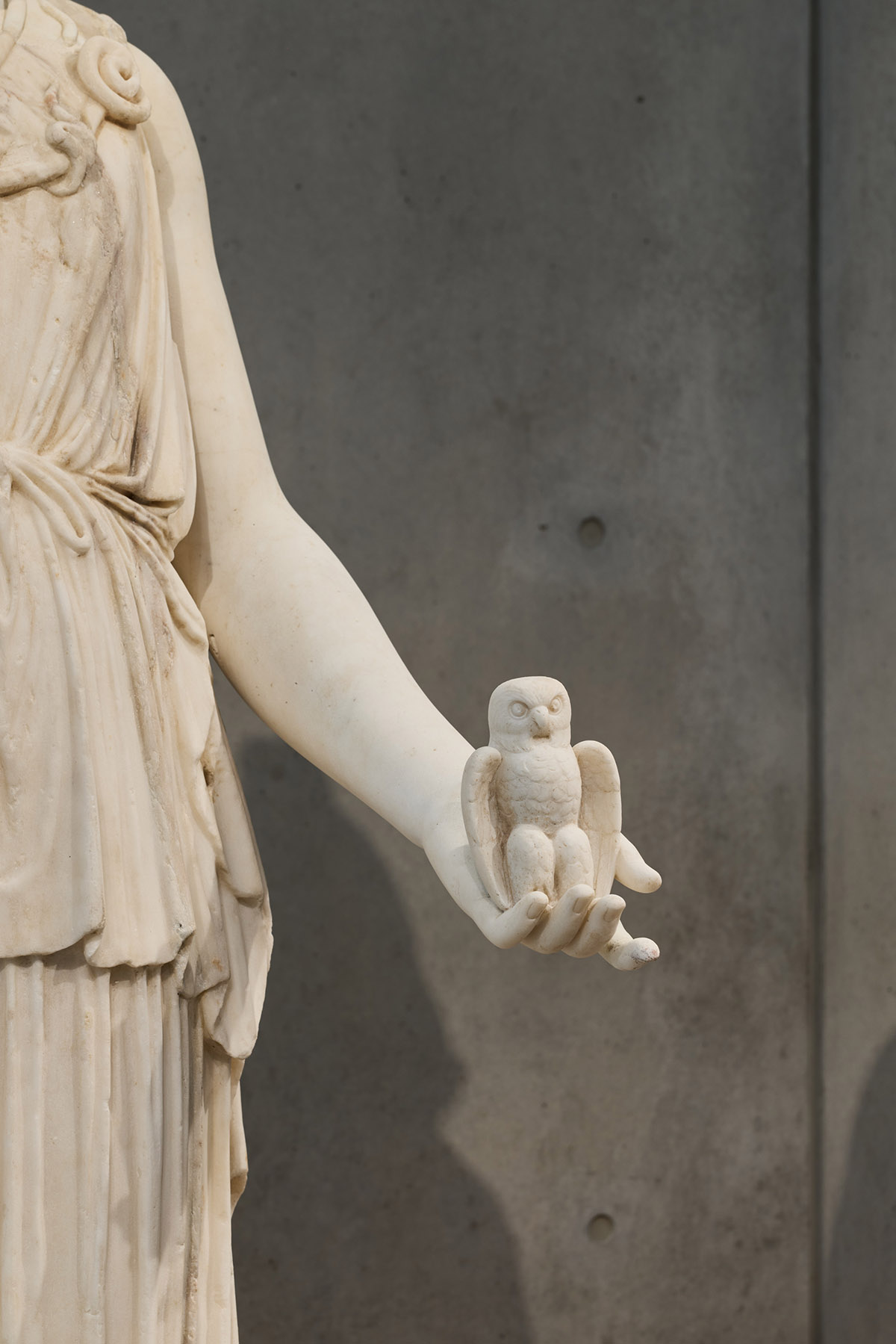
- Ideal Bodies and Model Behavior, showcasing statues of deities and mythic figures, including the celebrated “Hestia Giustiniani,” one of the most important Roman renderings of the Greek “severe style.”
- Strategies of Succession, where emperors such as Trajan, Hadrian, and Marcus Aurelius are presented in busts that once broadcast power and propaganda.
- Restoration and Reconstruction, which explores how Renaissance and Baroque collectors had fragments restored—sometimes enlisting masters like Gian Lorenzo Bernini to complete these ancient Roman works.
- Torlonia Excavations, presenting discoveries unearthed from the family’s estates along the Via Appia Antica and at the ancient Roman port city of Portus.
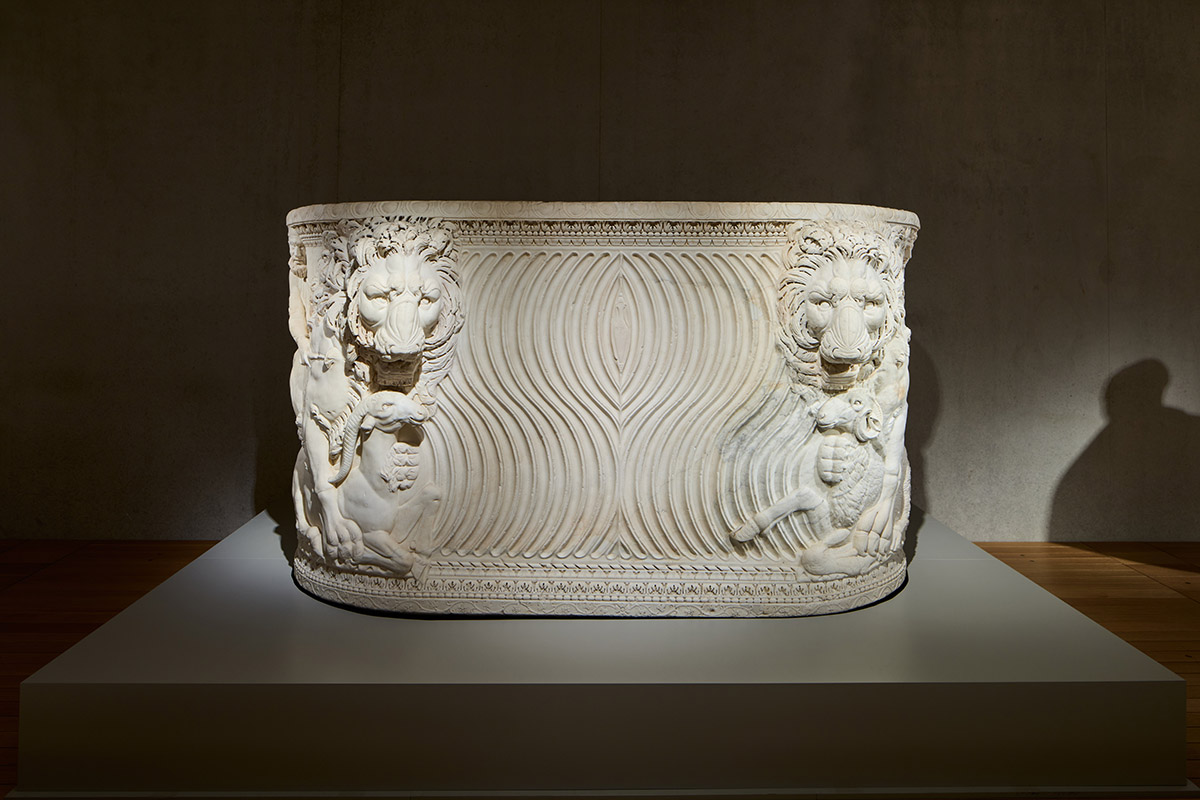
- Death and Remembrance, concluding with extraordinary monumental sarcophagi, including two depicting the popular theme of the Labors of Hercules.
What makes Myth and Marble so powerful is not just the artistry but the connection. To stand before these works is to feel the humanity of their subjects—the grief etched in a funerary monument, the authority in an emperor’s gaze, the serenity of a goddess. These sculptures were once integral to Roman life, displayed in public spaces, villas, and tombs. Now, in Fort Worth, they invite us into that world, bridging centuries in an instant.
“Think about the lives these sculptures have lived,” Casler Price encouraged. “From when they were created and how they functioned in ancient Rome, to being excavated and meeting the hands of a restorer, to entering into the Torlonia Collection and being on view for a brief period—and now they’ve journeyed across the Atlantic to Fort Worth. Even though their meanings and functions, as well as the sculptures themselves,may have changed over time, they still resonate with us today”
For a few short months, Fort Worth offers a rare chance to journey into the grandeur of ancient Rome—no passport required.
If You Go
Myth and Marble: Ancient Roman Sculpture from the Torlonia Collection
Dates Now – January 25, 2026
Location Kimbell Art Museum, 3333 Camp Bowie Boulevard, Fort Worth, Texas
Tickets $18 for adults; discounts available for children, seniors, students, teachers, active-duty military, and SNAP program recipients. Admission is half-price all day Tuesday and Friday evenings from 5–8 pm. Museum members enjoy unlimited free access.