


By Hannah Barricks
Photography by Jill Johnson
On a quiet weekday morning at Renata Salons, a charming carriage house-turned-business off College Street, owner Lauren Jackson moves with joyful, unhurried rhythm. The hum of blow dryers, at varying levels of intensity, fills the air, creating a blend of soft white noise, hairspray and other familiar scents. Jackson tilts her client’s chin toward the mirror and smooths a section of freshly styled hair into place. “Perfect,” she says, smiling. “You’re all set.”
The scene would be commonplace at any salon, but Jackson no longer takes anything for granted. Just seven years ago, the woman known for perfecting others’ “crowns” began losing hers without warning.
In 2018, Jackson was diagnosed with alopecia, an autoimmune condition that causes hair loss.
At the time, she had already built a thriving business behind the chair, known for giving women confidence through color and cut. So, when her hair was falling out in clumps, it was not only shocking but devastating. “My hair was part of who I was,” she recalls. “I built a career around helping people feel beautiful, and suddenly, I didn’t even recognize myself.”
Jackson only speaks about her experience, but she knows better than most from her work at the salon about the attachment women can have to their hair. She is also aware of the stigmas society places on those experiencing hair loss, such as wrongfully labeling them as “sick” or deserving of pity. In the weeks following her own diagnosis, Jackson hid under hats and scarves, praying the effects were temporary. But as more hair disappeared, so did her sense of identity. “In the Bible, it says a woman’s hair is her glory,” she says softly. “I kept thinking — if that’s true, then what happens when it’s gone?”
Jackson grieved the loss tenderly. Her brother, seeing her suffer, offered support she still carries today, asking her: “Who better than you?” His words caused a paradigm shift in her. “I realized that maybe this wasn’t something happening to me, but for me,” she says. “Maybe God was preparing me for something bigger.”
With renewed power, Jackson focused on spreading awareness from her salon, Renata, which means “rebirth,” offering private salon experiences to women facing hair loss from alopecia, chemotherapy, or other conditions.
“When you lose your hair, you lose more than just hair,” she explains. “You lose confidence, you lose privacy, and sometimes, you lose hope. I wanted to create a space that gives that back.”



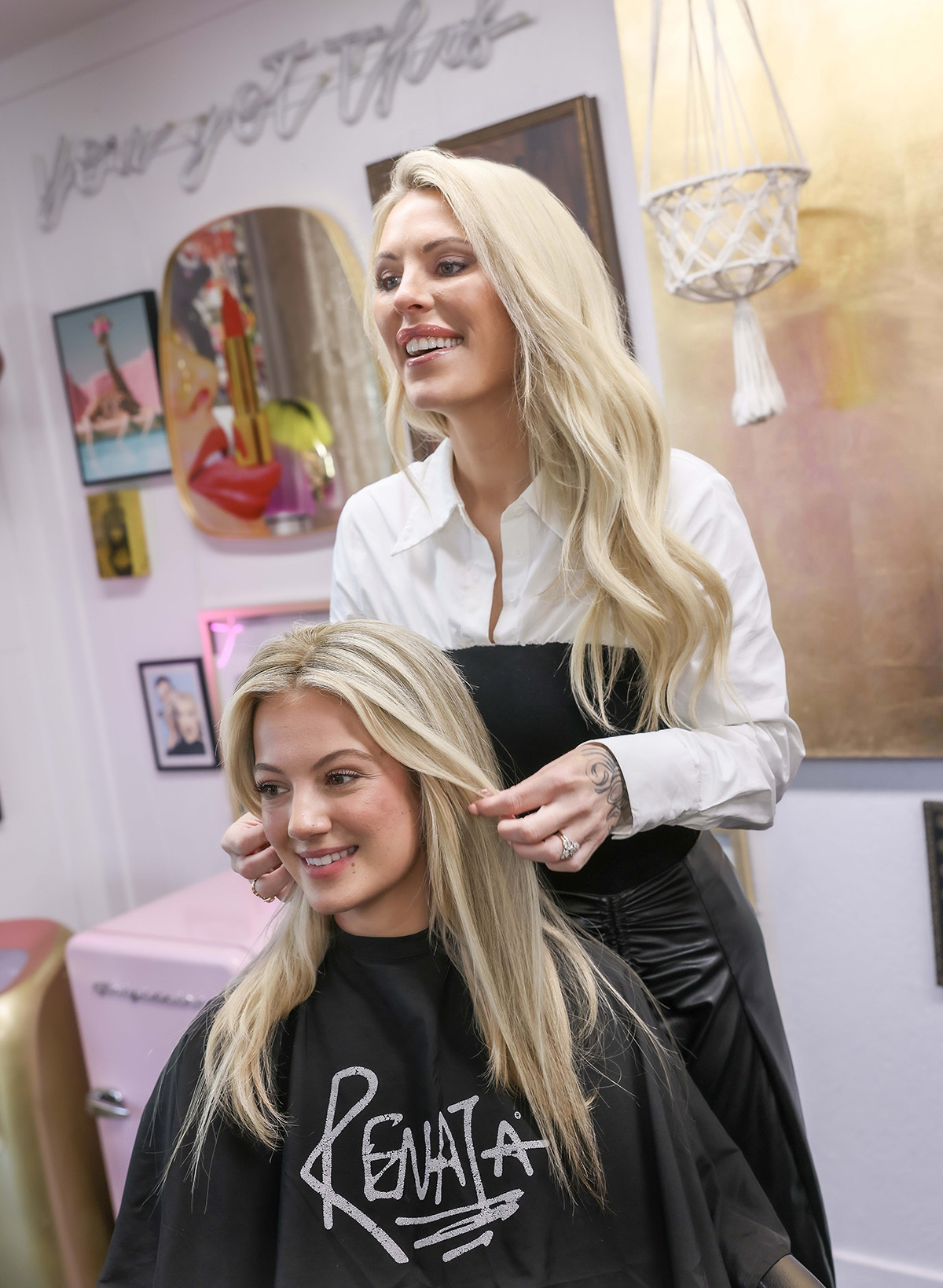

Inside Renata, Jackson’s clients — many of whom once feared walking into a salon — find understanding, empathy and community. She helps them recognize their reflection again, showing them everything she’s learned and shedding light on a condition that’s often hidden and, therefore, a lonely experience.
For a long time, during her own healing, Jackson says she avoided mirrors, drawing strength from obvious sources like faith and family, but also from the unexpected, entering a Mrs. Texas International pageant at the behest of her friends. The experience was unlike anything she had ever done before, but through the competition, Jackson was able to reclaim what she thought alopecia had taken from her: beauty and confidence.
“Walking onto that stage was one of the scariest and most freeing moments of my life!” she says. “Pageants used to be about perfection. But for me, it became about authenticity.”
The judges agreed, and they crowned Jackson Mrs. Texas International 2025.
Her goal wasn’t to win the crown — although she did — but to discover if she still had one inside, and help others find theirs, too.
In doing so, Jackson discovered her story was far from unique. “So many women struggle silently with hair loss,” she says. “It’s something people don’t talk about — but it affects how we see ourselves, our femininity and our strength.” She began speaking publicly about her experience, mentoring other women, and even working on a children’s book about self-acceptance for girls facing alopecia.
For Jackson, fixing other women’s crowns — whether literal or figurative — has become her life’s work. “We all wear crowns,” she says. “Some just look different than others. When one slips, it’s our job to help each other straighten it again.”
That message has made her chair more than a beauty station — it’s a ministry of grace. Clients come for hairpieces and leave with courage and knowledge of proper care. They talk about their fears and the quiet grief that comes with losing something so closely tied to identity. Jackson listens, guides and reassures. “Every woman who sits in that chair teaches me something,” she says. “They remind me that beauty isn’t about what’s on our head — it’s about what’s in our heart.”
She still remembers the early mornings in prayer, asking God, “Why?” Now, she says, she no longer needs an answer. “This journey has shown me that beauty isn’t something you lose — it’s something you live,” she says. “And if my story helps even one woman see that, then it was worth every tear.”
Back in the salon, Jackson’s alopecia is in remission, her own blonde hair sitting atop her head, although she says the threat of alopecia remains forever. Her client rises from the chair, admiring her reflection. Jackson smiles, brushes a stray hair from the cape, and begins sweeping the floor. She’s got work to do.