

By Belton Kleberg McMurrey
Photography by Crystal Wise
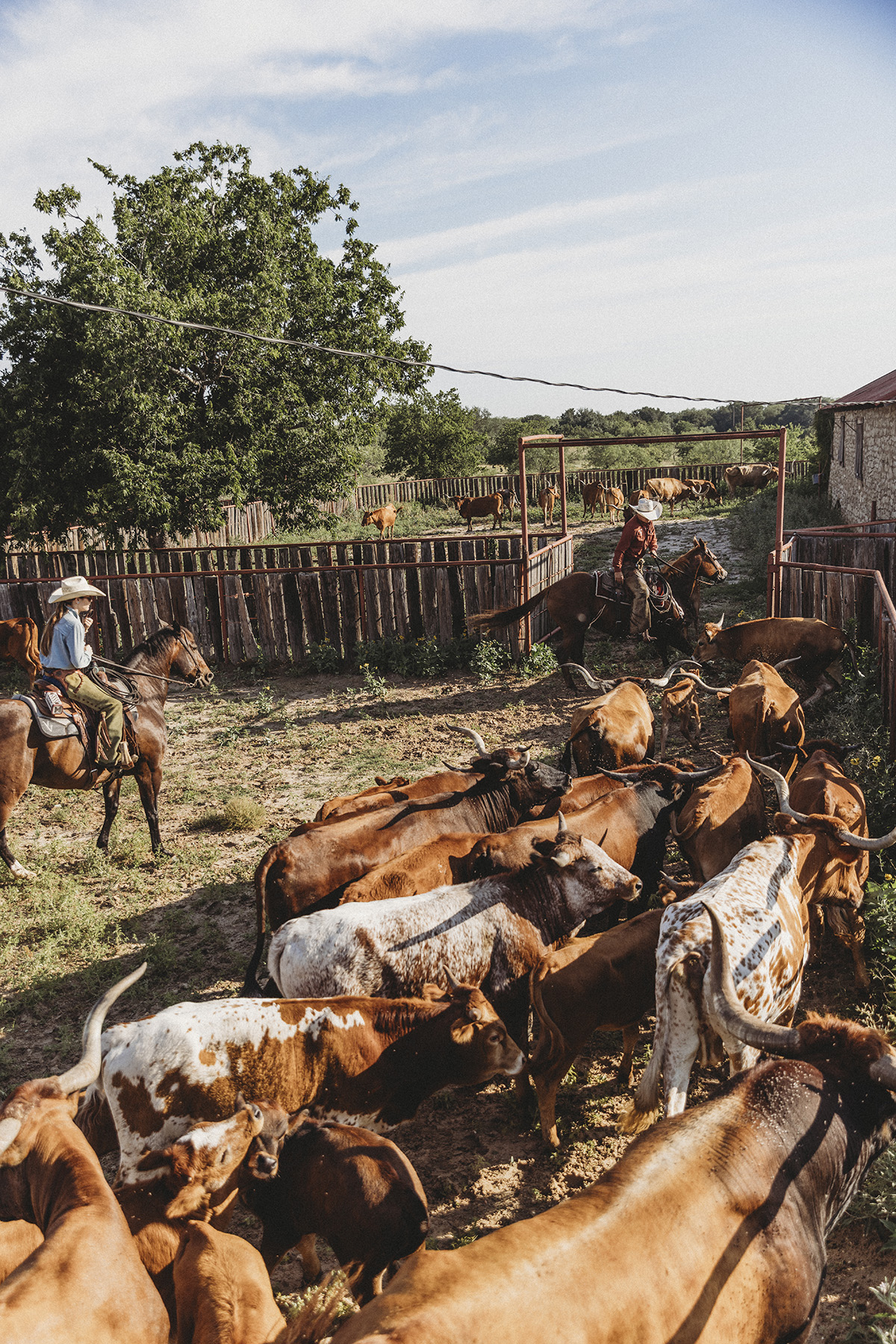
Forty-five minutes southwest of Fort Worth, a handful of square-jawed, mounted cowboys prepare to move an impressive-looking herd of Angus superblacks, a distinctive white barn anchoring the scenery. The menace of a rising summer sun threatens the animals’ supply of shade and their docility.
During even the mildest Texas August (and this one’s far from it), simple tasks involving any cow-calf operation’s titular lifeblood become an existential dance to keep these sensitive creatures calm.
Should they lose their cool, literally & figuratively, panicked bodily overheating might just cost a rancher a few valuable head. The pressure is always on in ranching, a business not exactly synonymous with do-overs. Sure, it’s nothing more than a simple move from here to there. But any good cowboy understands the house is always at stake when dealing with a man’s herd.
None of these riders breaks a sweat unrelated to the heat, though. An eye for horses might recognize their mounts as gold-plated ranch horse progeny. A mind for Parker County history might surely recognize the Twin V brand emblazoned on every cow’s hip — more than a guarantee that these animals will handle well.
The shade of the men’s hats over their eyes is so photogenic, so perfectly timed with the sun, one might think it’s a movie set.
“ACTION!”
An array of long-lensed cameras begins to roll, six total. Not quite a movie set, but a TV show. Filming has commenced on Episode 1, Season 1 of Dutton Ranch (working title Rio Paloma), the latest spinoff of Taylor Sheridan’s Yellowstone-verse.
Cole Hauser, in character as fan-favorite foreman Rip Wheeler, enters the picture on a bay mount, pushing his four-legged costars from Point A to Point B. Bosque Ranch Productions’ dedicated posse of professional wranglers waits in the wings, just beyond the frame’s edge.
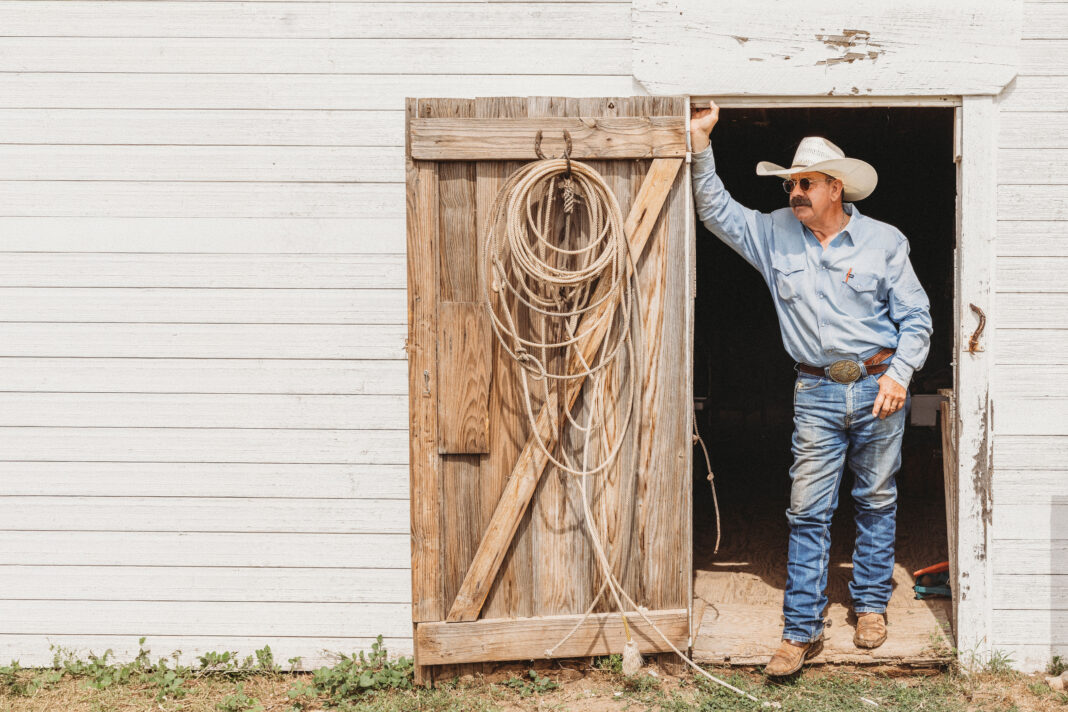
Despite playing this beloved part for nearly a decade, and weekly viewership now in the tens of millions, Hauser is not quite the most famous man on set — leaning against a fence beneath the fictitious “DR” brand now painted on his barn, Thomas B. Saunders V takes in the busy sight.
Mustache blacker than night, and the kind of gait only a lifetime of busting broncs can afford, this 7th-generation rancher requires no introduction within a day’s drive of Fort Worth. While it is far from Saunders’ first time on a set, it is his first time hosting a big-budget production on the home front.
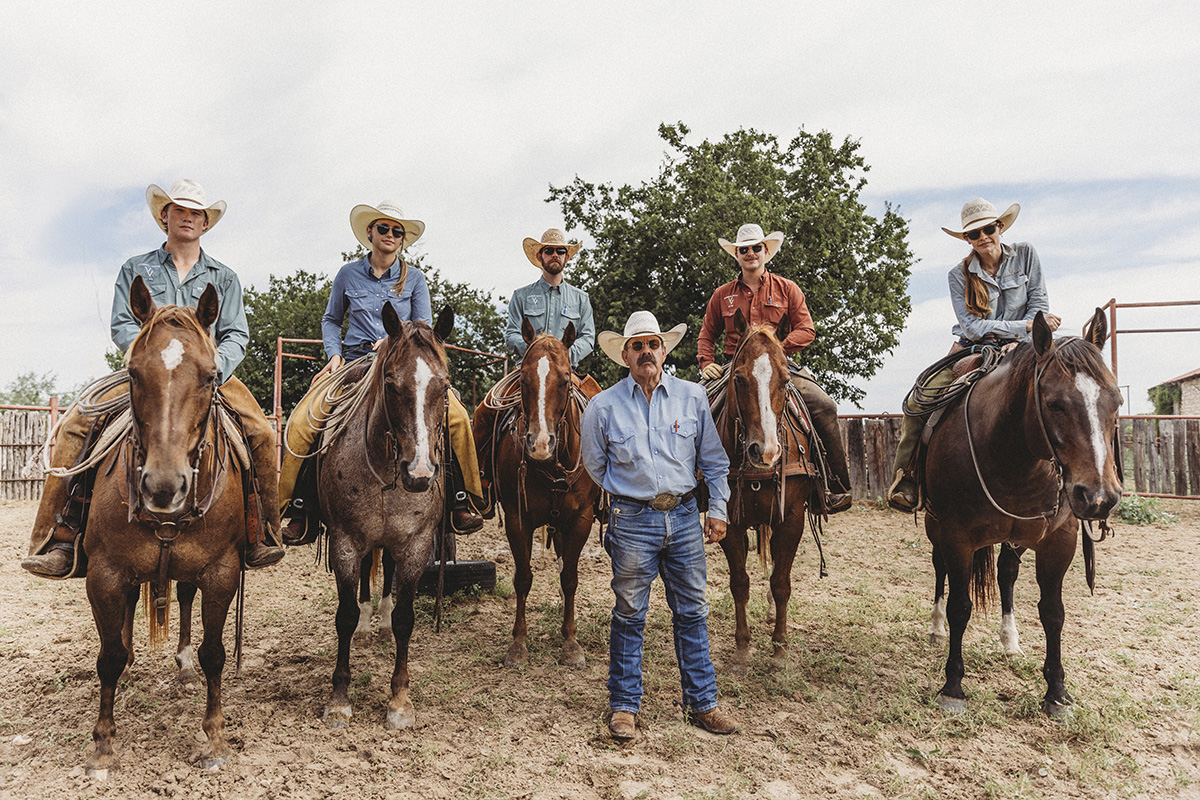 Left to right: Cole Montgomery, Jordyn Robertson, Latigo Petersen, Mark Price, Leslie Ann Saunders. Front: Thomas Bailey Saunders V
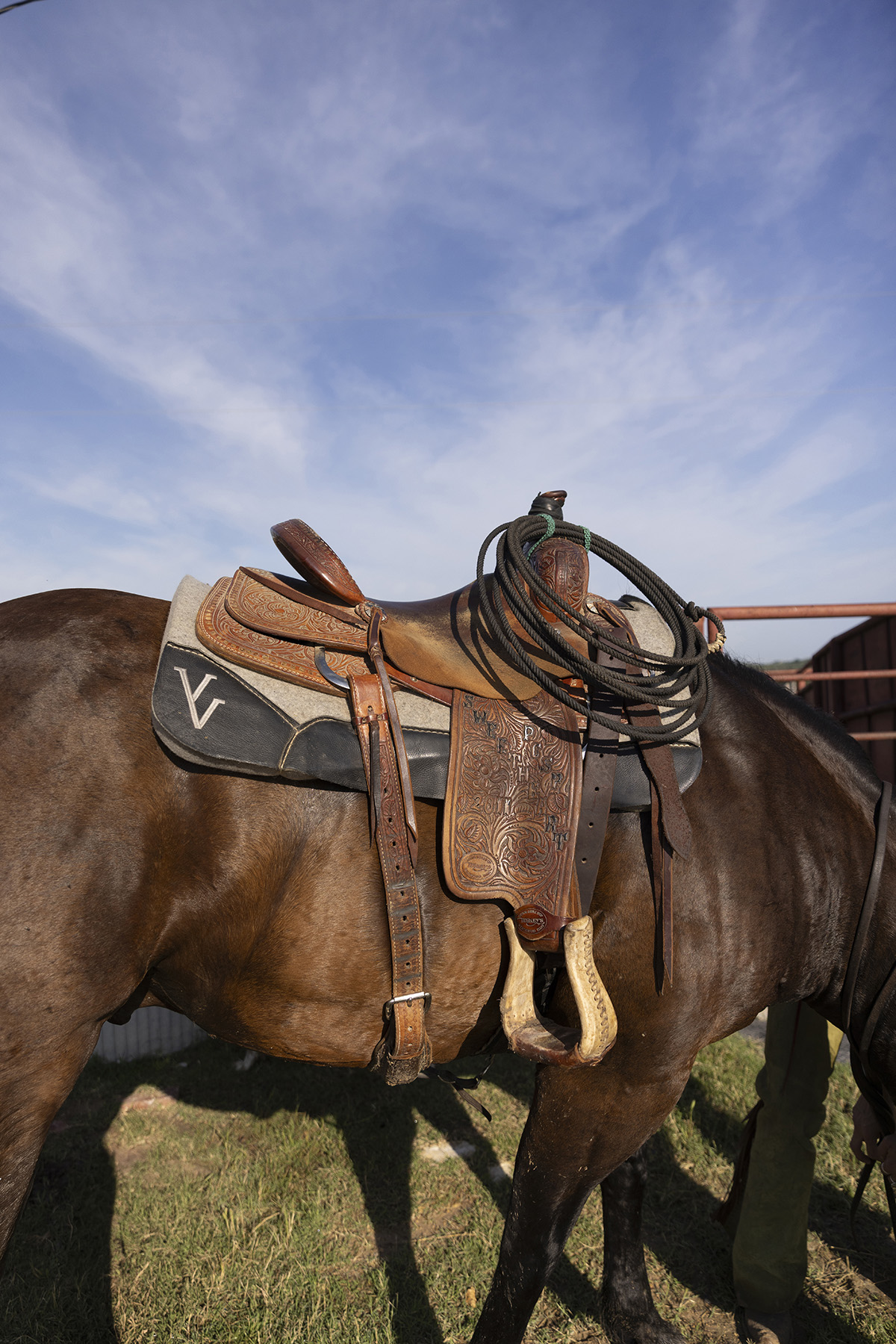
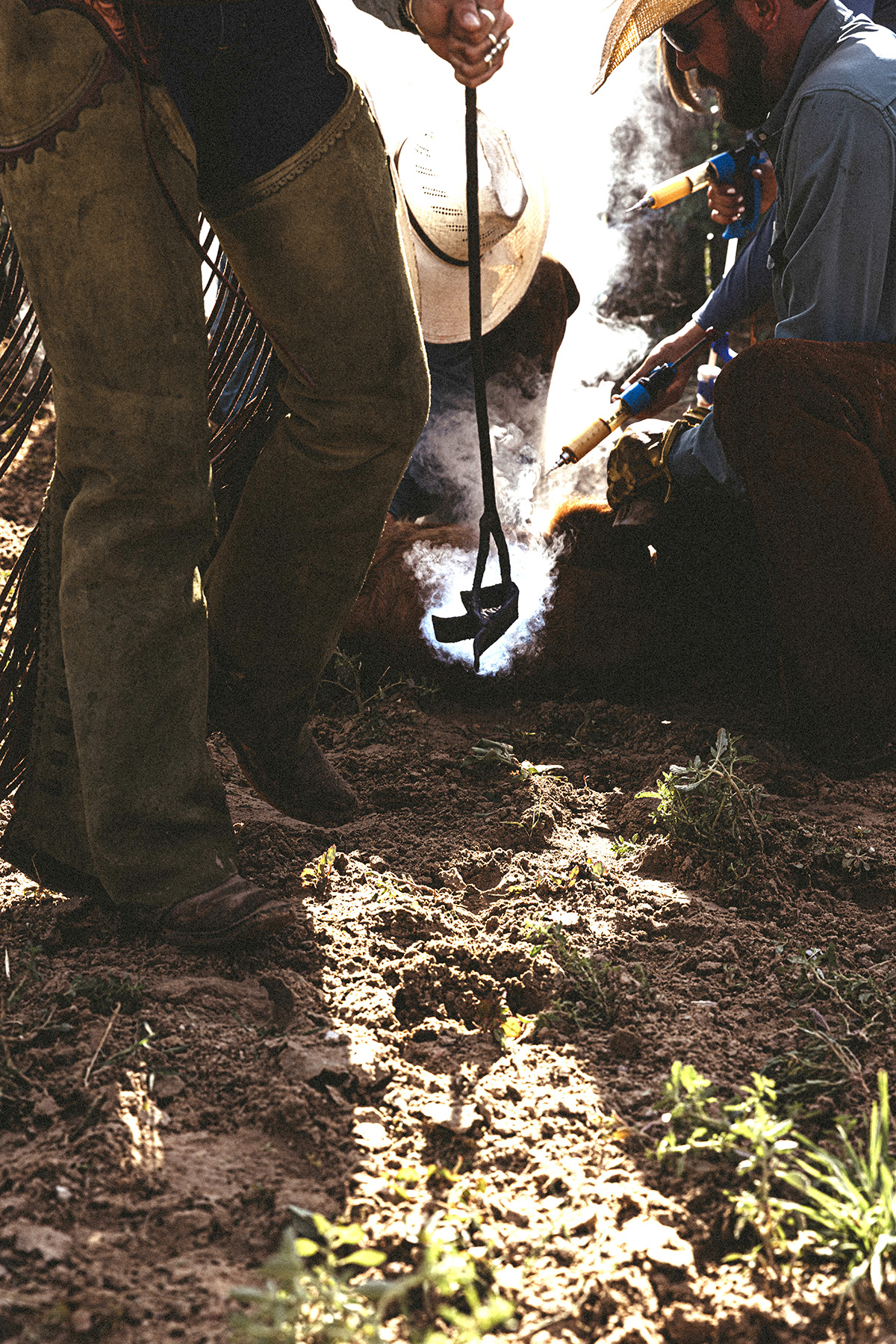
For the next several months, the various Parker County properties of the Saunders family will play the part of Dutton Ranch’s numerous exterior locations, lending the credentials of a built-in authenticity to this feverishly anticipated outing.
“I’ve had my Screen Actors Guild card for 30 years,” Saunders notes, having leased his horses and horsemanship to many a Texas-filmed Western. “Being able to bring it home to where I was born, being able to film something where we’ve been operating since 1928, we’re able to keep what’s old new again. How could I be anything but thankful?”
The take runs. The crew executes on both sides of the camera with a decade’s worth of know-how in staging genuine cattle work onscreen.
Someone in charge yells, “Cut!” Veteran Yellowstone director and executive producer Christina Voros approves the take. A bustling hive of crew members and massive production equipment shifts gears to prepare for the next task at hand.
Standing at her father’s side, Leslie Ann Saunders fields a coordinator’s questions and formally secures location permissions on behalf of the family.
As to whether the commotion of 500 technicians in her backyard might be intimidating, she shrugs off the notion with a smile.
“Come on, we ranch for a living. We know how to handle stuff.”
A modest statement, if any. The Saunders family has been steadily involved in the Texas cattle business for nearly two centuries. To rattle off the comprehensive accomplishments, credentials, and organizations that each generation has played a foundational part in, one might just run out of breath.
Original patriarch, Thomas B. Saunders I, arrived in Texas with a small herd of Mississippi beeves in 1850, with the words “Gone to Texas” painted in bold lettering on the sheet of his ox-drawn wagon for all to see.
While the original Saunders family ranches came about in Gonzales and Goliad counties, Thomas B. I and his seven sons (out of 11 children total) continued weaving the thread of true trail drivers as the gravity of developing cattle markets on the Texas frontier steadily coalesced. To this day, a herd of cattle has not crossed the mile-wide Mississippi River under their own swimming power — except that of noted son, W.D.H. Saunders, and 1,100 steers in 1862.
He was 17 years old.
W.D.H.’s brother, George W., collected similar dramatic stories from both family members and fellow trail drivers, publishing these under The Trail Drivers of Texas (1925). The two-volume collection is considered a definitive work on the subject.
“What’s so interesting about all of this, everything they went through, every bit of hardship on those long trails, it’s all because they wanted to be in Texas,” Leslie Ann said. “They did business all over, from New Mexico to Louisiana, but they wanted to ranch, and they wanted to do it in Texas.”
True to the current silver-screen dramatic dealings of the Saunders family property, the many stories recounted in Trail Drivers verifiably bore direct influence over film and television classics of the Western genre, among them John Wayne’s Red River and Clint Eastwood’s Rawhide.
During the inaugural years of the 20th century, the family found its now-longstanding domestic roots in the soil of North Texas. After years of pushing longhorns to Kansas railheads and a valuable stint in a San Antonio business college, Thomas B. Saunders II (grandson of his namesake) became the first cattle dealer in the newly established Fort Worth Stockyards. From 1912 to 1922, Thomas B. II found repute as arguably the largest dealer of his kind in the United States.
His brother, the horsemanship-exceptional James William, participated in the first-ever indoor rodeo, held at Fort Worth’s Northside Coliseum, where he placed 2nd in cutting.
The National Cutting Horse Association counted Thomas B. III among its founding members in 1947, with an eventual Hall of Fame induction. Alongside his heavy involvement in both the Texas and Southwestern Cattle Raisers Association and the Fort Worth Stock Show & Rodeo, he maintained a meaningful presence in Parker County as one of 13 founding hands of the eponymous Sheriff’s Posse.
As a future west of Fort Worth became clearer for the family’s ranching interests, such community organization and industry service efforts became a steadfast Saunders tradition, one which persists today.
“Being involved is the life of who we really are,” Thomas V said. “You wanna stay current in this business. How you do that is showing up for where you’re from, side by side with your neighbors and people. Whether something comes back around or not isn’t the point; it’s about being proud to represent where we were raised.”
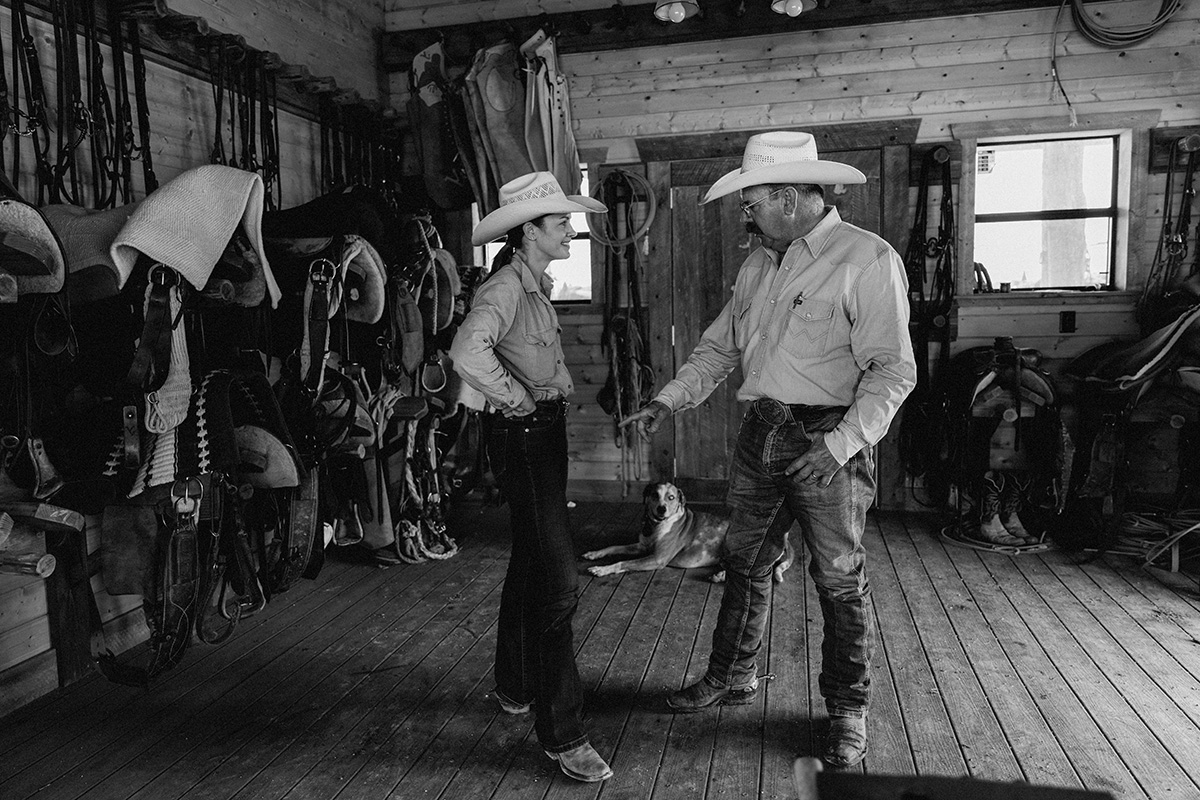 Leslie Ann Saunders is the Head of Marketing and Saunders Ranch Outreach efforts, pictured with her father Thomas Bailey Saunders V, the Owner Operator, Stock Contractor, and Producer for the ranch.
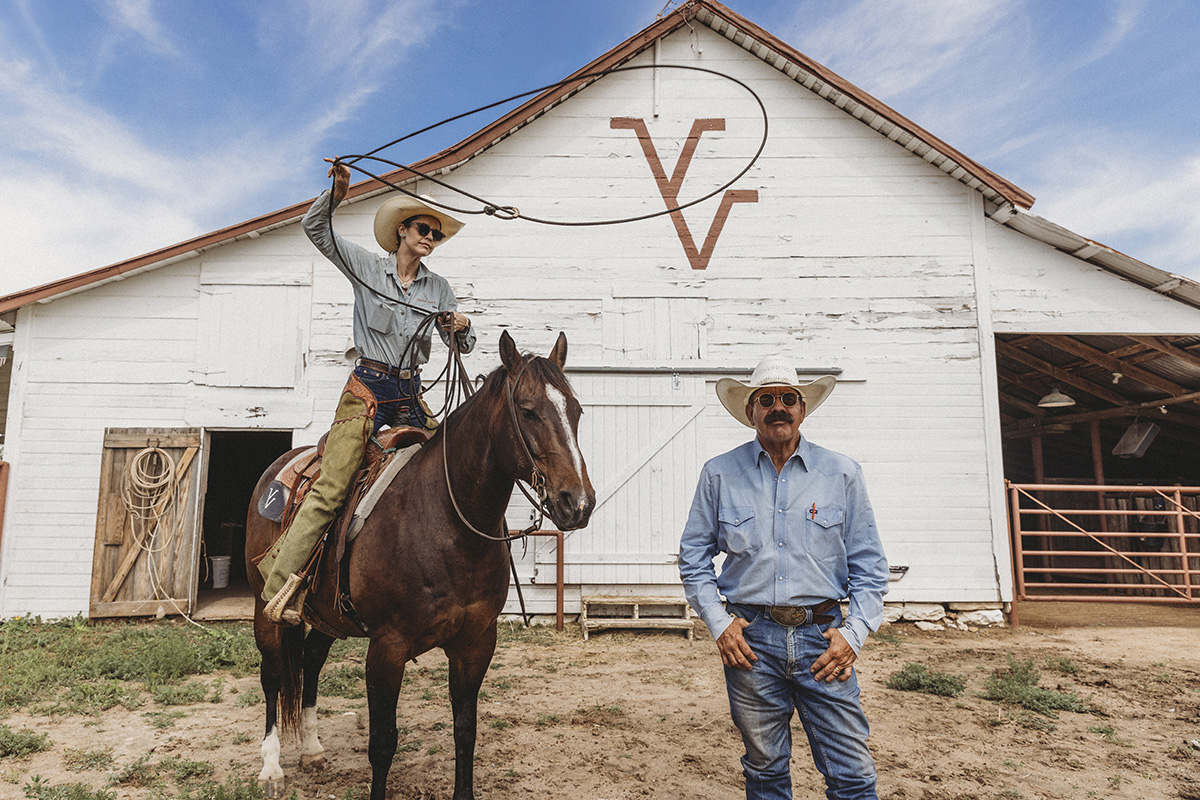

As for the well-known “Twin V” brand still visible across the Saunders herd, its origins trace to Thomas B. III’s final purchase of Saunders homestead land in 1934 and the need for an iron to call his own. Taking inspiration from his father’s solitary “V” brand — the first initial of Thomas B. II’s wife, Virginia — the younger Thomas simply added a second V, representing the initial of his sister, Vanita.
Thus, the Twin V was born. In times apart from Yellowstone-adjacent filming, the brand prominently displays atop the ranch’s central white barn.
Thomas B. IV, who grew up cowboying for his father across both the Stockyards and the Parker County family ranches, stood as a TSCRA director and board trustee from 1975 until his passing in 2017.
That, and chairman/president/director of the Parker County Livestock Improvement Association, Farm Bureau, Sheriff’s Posse, YMCA, and the Fort Worth Stock Show, among several others.
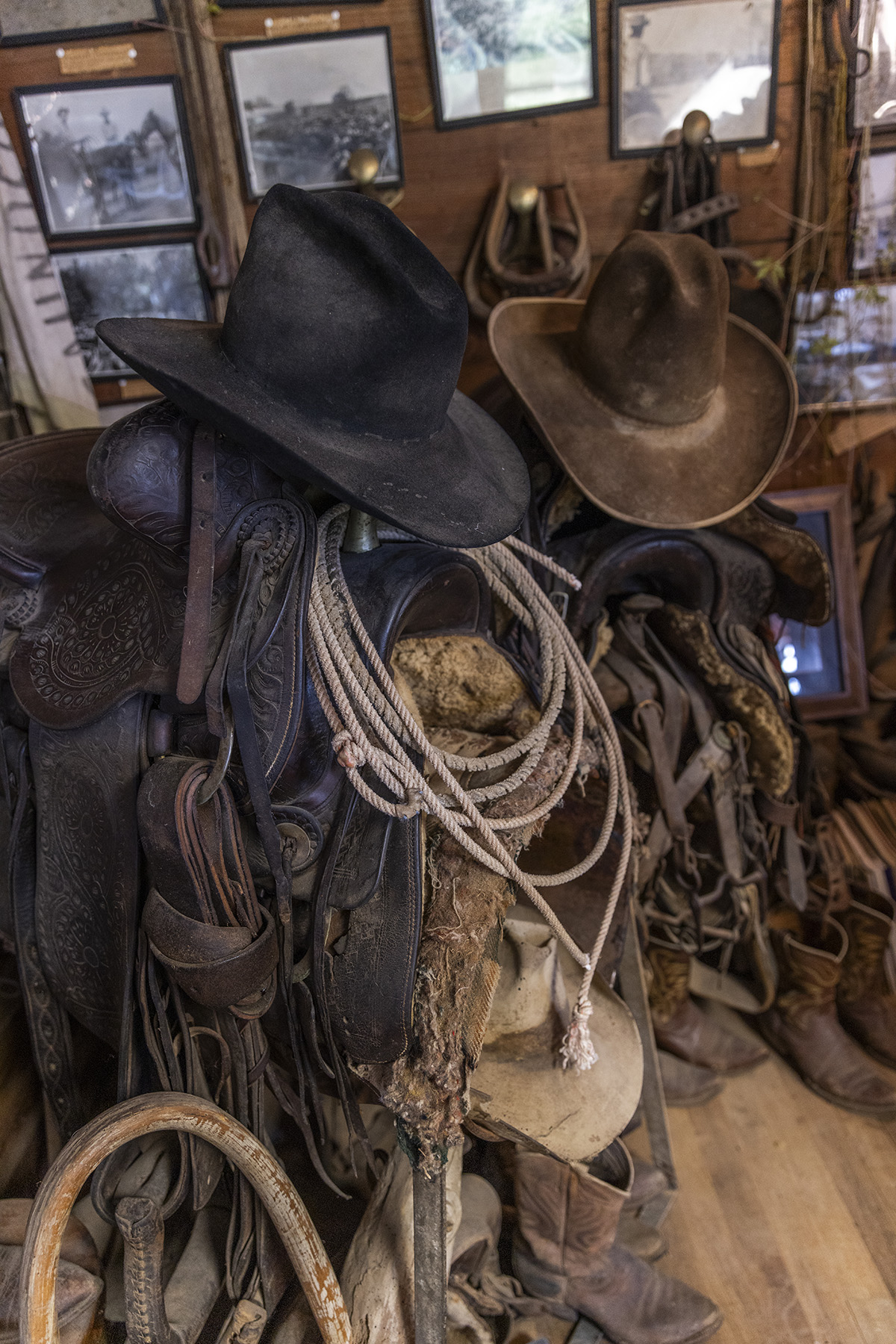
Taking from his predecessor’s penchant for the Western heritage record, Saunders IV co-produced the coffee-table book Texas Cowboys (1997) with David Stoecklein. Countless other works, from magazines to books to research papers, have likewise benefited from his unofficial involvement. In the old Saunders Ranch bunkhouse, a carefully maintained family archive catalogs an exhaustive inventory of family history, memories and artifacts.
Tactile dedications to domestic memory are priceless when sustaining the momentum of the valuable pride inside the fenceline. Whether times are good or bad, every manner of difficulty has been thoroughly weathered, studied, and built upon — since day one.
“Each generation’s been broke in the meanest of ways,” marvels Leslie Ann. “But not one of us didn’t get a horse rode or a cow sold. Not one. We’ve come so far, and that’s how we’ll keep doing it.”
The statistical implausibilities of a family ranching business passing from one generation to the next, let alone successfully, reinforce the idea that they’re still in the fight. Sobering research suggests the likelihood of a ranch passing from a founder to their children at around 30%. By generation five, the likelihood stands at well under 1%.
The Saunders family is currently entering its eighth generation, something very few businesses in American history can attest to. Nor does the calculus seem to indicate anything except forward momentum.
Following in the cowboy bootprints of his every predecessor, Thomas B. V has long enjoyed a sterling reputation as a horse trainer (or “bronc buster,” as Leslie Ann affectionately quips). Countless champion cutters and ranch horses have met their first saddle, achieved titles in the show pen, and found dependable places in respected outfits, all under his instruction.
“From my 20s to my 50s, we started 150 head of horses a year. Waggoner, Pitchfork, Y.O., R.A. Brown, I worked a lot of good ranches,” Saunders recounts. “I pride myself on the fact that I started a lot of good young hands, too. There’s a very qualified list of great riders today — not saying I made them, but I did help them. That’s a wonderful thing, looking back on.”
In fact, the 2026 champion of the World’s Greatest Horseman reined cowhorse competition, Jordan Williams, counts one of his earliest jobs under Saunders.
Born and raised on the land he still calls home, Thomas B. V pivoted on the cattle side from the registered Simmentals and commercial Simmental-Brahman crosses of his father to superblack Angus genetics sourced from their longtime friends at R.A. Brown Ranch, highly respected breeders in their own right.
In ranching, of course, being receptive to change is a part of the game that has never changed.
“Quality is better, and that’s what we gotta look for,” Saunders said. “You spend good money maintaining, so you’d better maintain in ways that take a dollar far. Inputs are higher, margins are slim, like they’ve always been. What’s this life ever been except being smart at choosing what, where, when, and how to work with what you got?”
Sentiments like these inform how the right decisive adaptation might bolster the bottom line in ways that keep the ranch house clocks ticking right along. Opening the gates to a TV crew is no less a practical choice than replacing an entire fence, pivoting to a different cattle breed, or adopting modern reproductive techniques in the mare band.
“The filming has been more than helpful,” Leslie Ann points out. “Call it a newly dug stock tank, a fixed-up gate, or a fresh coat of paint, the benefits are practical beyond any location fee. Sure, we gotta remember none of this is forever in the way that other decisions might be, but for many of our nice old things to get some nice attention, that benefits our home as good as any.”
“Cattle and horses don’t come second to anything, though, that part stays,” she is quick to clarify.
While the positive critical and commercial reception of Dutton Ranch suggests several years of renewals lie in store, the timeline behind even a record-breaking number of seasons would compare as a drop in a bucket against the lengthy history of the Saunders Ranch, a place Thomas B. V will always proudly view as a cow-calf operation first and foremost.
“You’re looking at seven generations of running Texas cattle, me and my kids. Legacy is a beautiful thing, but only if it survives. We never gave up. We never gave up. We get up every morning, punch some cows, ride some horses. Cause that’s what we’ve always done.”
The cameras begin to roll again, and the ranch onscreen brings the scene to life in ways only a century or two could afford.