


By Marice Richter
Southlake is known for its resplendent homes, carefully curated neighborhoods, top-rated schools and fabulous Town Square, with a myriad of shopping and dining options. Combined, these attractions make Southlake a desirable destination for newcomers in the area and locals seeking to relocate.
But like most cities, Southlake’s origins were as an unspoiled wilderness of grassy prairie land, timber forest and wild game. First inhabited by Native American tribes, settlers searching for cheap land and a better life began arriving in Texas from Missouri, Tennessee and other Southern states in the mid-1800s.
Early pioneer life wasn’t easy, but settlers established the small communities of Dove, White’s Chapel, and Old Union on territory long known as “the area west of Grapevine,” now Southlake.
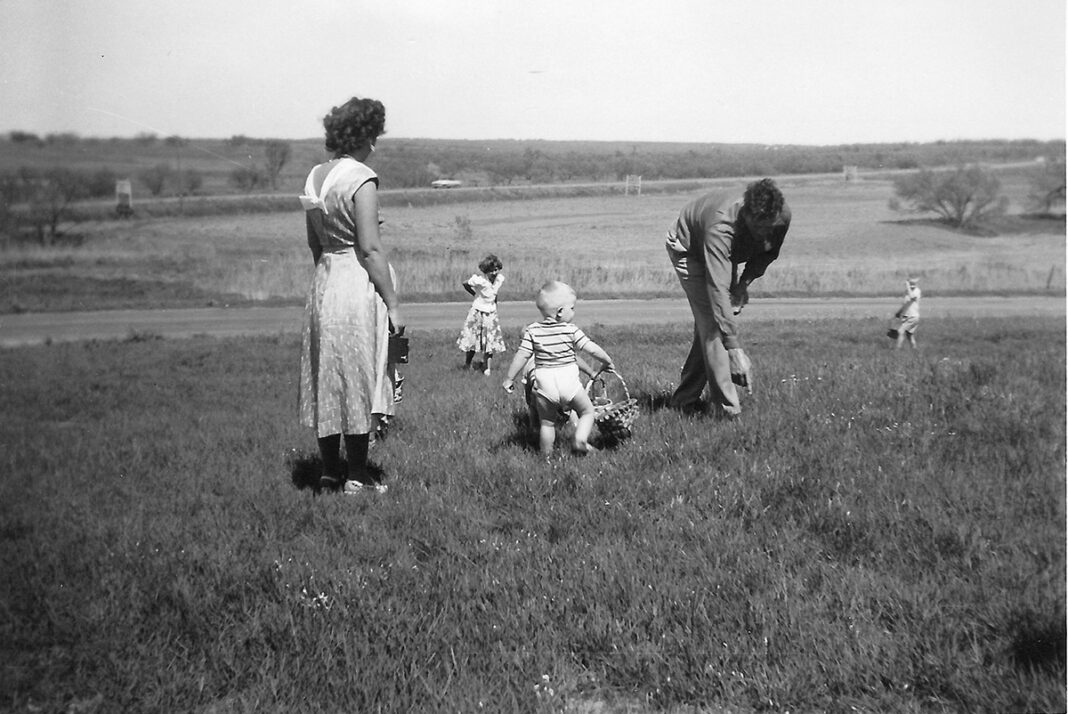
Residents formed the Southlake Historical Society to preserve the city’s history, starting from its rural beginnings to the present. As part of the organization’s efforts to inform residents and visitors of that rich history, the Historical Society presents an annual exhibit every summer at Southlake Town Hall, focusing on different periods.
This year’s 11th annual exhibit focuses on Southlake’s modern history, specifically its incorporation in 1956 and the monumental growth that followed. The exhibit runs from July 14 to August 23.
“This was something we wanted to do,” said Connie Cooley, president of the Historical Society, who was instrumental in helping inaugurate the program in 2015.
Past exhibits have focused on topics such as pioneer life, the first schoolhouse opening in 1919, the impact of aviation and the creation of Lake Grapevine.
“We’ve done so many topics and a lot of them had to do with pioneers in the Wild West, church leaders and cattle barons,” said Anita Robeson, historian of the Historical Society. “Because of all the newcomers to Southlake, we thought it would be nice to focus on more recent history. The focus on Lake Grapevine last year set the stage for this year’s exhibit.”
Southlake’s official founding is a fascinating story of determination. In the summer of 1956, rumors began to circulate that the city of Hurst, a fast-growing city with a population of about 10,000 and emboldened by the arrival of Bell Aircraft Corp., was looking to annex land up to Lake Grapevine.
A group of residents, many with long family histories in the unincorporated area that is now Southlake, began to worry about their future. They launched a petition drive to gather signatures to vote on incorporation.
“I don’t think that there’s any of us here that were very excited about being Southlake,” the late Mabel Cate, a longtime resident, was quoted as saying. “We just didn’t want to be Hurst. But they were coming right down the road after us.”
Although the 200 residents of the area preferred to avoid paying city taxes or abiding by new rules, the incorporation vote passed 30-24. Colleyville and Westlake similarly incorporated that year to block the Hurst land grab.
The new city’s name was suggested by the first mayor’s daughter, based on the city’s geographical location south of the lake. While the completion of Lake Grapevine in 1952 drew some new residents to the area, growth and development proceeded slowly for several more decades. The exhibit highlights significant milestones that occurred during each decade up to the present. With a population of 1,023 and school enrollment of 290 in 1960, the focus of the decade was establishing infrastructure necessities such as water, natural gas and sewer systems.
By 1970, the city’s population had grown to 2,031, and school enrollment had risen to 600. Still, a city official said: “We’ve got more head of cattle and horses than we do people out here.”
The opening of the new Dallas-Fort Worth Regional Airport in 1974 would become a game-changer for the city’s growth, particularly after American Airlines moved its headquarters to Fort Worth in 1978.
The 1980s marked the beginning of Southlake’s growth spurt, with the planning and development of sprawling housing developments, corporate campuses and the widening of FM 1709. The population in 1980 was 2,808, and school district enrollment was 735.
The 1990s ushered in rapid growth with the opening of what is now Carroll Senior High School, the groundbreaking for a new football stadium to accommodate larger crowds at Carroll Dragon football games and the completion of the city’s crown jewel, the 130-acre Southlake Town Square, including Town Hall. Bob Jones Park also opened. By 1990, Southlake’s population was 7,158 and school district enrollment was 5,850.
The 21st century brought more amenities and opportunities, including the Southlake Public Library in Town Hall, the new football stadium, the Bob Jones Nature Center & Preserve, along with other new parks, schools and recreational facilities. The hiring of Todd Dodge as head football coach in 2000 boosted the Carroll school district’s status as a powerhouse of Texas high school football. Southlake’s population in 2020 was 32,280, and school district enrollment was 8,292.
Today, Southlake stands as a vibrant, family-focused community that blends small-town charm with big-city amenities. Local pride has never been higher, with its top-rated schools, walkable shopping districts and growing roster of dining and entertainment options, Southlake offers residents a connected, active lifestyle rooted in tradition but open to innovation.