

By Hannah Barricks
Photography by Crystal Wise
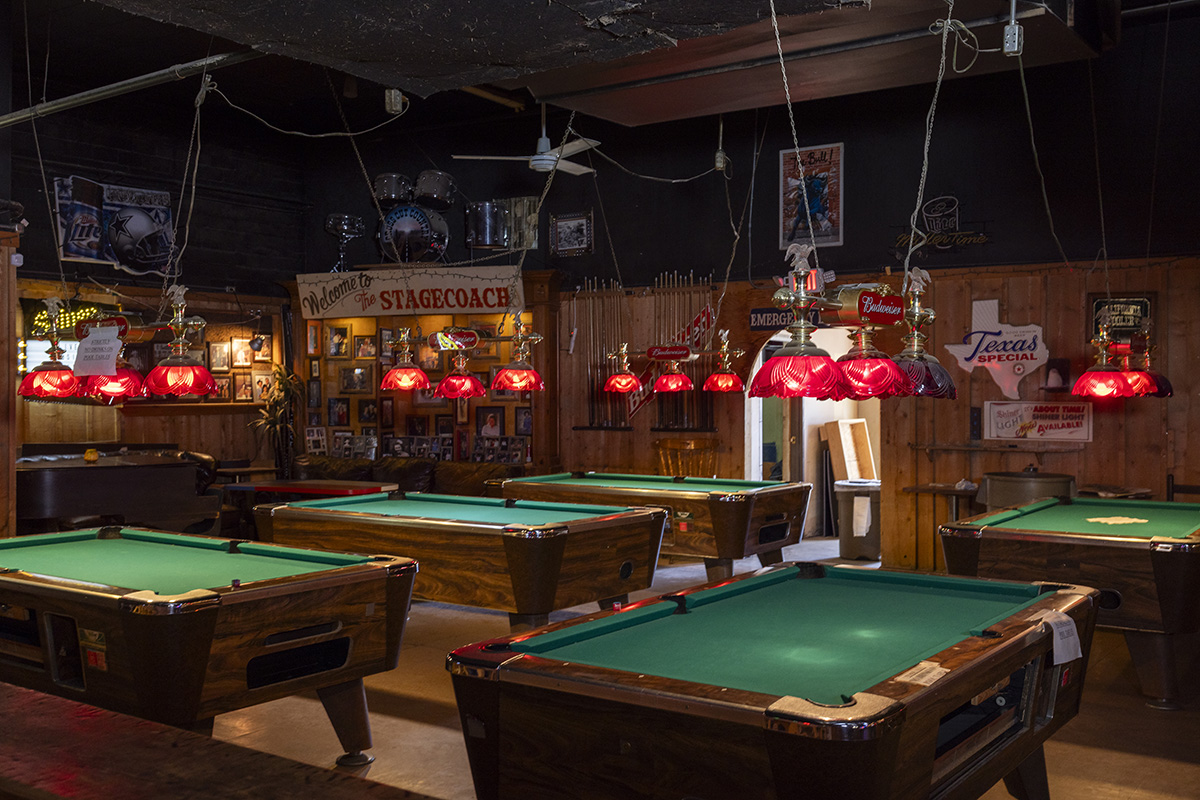
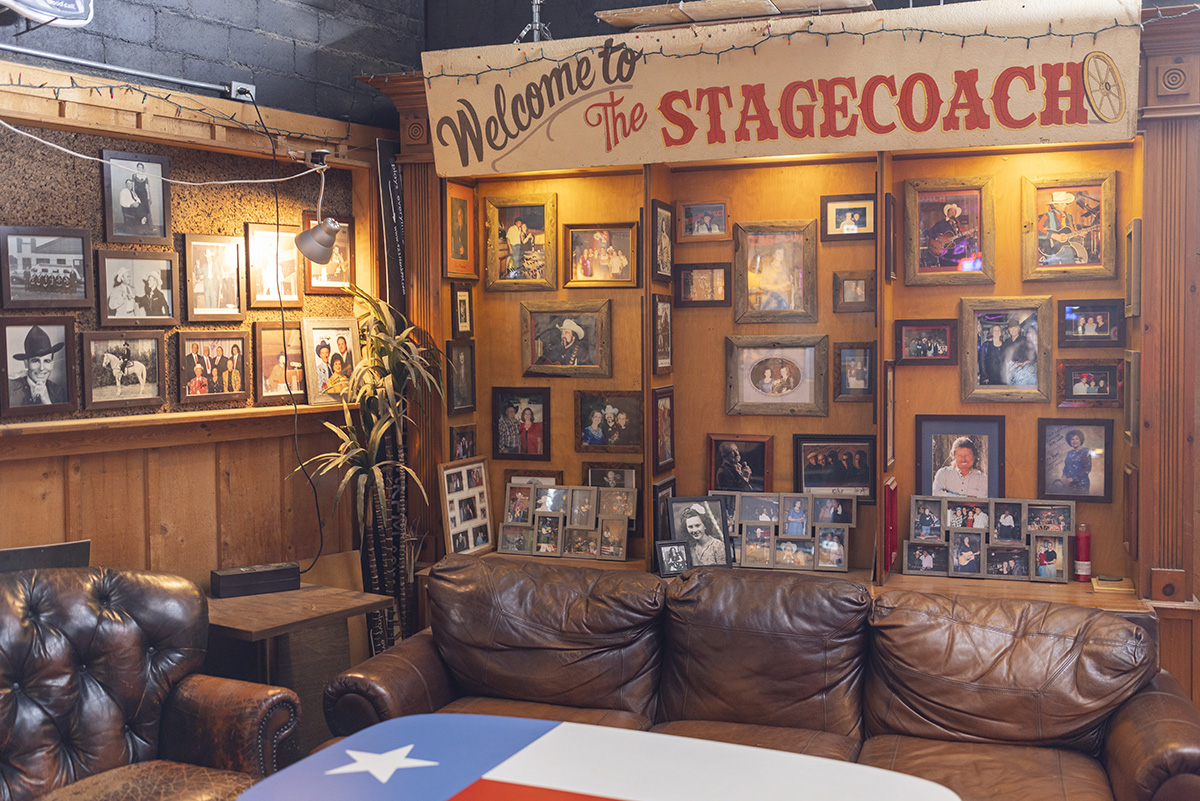
The walls inside Stagecoach Ballroom are lined with photographs — artists, regulars, moments caught mid-laugh or mid-song, decades stacked side by side and strung together with twinkle lights.
Owner Jean Czajkowski-Desai, who runs the ballroom alongside her husband, Kiran Desai, is at home among them, moving through the room with the self-assuredness of someone who knows every inch of it, past the bar, past the dance floor, toward a case near the back exit. From there, she pulls out a particular image.
It is an older photograph, framed in pine. Czajkowski-Desai’s family stands together under the glow of neon, and tucked in among them is Rob Lowe — captured at the height of his 1980s fame, when “St. Elmo’s Fire” had made him part of a generation defined by a spark in their youth that refused to burn out.
On the dance floor at Stagecoach, that idea still lives.
“This was just one of those moments,” Czajkowski-Desai says, tenderly tucking the frame back away. “We’ve had a lot of them.”
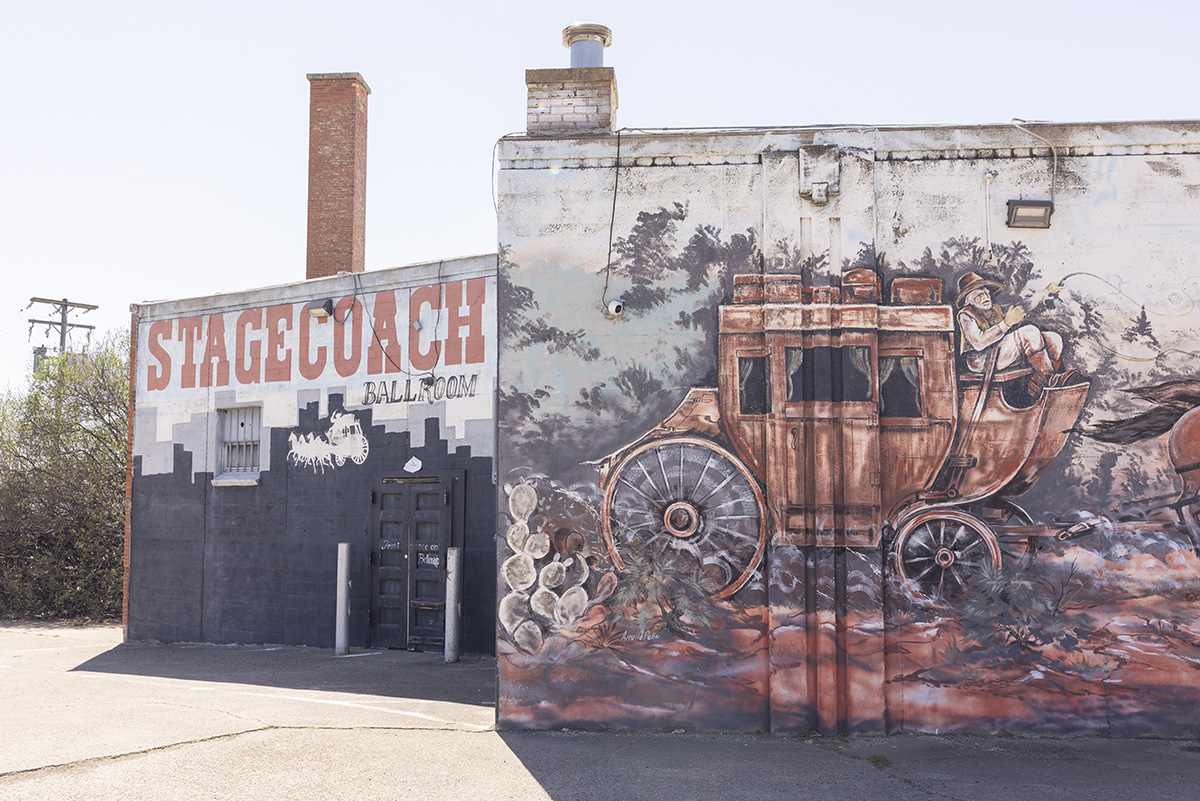
This spring, the family marked 50 years of ownership at Stagecoach Ballroom, a milestone tracing back to April 13, 1976, when Czajkowski-Desai’s parents and uncle took over the venue. The anniversary unfolded as part of a yearlong celebration, complete with two-steppin’, live performances and the continuation of a Western tradition that has sometimes lulled, but never really stopped.
Czajkowski-Desai has been part of that tradition for most of her life, though she did not always expect to carry it on.
In 1983, when her uncle was ready to sell his share of the business, the family faced a decision: let it go or keep it. She and her then-husband stepped in, taking on the financial and operational responsibility at a time when interest rates were high and margins were tight.
“We just wanted to keep it going,” she says. “It was too special not to.”
The couple saw more potential in the dancehall after buying out their uncle. It needed structure. Inventory required tighter cost tracking to match revenue. The work quickly became hands-on — balancing books, managing staff and handling the day-to-day realities of keeping the doors open.
Over time, the business adapted. The ballroom transitioned from its early BYOB model to a mixed beverage permit. Czajkowski-Desai introduced credit cards. The nightly house band gave way to a rotating schedule of performers as the economics of live music shifted.
“The model for live performances has changed,” she says. “Today, the artists cost more. Everything changes in this industry eventually, though, so you adjust.”
But not everything.
The dance floor remained the heart of the room — 3,500 square feet that has carried generations of two-steppers, regulars and first-timers alike. Prices stayed reasonable. Parking remained easy. And the crowd continued to be exactly what it had always been: a mix.
“You’ll see everybody here,” she says. “People from all walks of life. And they’re all dancing together.”


That sense of accessibility was not accidental. It reflected both the family’s philosophy and its roots. Czajkowski-Desai points to her Czech and Polish background, where dancing was cultural and part of everyday life.
“Dancehalls like this, a lot of them come from that culture,” she says. “It’s just what people do. And we like to call ourselves ‘family-friendly.’”
Today, Stagecoach remains a family operation in the fullest sense.
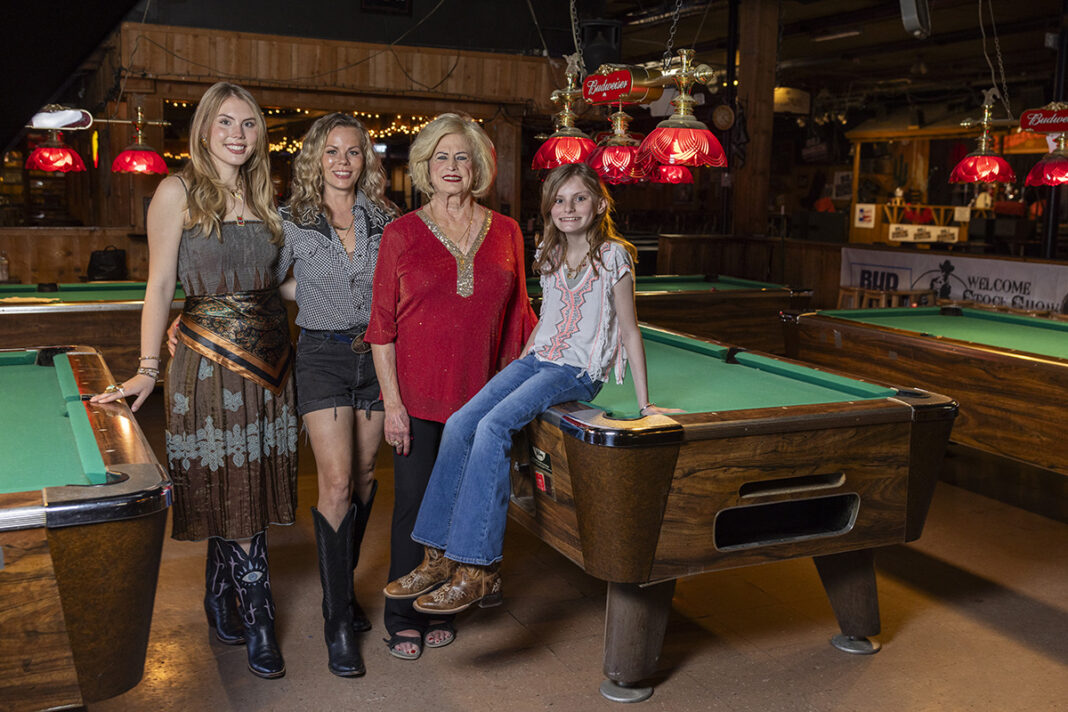
Czajkowski-Desai and Kiran Desai continue to anchor the business, while their children and extended family carry it forward in visible and behind-the-scenes ways. Her daughter Julia Paur, along with her husband Kyle, and their children — including Sophia-Jean and Eve Tyler Kroh — represent the next generation growing up inside the rhythm of the ballroom.
Elsewhere in the family, Jennifer Chidgey and John-Paul Chidgey, along with their children — Amanda, John-Luke, Katie and Tex — are part of the broader network that has remained tied to the venue over time, a reflection of how deeply the business is woven into family life.
The young blood is part of what drew a new wave of attention to the ballroom this year.
In early April, Stagecoach served as the filming location for country artist Ella Langley’s music video for “Choosin’ Texas,” a production that brought an all-star cast and crew through the doors. Among them were Miranda Lambert, Kaitlin Butts, Luke Grimes and Ava Phillippe, along with cameos that included Shad Ryan Mayfield, Dale Brisby, Casey Donahue and Wade Bowen.
The production came together quickly, unfolding over just a few weeks, but its impact lingered.
“When Ella chose Stagecoach Ballroom for this production, it felt like she was bringing a heartbeat back to our dance floor,” said Julia Paur, Czajkowski-Desai’s daughter.
For Czajkowski-Desai, the moment echoed others she has experienced over the years — film crews, touring artists, nights on the dancefloor — some captured in photographs that still hang on the walls, but not always guaranteed to return.
“This one felt special,” she says.
In a city that continues to grow and reinvent itself, the ballroom shows it can bend rather than break. It evolves when necessary, but it does not chase trends. It holds onto what works: the floor, the music, the mix of people and the sense that nothing here needs reintroduction.
It continues.
Just as the anniversary crowd thinned in April, with only regulars lingering near the bar, not quite ready to leave, chairs scraped back into place and the floor cleared.
Czajkowski-Desai has seen that moment thousands of times.
It never really feels like an ending.
Fifty years in, Stagecoach doesn’t ask much of the future.
Just that it keeps showing up — and they’ll keep throwing the party.