

By Hannah Barricks
Photography by Crystal Wise
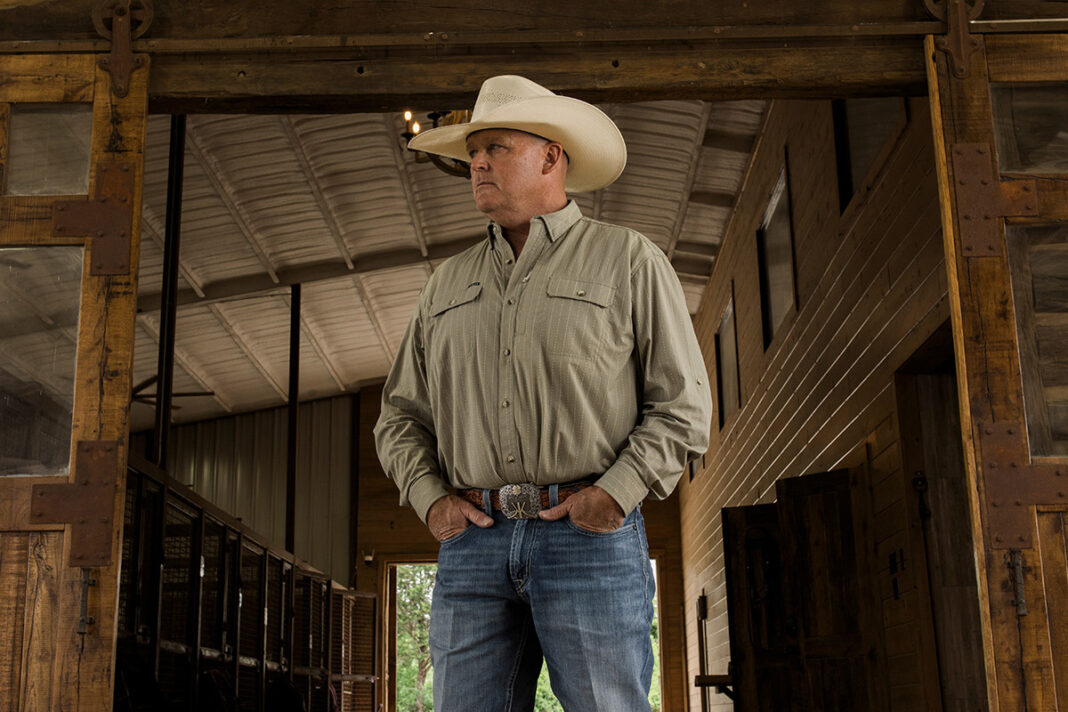
Just outside Fort Worth, where pavement gives way to pasture, Kerry Kelley moves across his property with practiced ease, guiding an all-terrain vehicle past a showroom of heirlooms and toward a newer workshop still taking shape behind his home.
Inside the showroom, a framed magazine spread preserves an earlier version of Kelley — younger, hair lighter beneath his hat — alongside a line that still defines him:
“One thing about me? I’m from Parker County.”
Behind him, his son, Kayden Kelley, follows in a black pickup, keeping pace across the land and the business they are increasingly learning to share.
The farther into the property you go, the more personal it becomes. Workshops sit behind landscaped paths lined with native plants and tropical greenery, the business and home existing side by side without much separation.
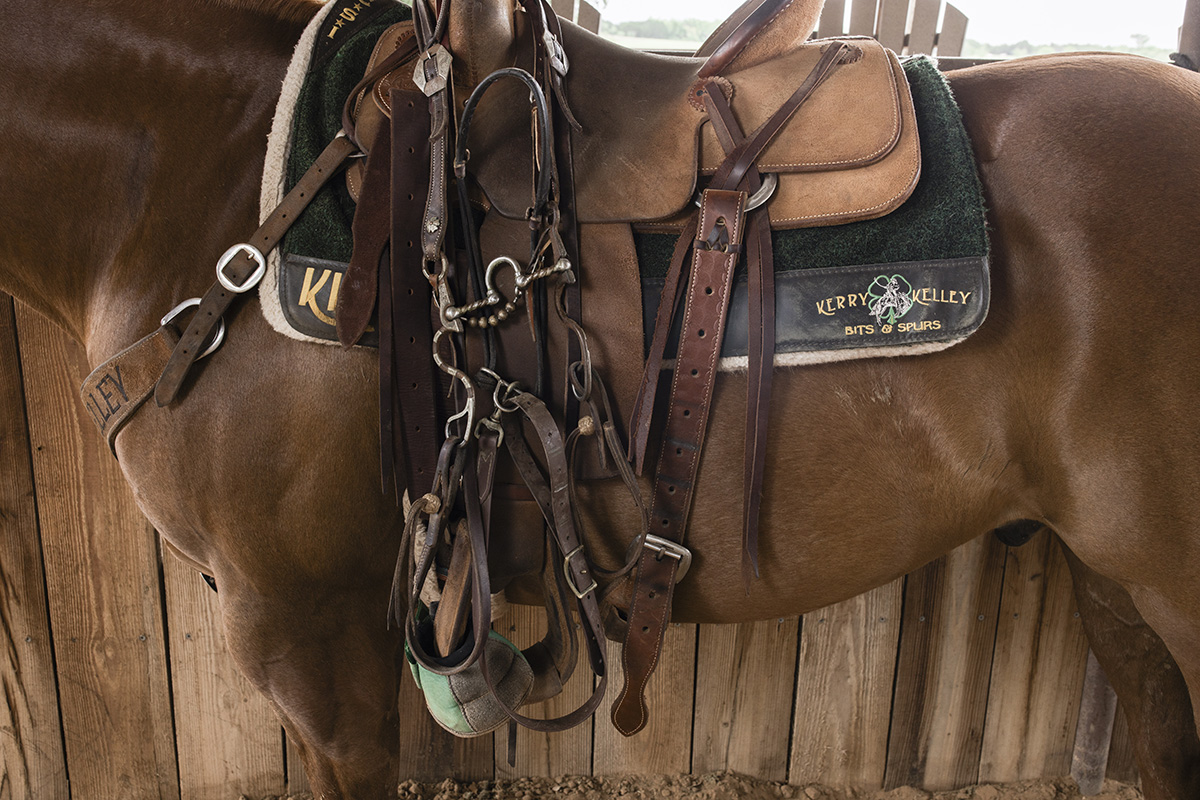
At Kerry Kelley Bits & Spurs, legacy is not treated as an abstract idea. It is shaped daily in steel and silver, then handed carefully to the next generation.
Where Work and Life Converge
At Kelley’s property, work and home are not divided cleanly. The workshop begins where the backyard ends.
The showroom offers a curated introduction to the brand. Glass cases hold pieces that trace both craftsmanship and memory. Near the entrance, a pair of custom superhero cowboy boots made for Kayden as a child rests behind glass. Toward the back, more valuable pieces sit inside a large antique safe, the weight of the door matching the significance of what it protects.
Nearby, a hat display offers a more accessible entry point into the brand — where handcrafted tradition meets everyday wear.
“We want people to use what we make,” Kelley says. “If it becomes something they keep forever, that’s great. But it’s meant to be used.”
Built, Not Taught
Kelley did not arrive here through formal training. His path was shaped first by steel, then by horses.
His stepfather, a metallurgist at a Fort Worth heat-treating company, introduced him early to the mechanics of durability — what makes metal hold, bend or fail. Outside of that world, Kelley spent his time ranching and roping, briefly riding bulls before deciding, as he puts it, “it’s not if you get hurt — it’s when.”
A mentor, Bill Todd, eventually introduced Kelley to spur maker Ray Anderson, who offered critique rather than instruction.
“I’d take him what I was working on,” Kelley says. “He’d just say, ‘You might want to try this next time.’”
There was no apprenticeship, only repetition. Kelley began making spurs for coworkers, then members of the sheriff’s posse, before demand gradually expanded beyond Parker County.
In 1995, he committed fully to the business after his wife, Wendy Kelley, secured stable work of her own.
“Looking back, it was a big leap,” he says. “But it worked.”

A Business That Refuses to Scale
Today, Kelley’s operation could likely be much larger.
Demand stretches far beyond Texas, and the company now employs a team of eight while operating alongside a foundry Kelley acquired to maintain control over production.
Still, growth for growth’s sake has never been the objective.
“You lose something when it gets too big,” Kelley says. “We like staying hands-on.”
That philosophy continues to define the business in an industry increasingly shaped by mass production and overseas manufacturing. Kelley remains committed to domestic production, smaller runs and precision craftsmanship.
“We want to make something that looks good,” Kayden says. “But more than that, we want to make something that lasts.”
Every bit carries a guarantee: wear it out, and they replace it.
“You used it that much,” Kerry says with a grin. “I’ll give you another one.”
The Work Itself
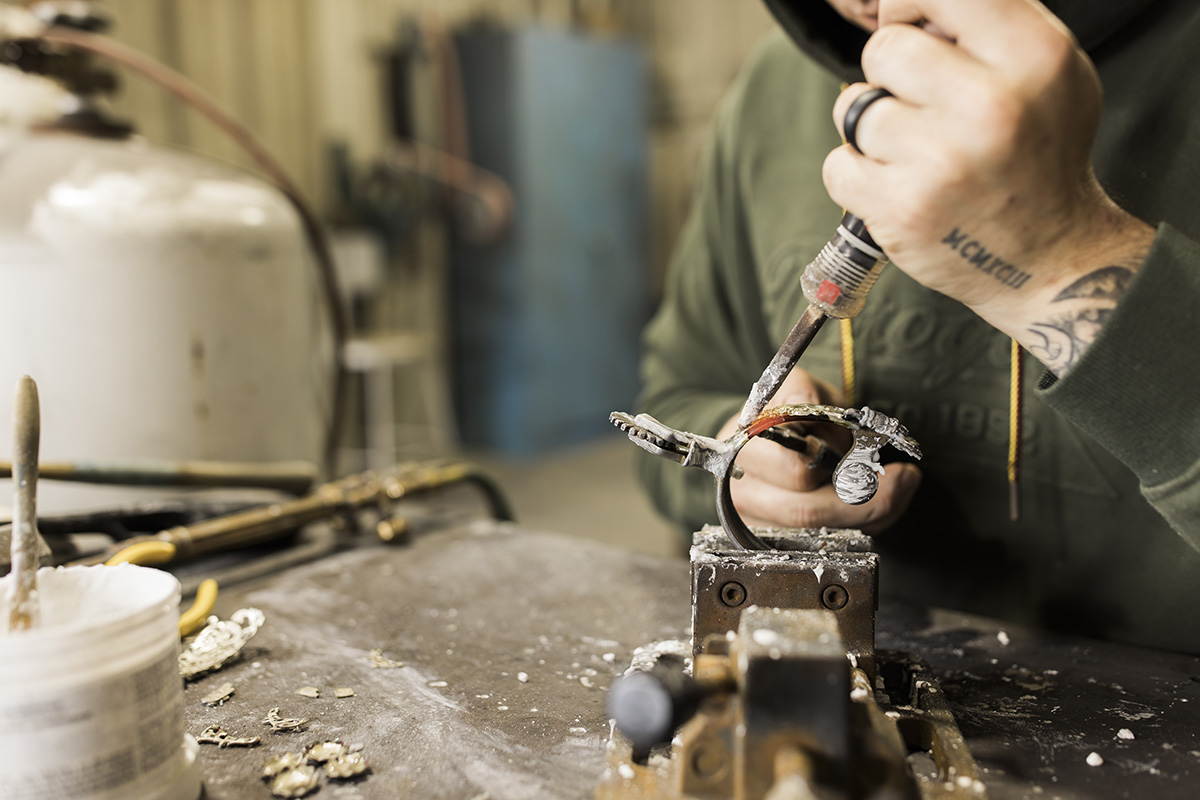
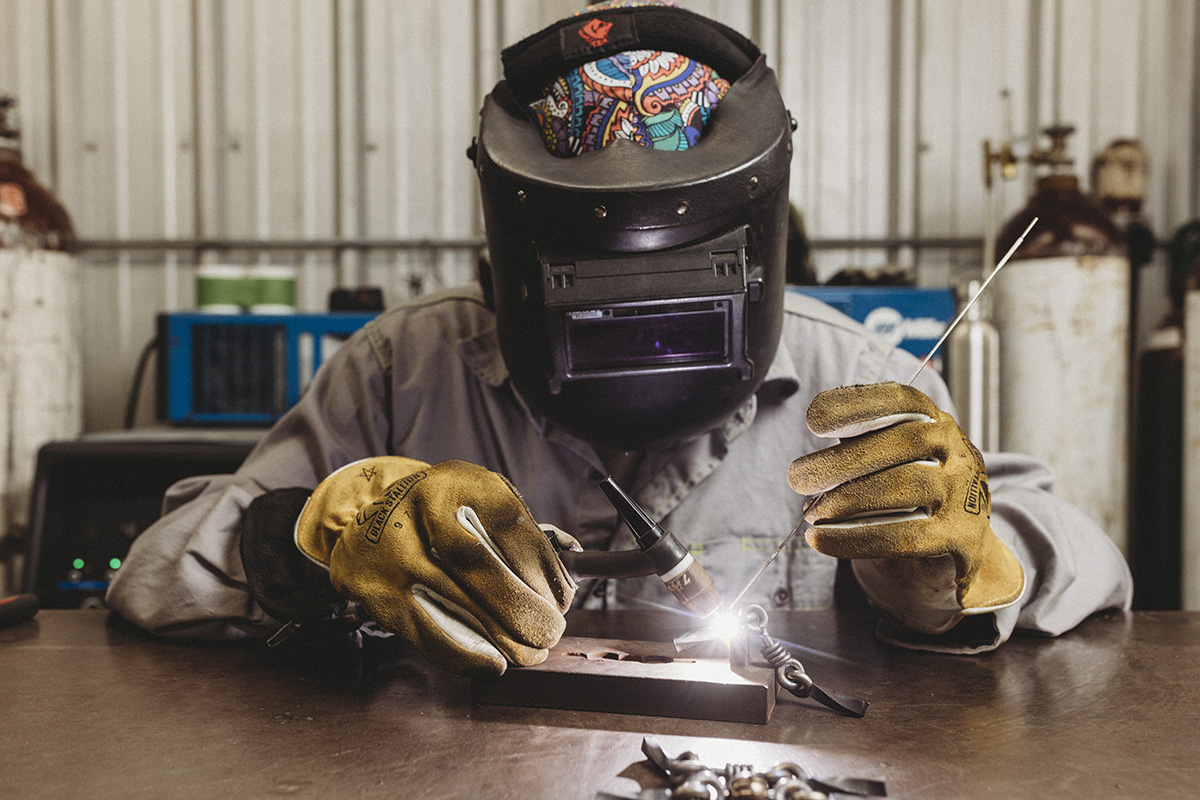
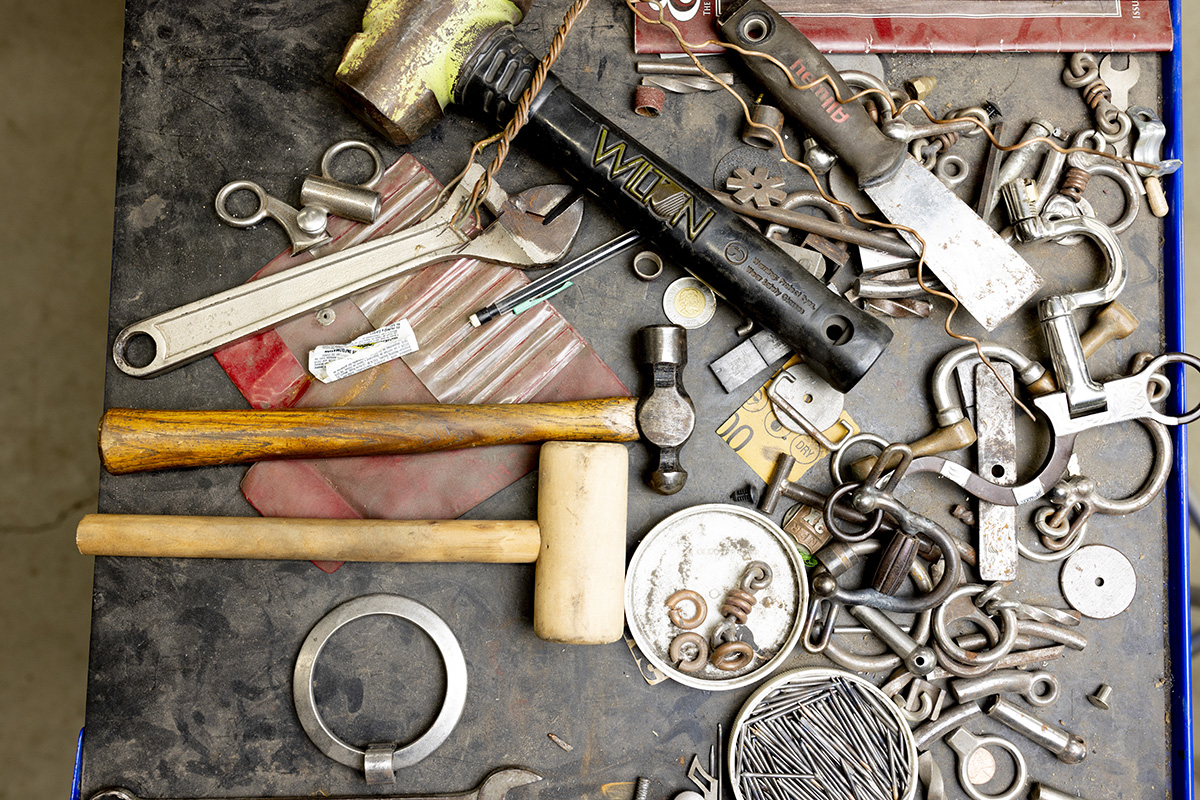
Inside the original workshop, the process unfolds in stages — cutting, welding, engraving — with craftsmen specializing in specific parts of production before components come together as finished pieces.
Technology now assists where it makes sense. Digital design tools and laser equipment help create patterns that once required manual drafting, adding precision without sacrificing individuality.
Still, the philosophy behind the work remains largely unchanged.
“You can’t reinvent the wheel,” Kelley says. “But you can make it better.”
Old Shop, New Vision
Behind Kelley’s home, the original workshop still stands as a reminder of where the business began.
Nearby, a new shop is nearing completion.
Its cleaner lines and expanded layout reflect a shift toward efficiency, but not away from the values that built the company. The contrast between the two spaces feels symbolic: one preserving decades of work, the other preparing for what comes next.
For Kelley, the transition is intentional.
“I’m lining it out so they can run it,” he says.
The Next Generation
That “they” increasingly includes more of the Kelley family.
At 25, Kayden represents both continuity and change — less focused on fabrication than his father, but deeply invested in the company’s future. Recently graduating with a degree in business management, he has stepped into the role of director of operations for the company.
“I don’t know if I’ll ever be fully ready,” he says. “But I’m learning.”
His siblings are finding their own paths as well. Kanyon Kelley, a student at Texas Christian University, balances interests in aviation, finance and art, while Karter Kelley, a freshman at Tarleton State University, is pursuing elementary education.
Legacy here is not framed as obligation. It is treated more like opportunity — an invitation rather than an expectation.
Letting Go
As Kelley moves across the property, pointing toward the new shop and then back toward the original workspace, there is a sense of pride, but also readiness.
“I’m trying to retire,” he says, half-joking.
The timeline remains loose — three years, maybe sooner — but the transition is already underway. Kelley now works shorter days where he can, gradually stepping back from the pace that defined much of his life.
Not far behind him, Kayden keeps pace — observant, steady, already carrying part of what comes next.
Inside the showroom, that earlier version of Kelley still looks out from the framed magazine spread, the same line printed beneath him.
The work has evolved. The future is taking shape beyond the old shop.
But some things were decided long ago.