


By Hannah Barricks
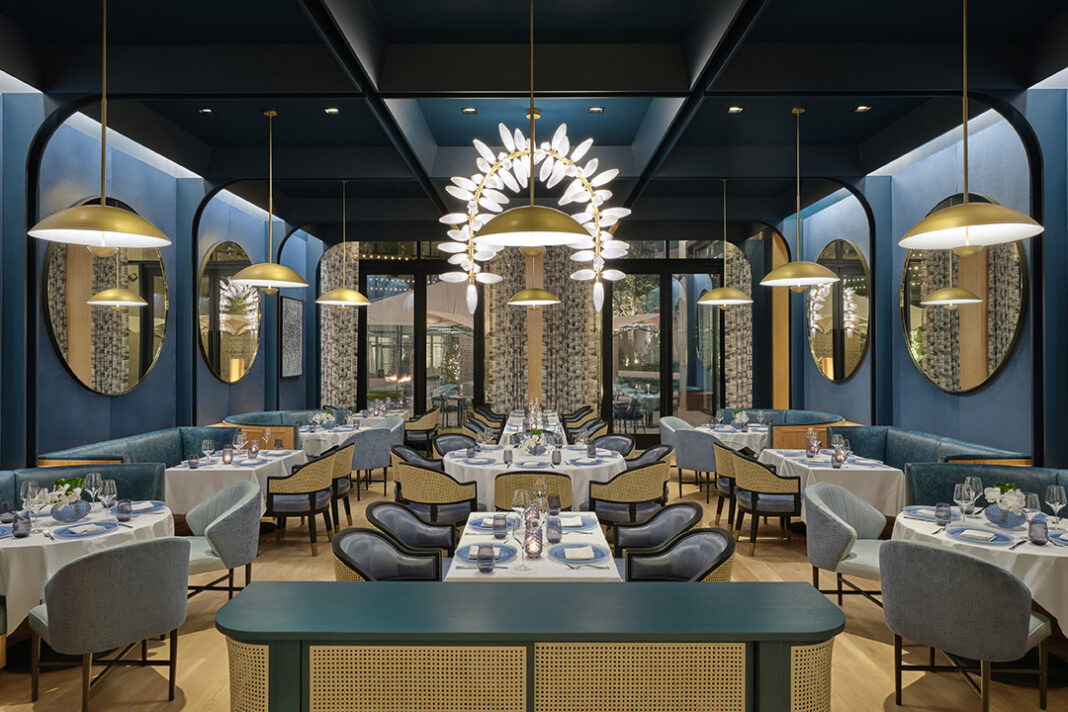
Some dinners leave you remembering a single exceptional dish. Others stay with you because of the conversations around the table. The Blue Room’s recent Caymus Wine Dinner at The Crescent Hotel Fort Worth was memorable for both, bringing together four carefully prepared courses and wines from across the Wagner family’s labels for a dining experience built around curiosity, conversation and discovery.
Lauren Alford, North Texas market manager for Wagner Family of Wine, begins the evening by acknowledging what many guests likely expect.
“I know you probably think of big cabs when you hear ‘Caymus,’” she says. “But this evening, you’ll also get to try some of the other beautiful wines we make.”
Her comment immediately sets the tone. Rather than centering exclusively on Caymus’ celebrated Cabernet Sauvignon, the dinner introduces guests to several wines produced by the Wagner family — and the stories behind them.
As each course arrives, Alford shares pieces of the family’s history. Chuck Wagner was only 19 when his parents asked whether he wanted to help establish the family business. Had he declined, they planned to sell the farm and move away. He agreed, and the winery founded in 1972 remains family-owned, with a third generation of Wagners now involved in its winemaking.
She also introduces guests to Chuck’s daughter, Jenny Wagner, through the evening’s opening wine, Emmolo Sauvignon Blanc. Jenny carries forward her maternal family’s Emmolo name, Alford says, while embracing a “less is more” philosophy that favors balance and restraint.
That Sauvignon Blanc arrives alongside amberjack crudo with kumquat and micro cilantro. Bright citrus notes complement the delicate fish without overwhelming it, creating an understated opening before the evening moves into two Cabernet Sauvignon expressions.
I’m seated beside writer Andrew Chalk, whose career has been built around wine, food and travel. His expertise could easily have made me self-conscious, but he never tells me what I should taste or treats the meal like a test.
Instead, he asks questions.
“What stands out to you first?”
“Do you notice how the flavors change after another sip?”
I answer as honestly as I can, partly out of respect for someone who has spent years studying the subject. Andrew never corrects me or nudges me toward a preferred answer. His questions simply keep me present. Instead of moving from one course to the next, I find myself returning to each glass after another bite, noticing distinctions I might otherwise have missed.
The second course quickly becomes my favorite. Doppio ravioli, filled separately with mortadella and gorgonzola, rests in a smoked ham hock velouté that feels luxurious without becoming heavy. Paired with Caymus California Cabernet Sauvignon, each sip softens the sauce’s richness while brightening the savory filling.
Next comes moulard duck breast with blackberry and mole negro, accompanied by Caymus Napa Valley Cabernet Sauvignon. Earlier, Alford encourages guests to reserve a small pour of the California Cabernet so the two wines can be tasted side by side. She describes the California bottling as approachable and fruit-forward, while the Napa Valley Cabernet offers greater depth, structure and aging potential.
Comparing them reveals differences I likely would have overlooked on my own. The Napa Cabernet feels fuller and more layered beside the duck, but what surprises me most is how the blackberry lifts the mole. I reach for another sip almost instinctively — not because anyone suggests it, but because I genuinely want to see what changes.
Dessert brings a baba rum cake with raspberry and Chantilly cream alongside Emmolo Sparkling Wine. Produced using the traditional Champagne method and aged for 38 months on the lees, the wine offers fine bubbles and a lightly toasted character. Its crisp acidity balances the cake’s sweetness while reinforcing Alford’s belief that sparkling wine belongs throughout a meal, not just at dessert.
At the end of the evening, guests can purchase featured bottles to enjoy at home, but the greatest takeaway I leave with comes uncorked.
The meal wasn’t simply a tasting menu or a lesson in wine but a dining experience, built around conversation — between chefs and guests, winemakers and diners, experts and newcomers.
Long after the final glass emptied, those conversations remained.