

By Rachael Lindley
Photography by Crystal Wise
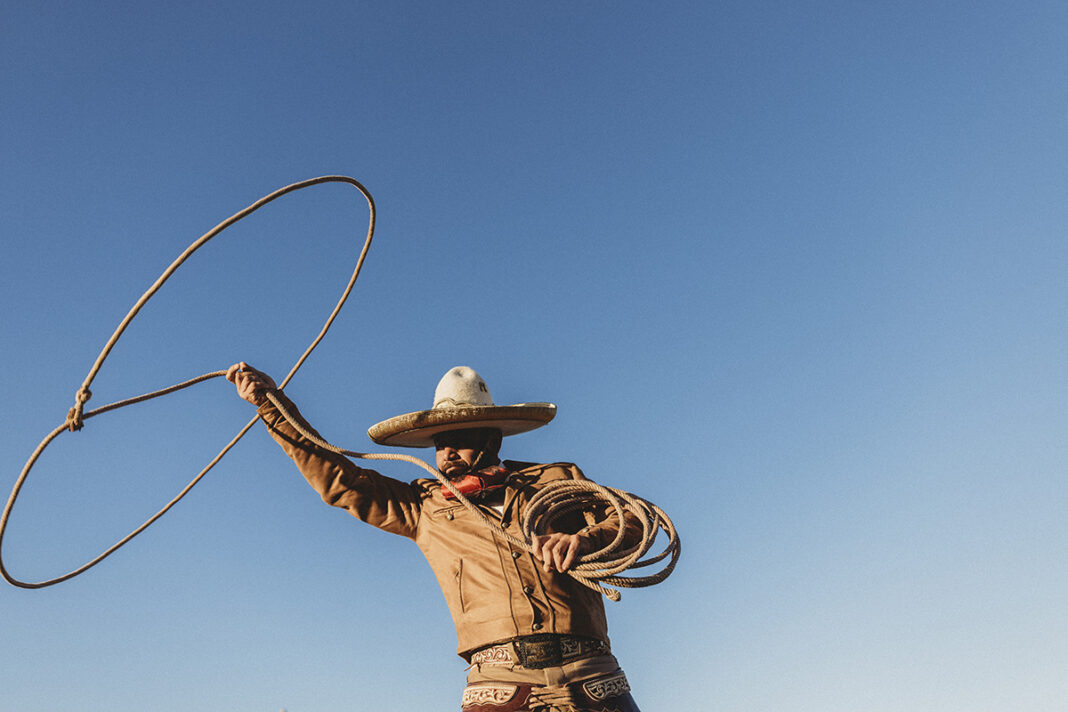
In the Central regions of Mexico, the Charrería tradition was never something learned: it was lived — passing quietly from one generation to the next.
“It’s not a sport,” says Luis Quirino. “It’s a way of life.”
The roots of the Charro reach back centuries, to the arrival of Spanish settlers who brought horses and cattle to Mexico. Indigenous people were initially barred from riding, but necessity changed everything. Ranch owners needed skilled hands, and soon the men working the land became exceptional horsemen. Over time, everyday ranch labor evolved into competition — roping, riding, and horsemanship performed not for spectacle, but mastery. Eventually, these traditions gave rise to Charrería, now recognized as Mexico’s national sport.
For those who carry the title of Charro today, the history is deeply personal.
Raised in Zacatecas, Mexico, Quirino grew up tending horses alongside his brother long before leisure was an option. “We never saw it as work,” he said. “It’s passion. It’s in our blood.”
His grandfather, a general in the Mexican Army, once oversaw the military’s horse division. His first Charro suit belonged to his great-grandfather — an heirloom worn thin by time. Wearing it meant stepping into a lineage of horsemen whose skills were learned by observation, repetition, and trust, something he passes on when he teaches young riders today. He wistfully remembers being gently reprimanded, “No charrito, do it this way.”
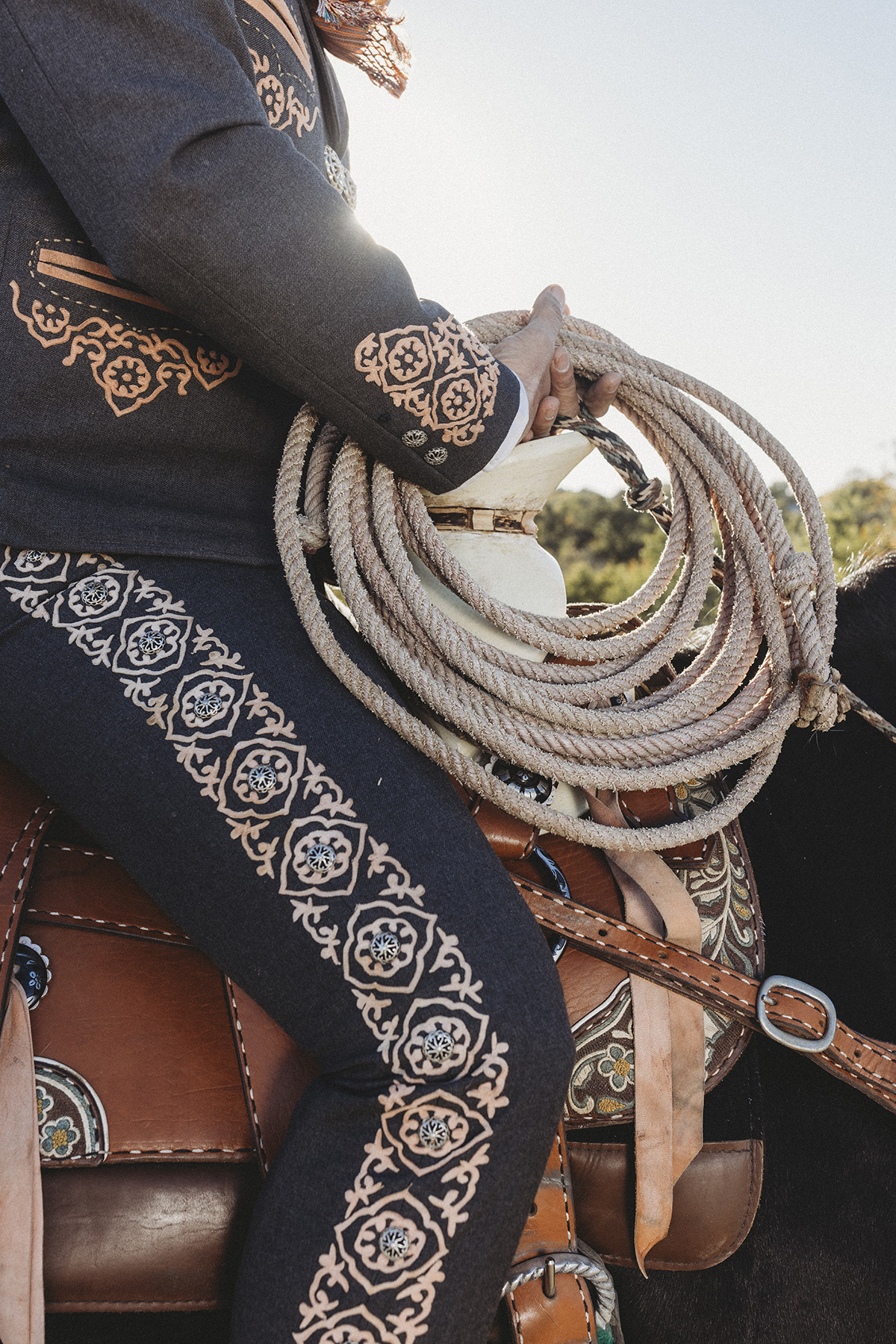
The Charro suit is one of the most visually striking symbols in Western culture, yet its beauty lies in its function. The leather chaps once protected riders from mesquite thorns and cactus spines. The spurs attach directly to the heel, unlike American styles. Pants are hand-cut leather, adorned not with thread but strips of leather stitched into intricate designs. Even the belts are handwoven, each pattern intentional.
Each suit also has its own religious memorabilia with the Virgin Mary to protect its riders.
Color rules are strict. Bright modern hues are forbidden. No turquoise, no bold purple. Instead, Charros wear earth tones, blues, greens and browns reflecting the landscapes that shaped the tradition.
The wide-brimmed Charro hat, elegant and imposing, serves a vital role. “It’s our helmet,” he said. During a serious fall, Qurino’s hat cracked clean through, protecting his head while he spent days recovering from internal injuries.
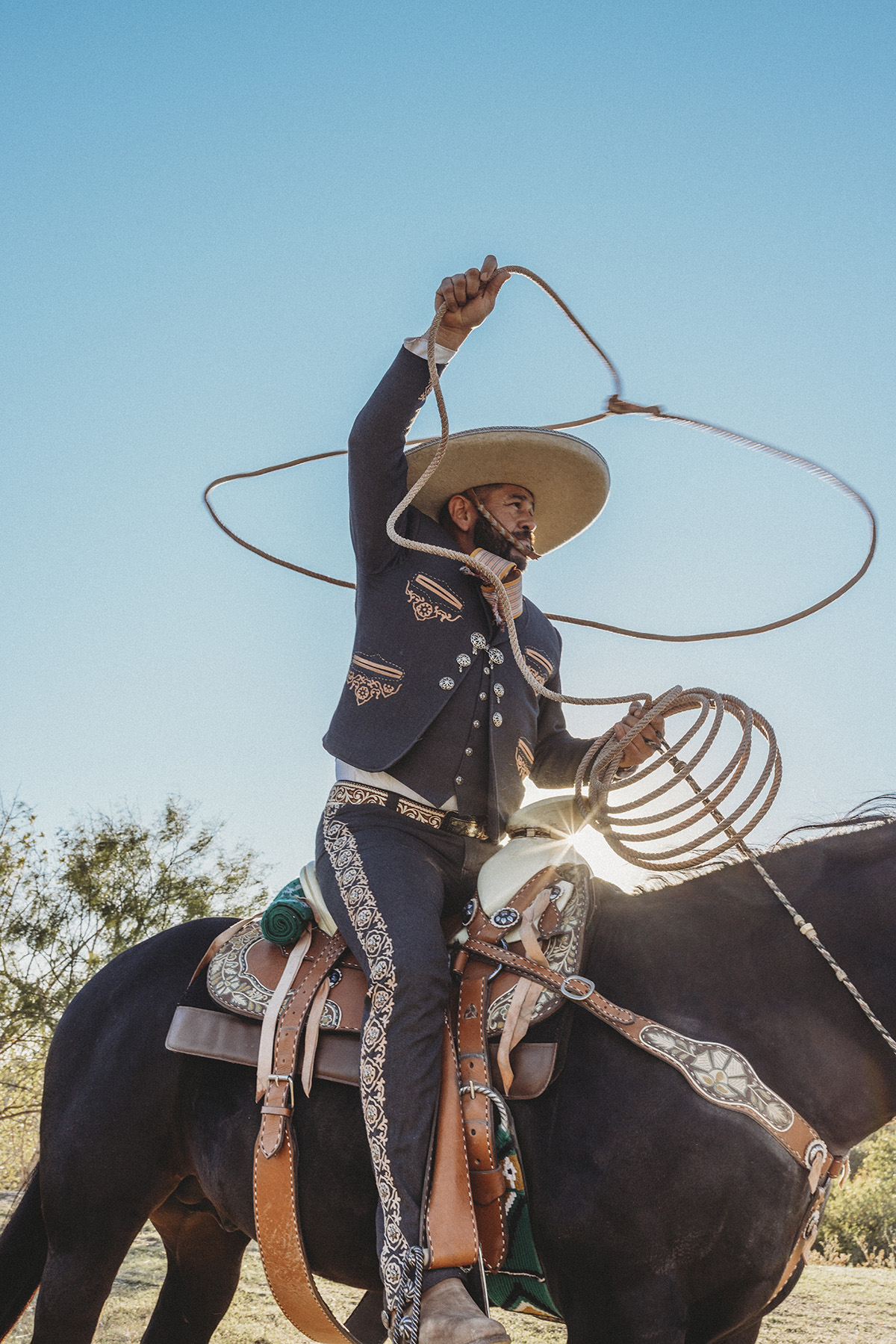
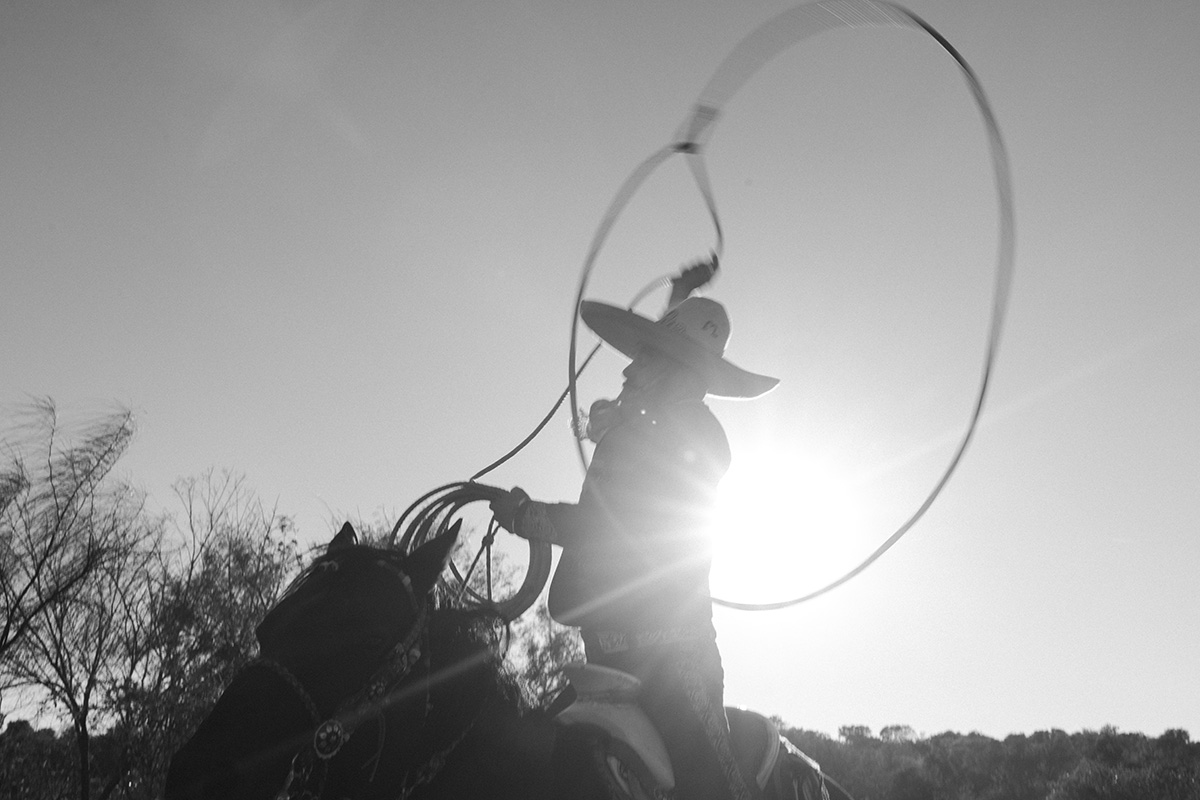
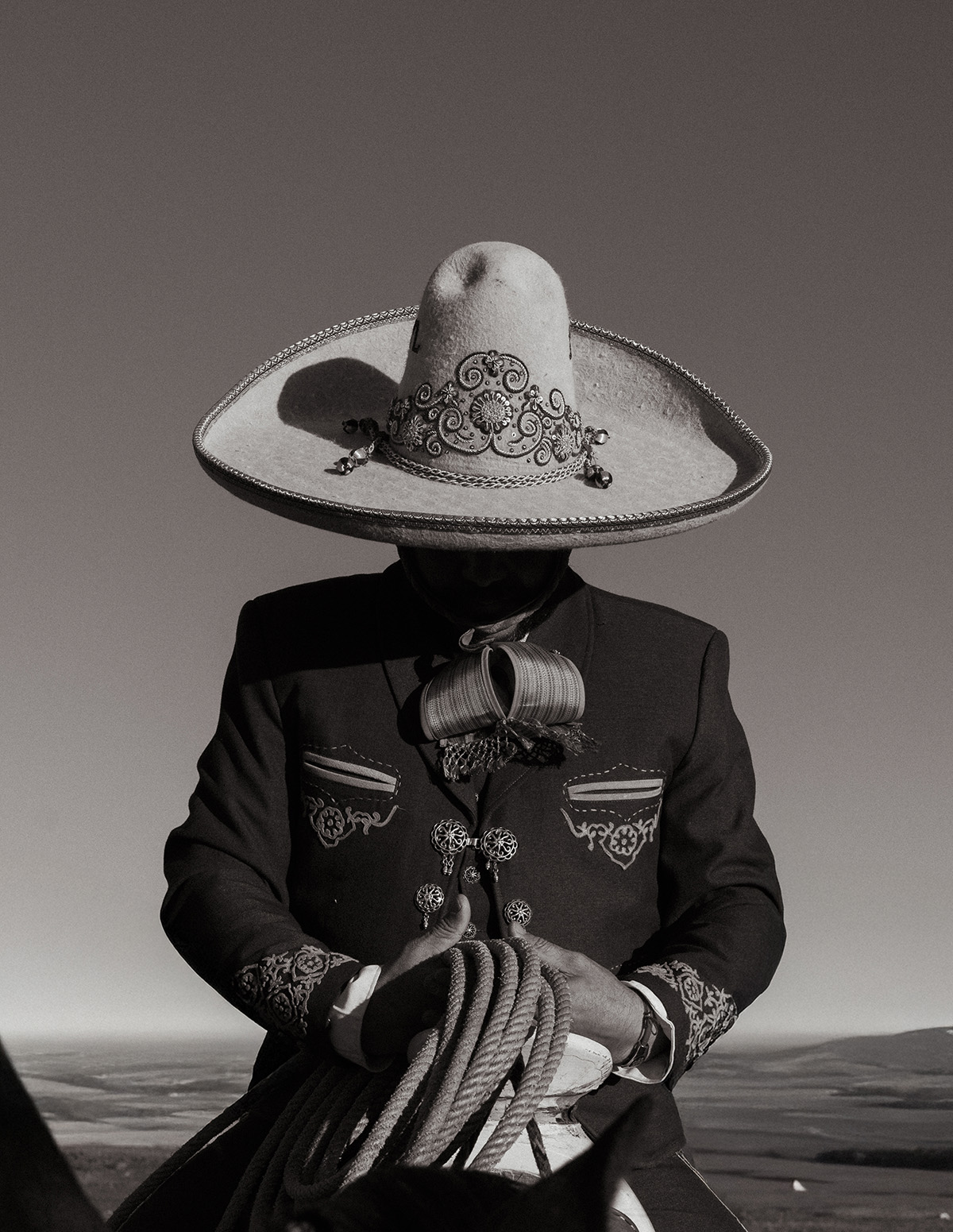
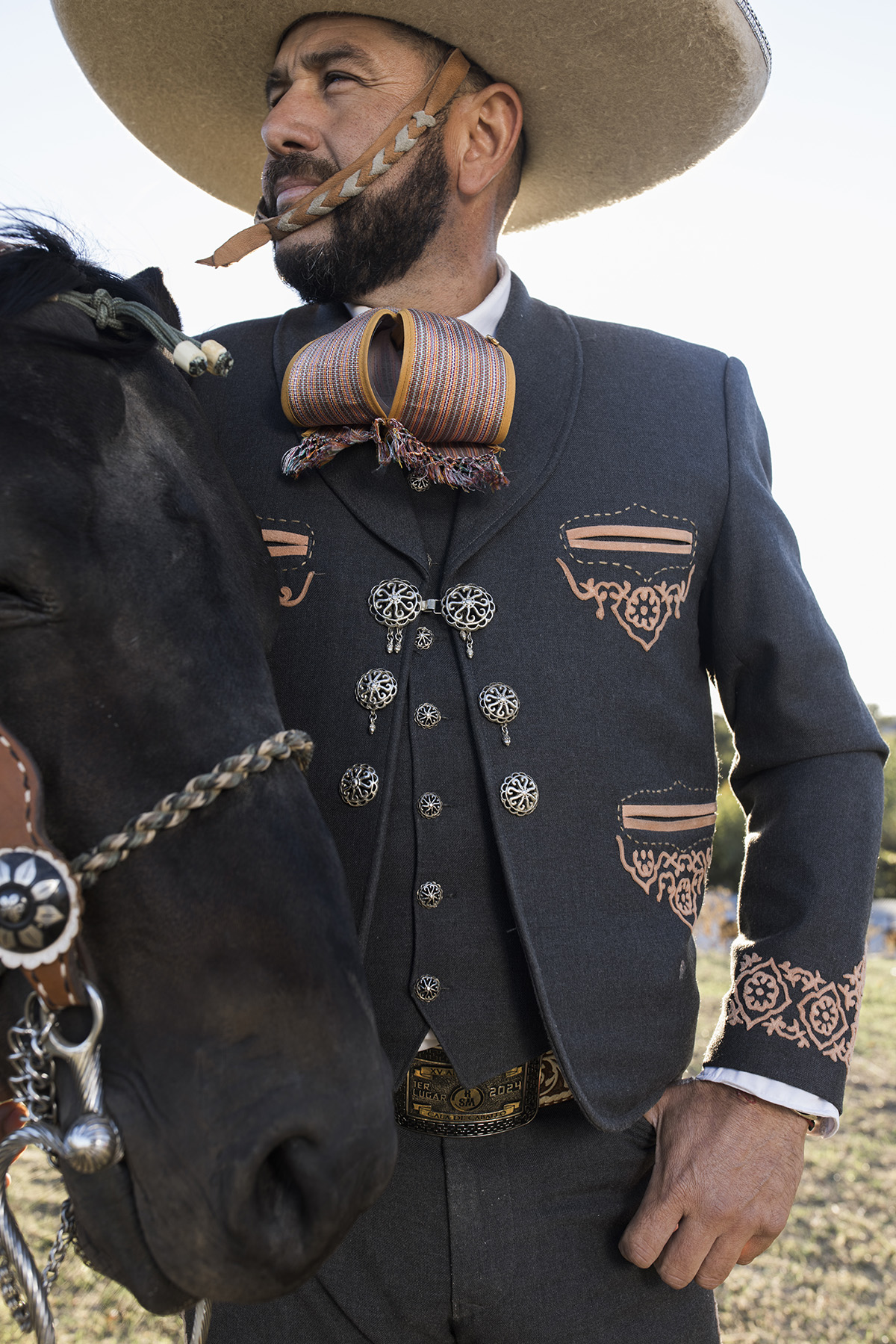
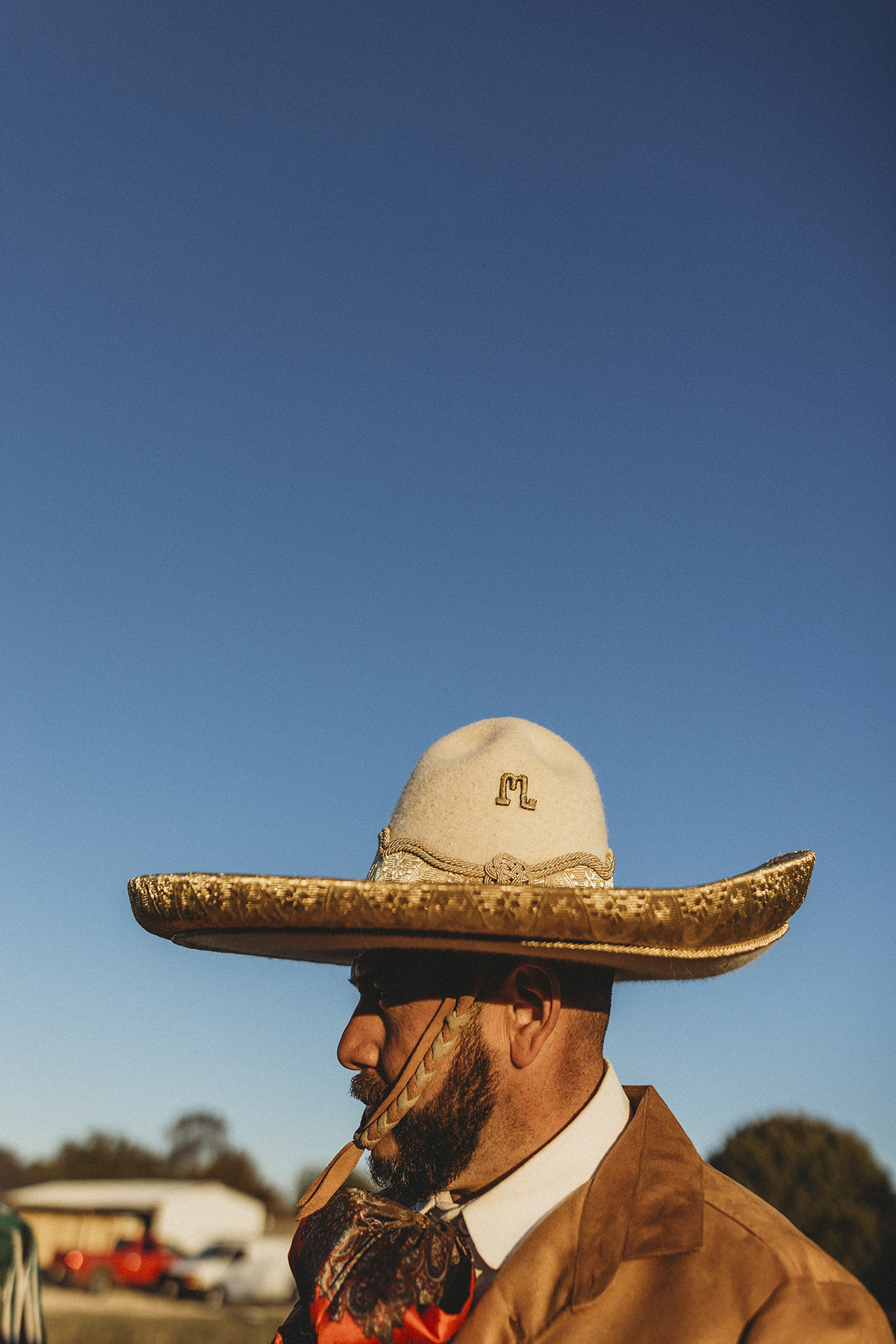
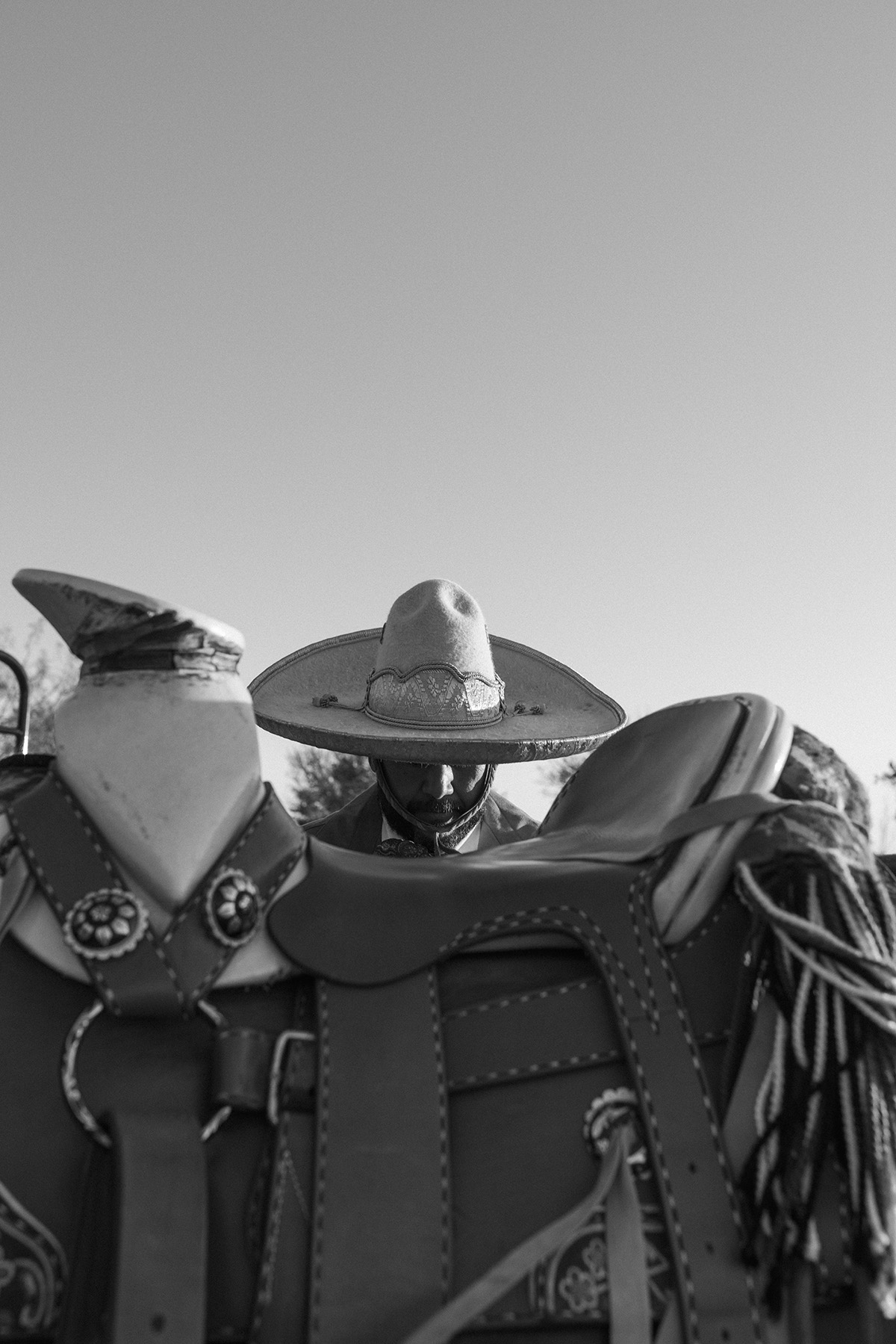
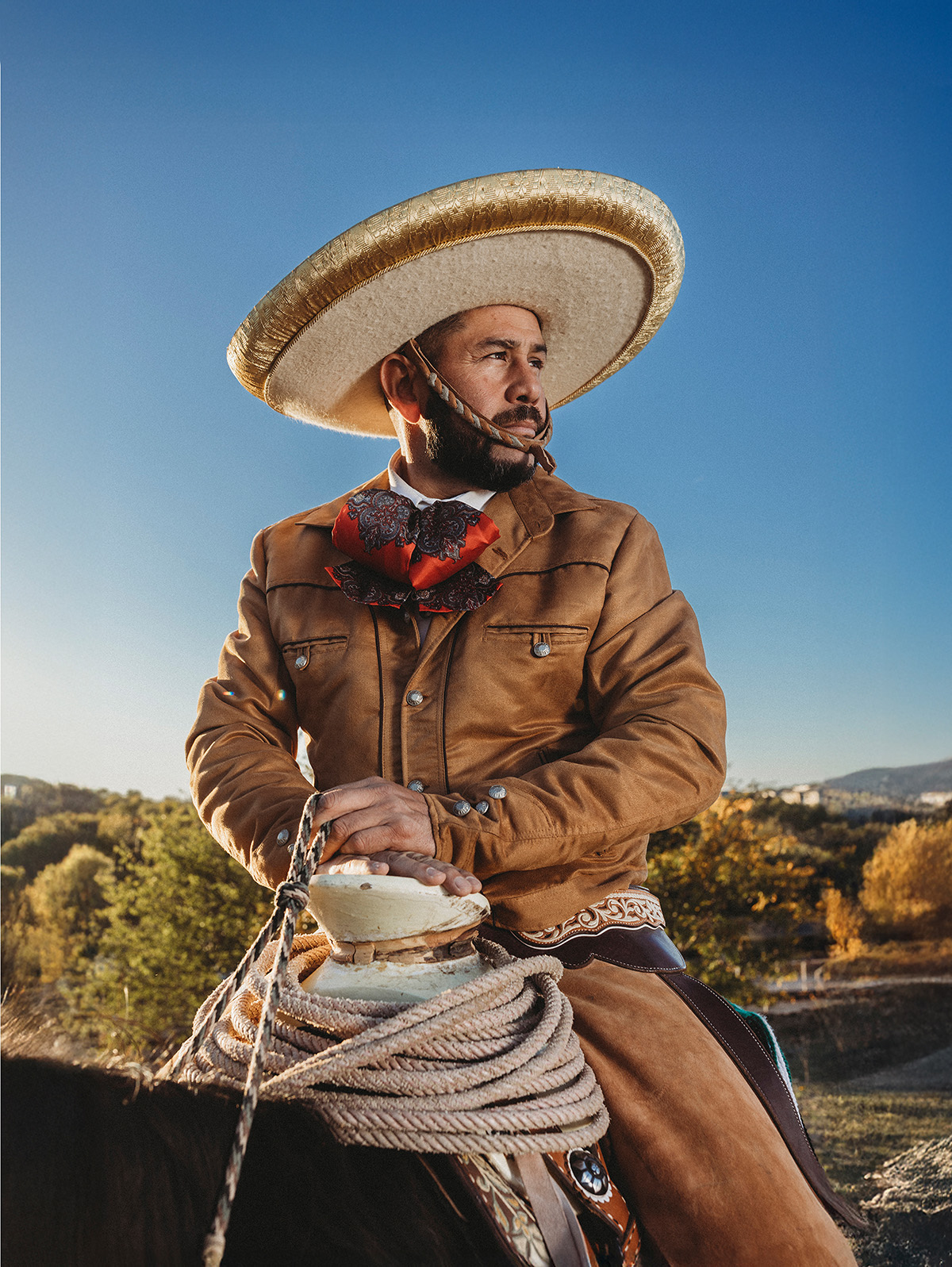

When he immigrated to Texas as a teenager, the goal was simple: work and return home. But tradition has a way of calling people back. A Mexican arena. A local Charro team. A familiar rope in his hands. “You can’t get it out of your system,” he said.
He spent years bull riding on the American circuit — an unusual crossover — but each Stock Show season, he returned to Charrería, serving as arena director and dressing in full Charro attire. No matter how far life pulled him, his pull to the Charro tradition remained.
His wife, an Escaramuza rider, Mirna Carrasco, jokes that meeting her sealed his return. Together, they have built a life centered on horses, heritage, and the responsibility of preservation.
Being a Charro means more than riding. He makes his own halters, repairs leather tack by hand, shoes his horses, and fixes equipment mid-competition if needed. During one event, when his wife’s breast collar snapped, he rebuilt it on the spot using tools he always carries. Without it, they would have been disqualified.
This self-reliance is part of the identity. The skills are not ornamental; they are highly necessary.
Each time he teaches a child or young rider, he feels the weight of generations behind him. “It’s an honor,” he said quietly. “Tremendous.”
In a world where traditions fade quickly, the Charro endures. Rooted, resilient, and proud. Charros do not simply perform; they preserve.