

By Rachael Lindley
Photography by Crystal Wise
There’s a particular kind of optimism pulsing through Fort Worth right now — one that lives somewhere between Western legacy and creative ambition. In the city’s rapidly evolving South Main district, that spirit has found a physical home in Hotel SOMA, a boutique hospitality concept built not by longtime hoteliers, but by two former finance professionals who saw possibility where others saw deterioration.
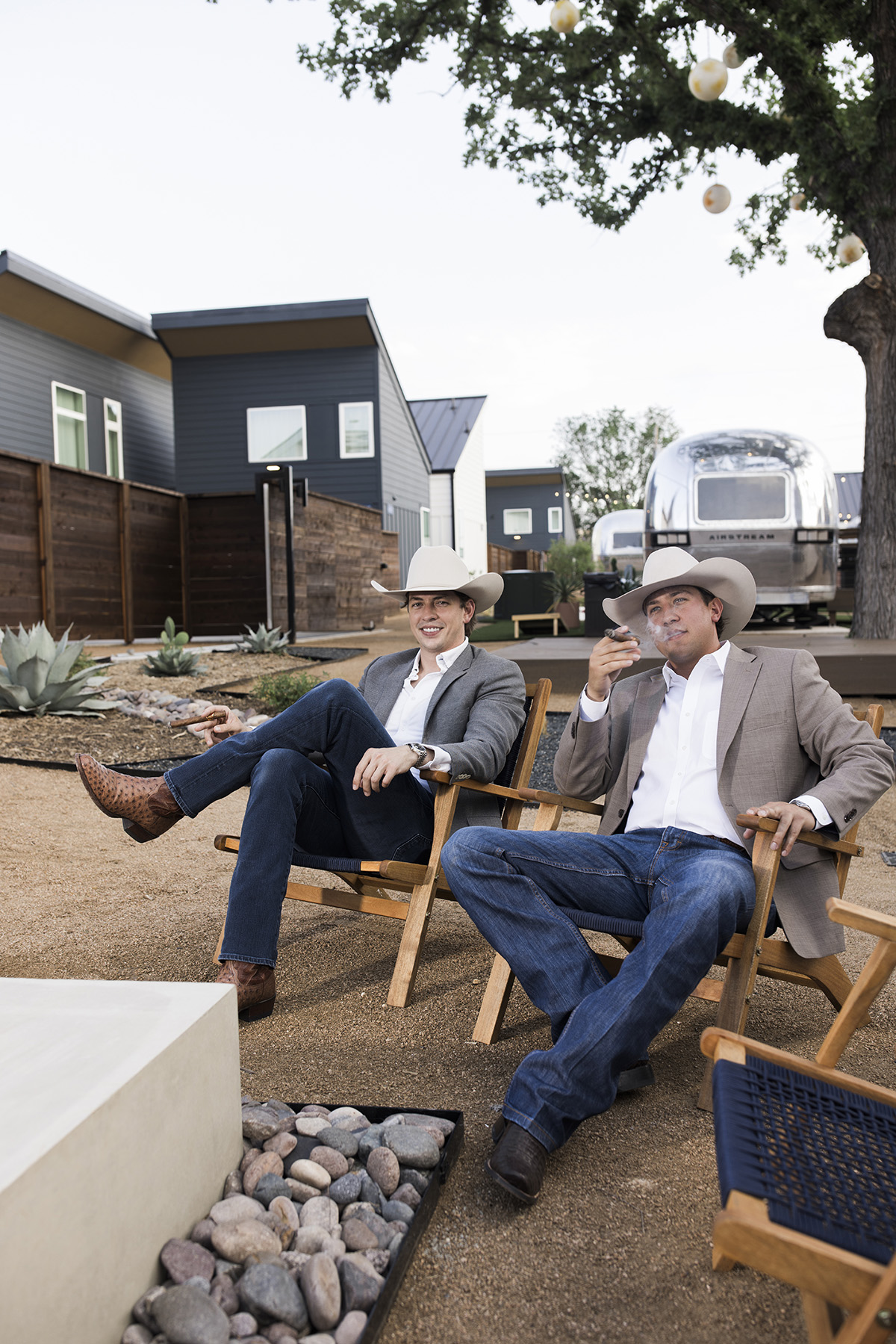
For founders Lane Loiselle and Will Moncrief, the journey into hospitality did not begin with hotels at all. The two met shortly after college while working together at a Fort Worth oil and gas company, both firmly planted in the corporate finance world. Over time, their careers diverged — one moving into wealth management, the other into corporate finance leadership — but the entrepreneurial itch remained. As Fort Worth continued its explosive growth, they found themselves increasingly drawn to real estate, looking for a way to build something in a city they deeply loved.
What began as a side venture investing in Airbnb properties across Dallas-Fort Worth eventually evolved into something much larger. The catalyst came when the founders were approached about a piece of land in South Main — eight lots occupied by several severely dilapidated homes. Initially, the plan was simple: renovate the properties into short-term rentals. But the more they studied the neighborhood, the more they realized the opportunity called for something bolder.
South Main, after all, is known as one of the most culturally vibrant pockets of Fort Worth. The SoMa district as it is affectionately called has quietly transformed into a creative corridor filled with murals, music venues, restaurants, bars, galleries, and independent businesses. Yet despite its growing popularity, there was very little hospitality infrastructure that allowed visitors to fully immerse themselves in the area.
That very realization became the foundation for Hotel SOMA.
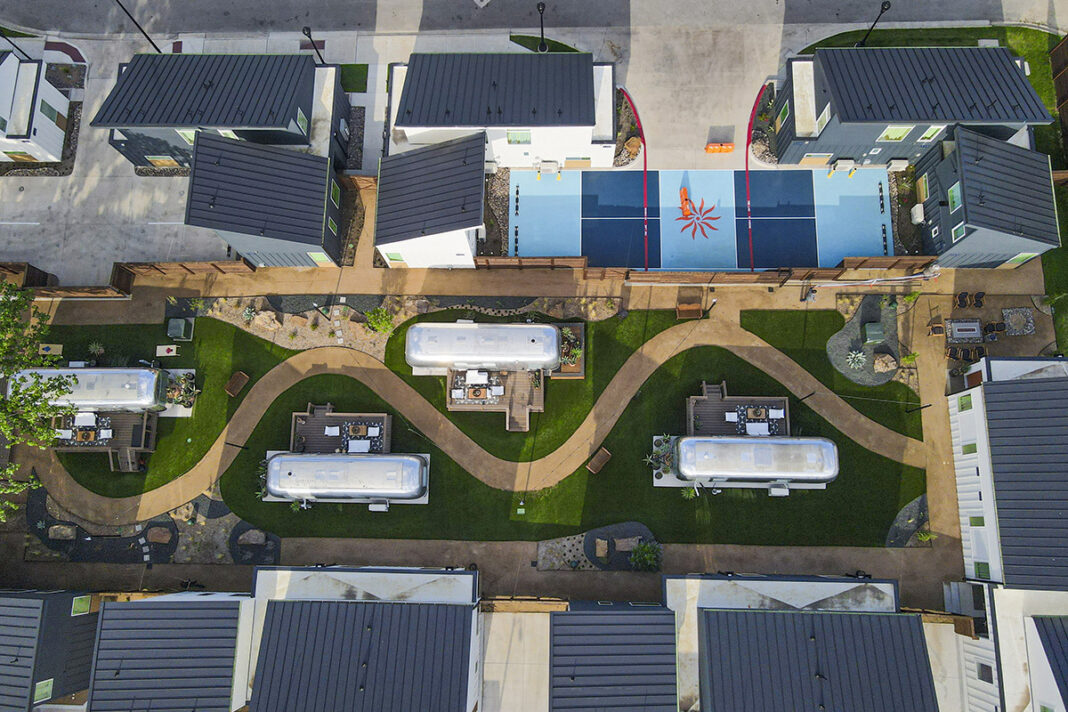
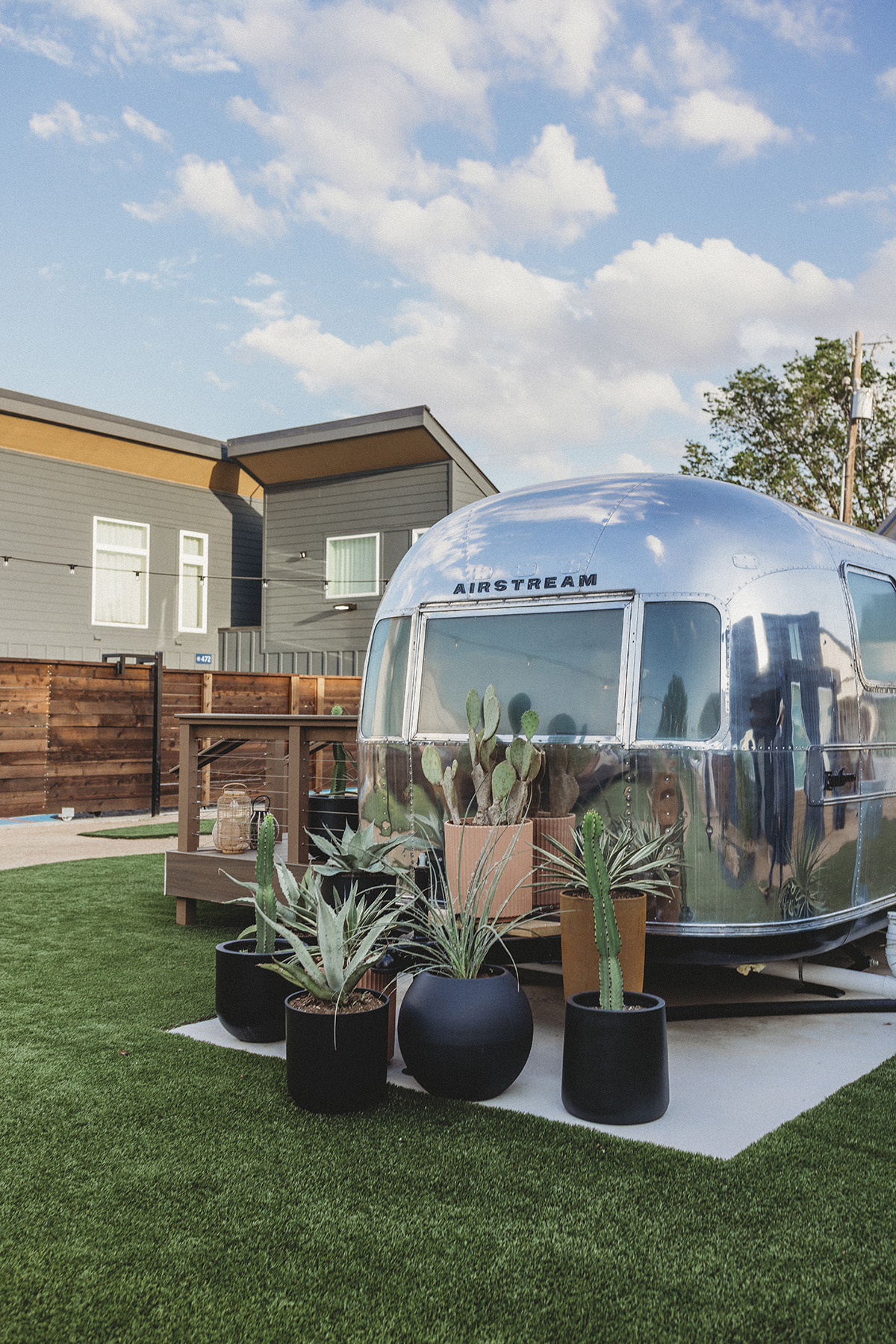
Rather than building a traditional hotel, the founders envisioned something intentionally intimate and deeply rooted in place — a boutique experience that felt more like a curated neighborhood retreat than a corporate property. They demolished the original homes and designed a village-like layout centered around 31 casita-style rooms surrounding a communal courtyard. The goal was not simply to create accommodations, but to create connection.
“We wanted people to experience a different side of Fort Worth,” Moncrief said. “Fort Worth is more than the Stockyards. This area has so much personality and creativity, and we wanted to build something that reflected that.”
That philosophy extends into nearly every aspect of the property. Hotel SOMA leans heavily into local identity, blending contemporary creativity with unmistakable Western roots. Cowboy iconography exists alongside modern art installations. The result is a space that feels distinctly Fort Worth without slipping into cliché, something Loiselle felt strongly about.
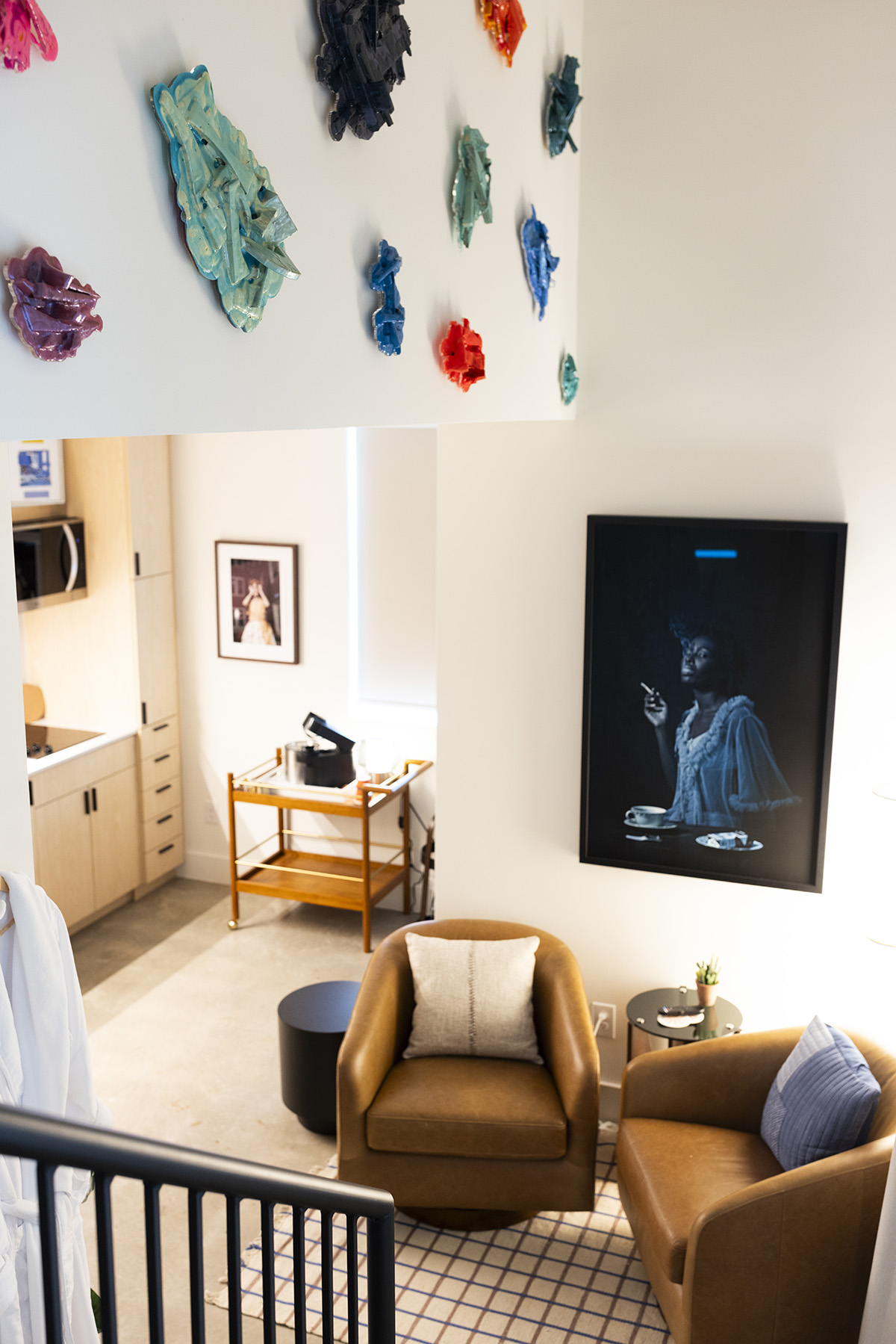
Perhaps nowhere is that more evident than in the hotel’s art program, developed in collaboration with William Campbell Art Gallery and local artists. Each casita features a unique collection of rotating artwork, ranging from photography and mixed media to contemporary Western pieces. Guests can even purchase many of the works directly from the property. Loiselle and Moncrief hope the hotel will eventually function as a living extension of Fort Worth’s arts community, hosting quarterly exhibitions and continuously introducing new regional artists into the space.

But beyond aesthetics, the founders believe the future of hospitality lies in fostering genuine human interaction — something they feel modern hotels often fail to prioritize.
Instead of long, empty hallways and sterile lobby bars, Hotel SOMA was intentionally designed around shared outdoor experiences and communal gathering spaces, and walkability to the surrounding neighborhood. During early openings, the founders noticed guests naturally gravitating toward one another — children playing in the courtyard, strangers sharing drinks around the fire, locals lingering for live music long after sunset.
That response helped shape the property’s next phase.
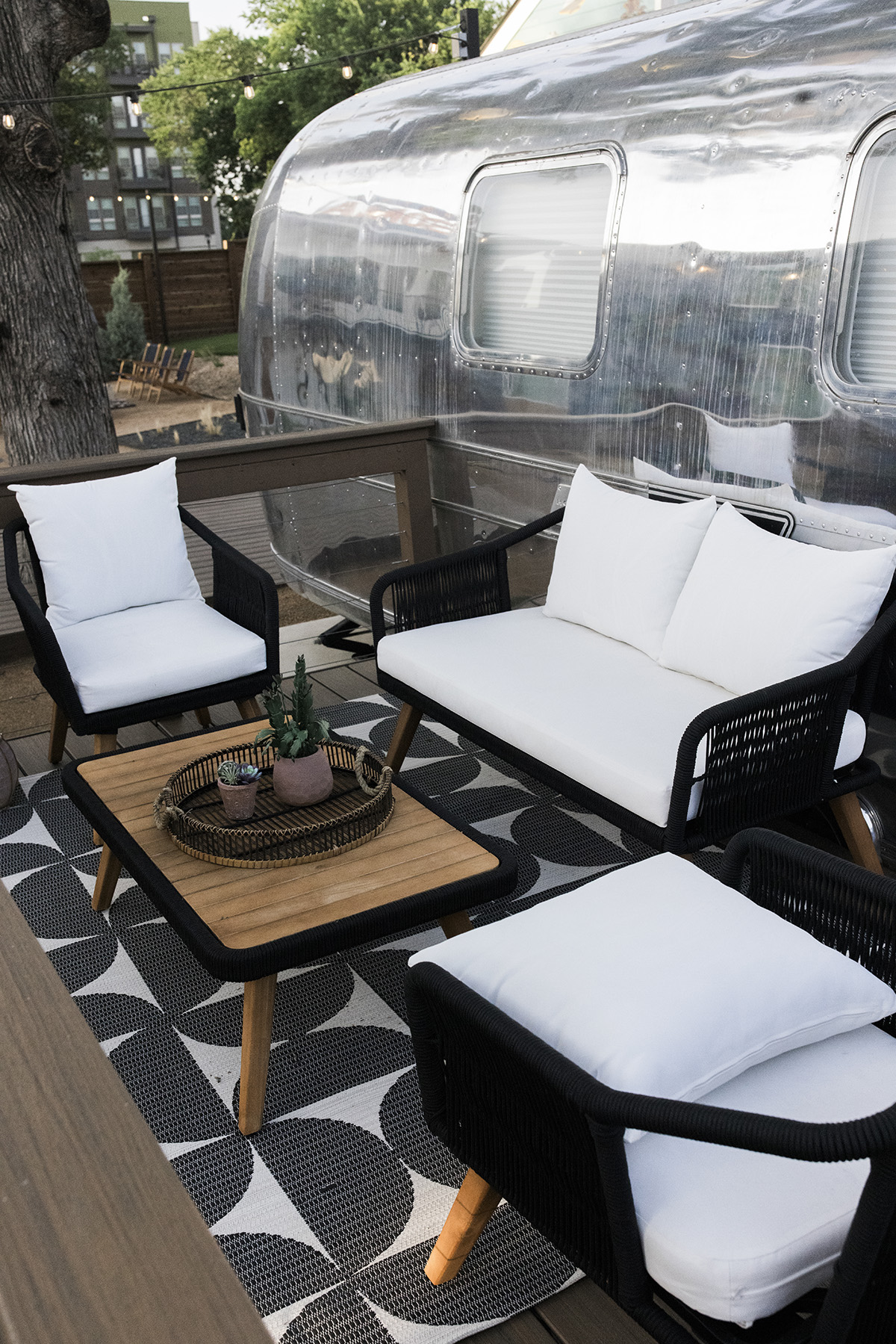
In the coming months, Hotel SOMA plans to gradually open an airstream bar, custom from Japan, and courtyard experience to the public through curated community nights, live music programs, and neighborhood events. The founders are careful to preserve the serene, retreat-like atmosphere that overnight guests value, but they also recognize the importance of becoming an active participant in the South Main cultural ecosystem.
Their ambitions extend well beyond Fort Worth. Through their hospitality company, Sidecar Hospitality Partners, the team now manages multiple boutique hotel concepts, including the Rambler Inn in downtown Arlington — a retro-inspired property celebrating outlaw country culture and Americana music legends. Another SOMA-inspired hotel is also in the works in Arlington, where the founders plan to replicate the successful courtyard-and-casita model they pioneered on South Main.
Still, despite the expansion, Fort Worth remains central to their vision.
For Loiselle and Moncrief, Hotel SOMA is not merely a business venture. It is an evolving reflection of the city itself — creative, communal, slightly unconventional, and deeply proud of its roots.
“We really want to invite people in and encourage them to engage in the culture,” says Loiselle.
The partners speak less about occupancy rates and more about atmosphere and human connection.
“Hospitality is about how you make people feel,” Moncrief says. “Human beings are designed to connect with each other. We just want to create spaces where people can do that.”
In a city racing toward growth, Hotel SOMA feels refreshingly personal — a reminder that the most memorable places are often the ones built with intention and a genuine love for the community surrounding them.