


By Eric Griffey
Photography by Thanin Viriyaki
If Smoke’N Ash represents barbecue’s ability to bridge continents, Goldee’s Bar-B-Q demonstrates something equally compelling: how a cuisine rooted in tradition continues to absorb new influences without losing its sense of place.
That balancing act helps explain why the Fort Worth restaurant has become one of the most celebrated barbecue destinations in America. Since Texas Monthly crowned Goldee’s the No. 1 barbecue joint in Texas, the restaurant has transformed from a local favorite into a pilgrimage site. Michelin inspectors have taken notice. So have food writers, pitmasters and devoted barbecue enthusiasts willing to spend hours in line for a taste of what many consider the state’s gold standard.
Yet even at a restaurant built on Central Texas fundamentals, traces of a broader culinary conversation are everywhere.
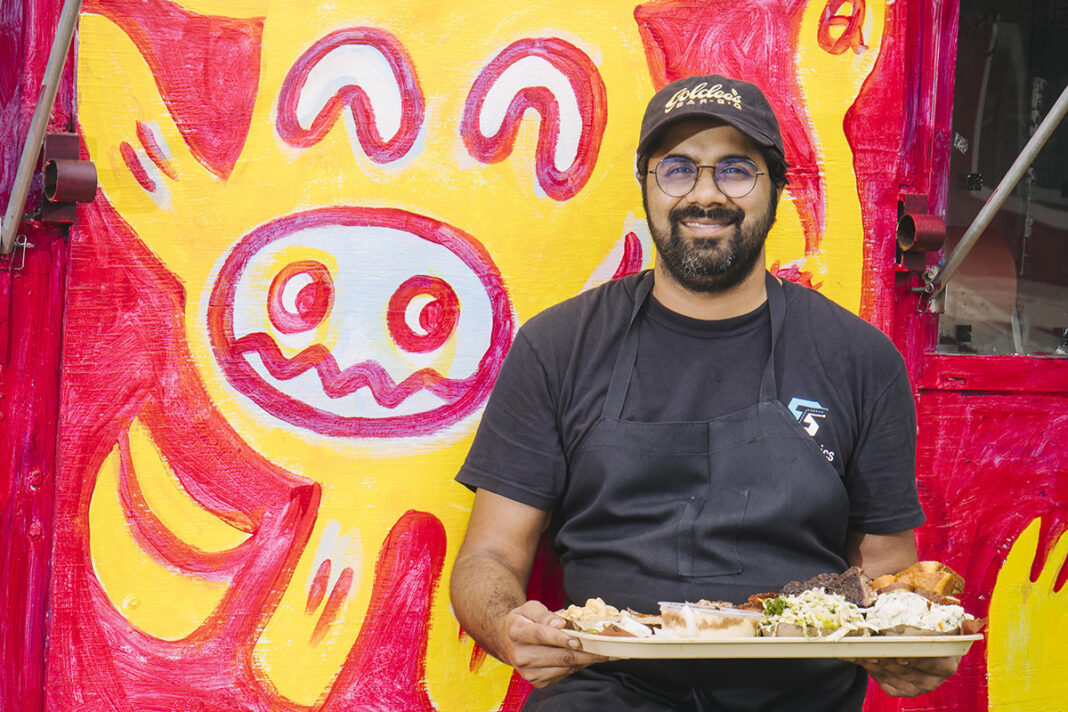
One of the people helping shape that conversation is co-owner Zain Shafi, whose path to Goldee’s reflects the increasingly global nature of Texas food culture. A Pakistani American who grew up in Texas while maintaining deep ties to his family’s homeland, Shafi first encountered the Goldee’s team not as a business partner, but as a student. Before barbecue became his profession, he enrolled in one of the restaurant’s brisket classes, eager to learn from a group of young pitmasters already earning a reputation for obsessive attention to detail.
Years later, after selling a business and dedicating himself full-time to barbecue, Shafi launched Sabar Barbecue, a Fort Worth trailer that fused Texas smoking techniques with Pakistani flavors. The concept was less about reinvention than translation. Traditional Texas staples such as brisket, turkey, sausage and lamb remained at the center of the menu, but they were filtered through another culinary lens.
A sausage might borrow its flavor profile from a seekh kebab. Turkey could be seasoned with spices typically used in tandoori cooking. Instead of white bread, diners received naan. Yogurt-mint sauce stood in for traditional barbecue sauce. Lentils replaced beans. The result was familiar enough to satisfy barbecue purists while offering many diners their first introduction to Pakistani cuisine.
“I don’t consider it fusion,” Shafi said. “You kind of took each cuisine and put it together where it worked.”
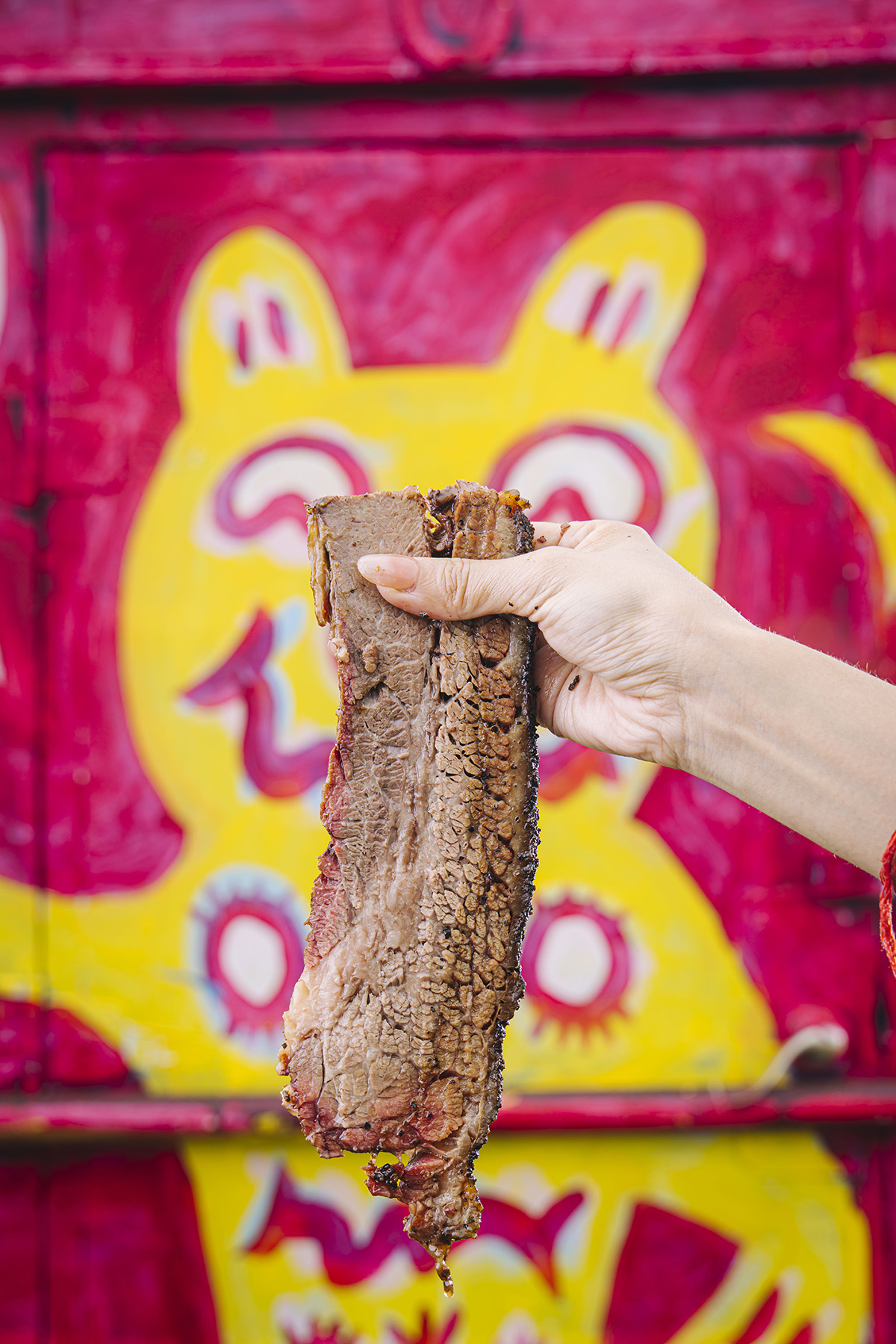
That philosophy mirrors the approach that has helped Goldee’s stand apart. The restaurant’s acclaimed menu includes touches that reach beyond traditional barbecue boundaries, including its celebrated Lao sausage, a nod to the culinary heritage of co-owner Nuphon “Nup” Phanthavong. Rather than feeling forced or trendy, those influences emerge organically, woven into the fabric of a restaurant whose reputation was built on flavor rather than novelty.
For Shafi, that distinction matters. The goal is not to be different for the sake of being different. It is to create food that makes sense.
That mindset resonates with a broader truth about American cuisine. The nation’s most enduring food traditions rarely arrive fully formed. They evolve through migration, curiosity and cultural exchange. New ingredients appear. Techniques cross borders. Dishes adapt to new landscapes and new audiences.
At Goldee’s, the brisket remains unmistakably Texan. The smoke, the craft and the devotion to process are rooted firmly in barbecue’s traditions. Surrounding those familiar elements are subtle reminders that Texas itself has never stopped changing. Every Lao sausage, every Pakistani-inspired chicken special and every unexpected flavor combination tells the same story: Barbecue, like Texas itself, grows richer as cultures impart their own distinct flavors, techniques and traditions.
4645 Dick Price Road, Fort Worth, TX 76140
817-480-4131
goldeesbbq.com
@goldeesbbq